Happy 110th Birthday!

It’s Dad’s 110th birthday today. I have been watching the D-Day commemoration and a dramatisation of tape recorded interviews with men who were there (BBC: D-Day the Unheard Tapes). The eye witness testimony was shocking and chilling. I hope, but doubt, that the men being interviewed were given psychological support as they were clearly being re-traumatised by telling their stories. It did remind me of the saying “there’s three sides to every story – yours, mine and the cold hard truth.” These young men, British, American and German, experienced something that no news report on either side ever told.

I was recently sent a newspaper cutting (possibly The Times or The Telegraph) regarding the situation in Hong Kong at 17 December 1941. The article includes the following statements:

Conditions of full siege exist. The colony is in good heart, with plenty of food, arms and ammunition, and the garrison is confident of the outcome.”

The Governor, Sir Mark Young, is stated to have declared that British subjects and those who have sought the protection of the of the Empire can rest assured that there will never be any surrender to the Japanese.

The Tokyo Radio states: Hong Kong is doomed to destruction within three months according to Japanese experts. The announcer claimed that the troops defending the colony were completely cut off, and that the island was faced with starvation, even without any further attacks.

Meanwhile Dad’s eye witness account states, on 16 December 1941:

For the past three days the Japs have been shelling us very heavily indeed.  Mt. Davis have had the worst of it.  One of the A.A guns has been knocked out.  About 11 men were killed when the enemy scored a direct hit on one of the shelters.  A dud shell hit the muzzle of the upper 9.2” gun and it appears to be slightly bent.  The plug gauge bore will no longer pass through it.  A shell (9”) came in through the old canteen along the passage into the plotting room and came to rest under the command exchange.

On 18 December 1941 he says (‘RA East’ refers to the Royal Artillery’s division of Hong Kong Island into 2 parts – East and West. A ‘3.7 How’ is a 3.7″ Howitzer gun, designed for use in mountainous terrain, that could be dismantled for transport. First introduced in WW1) :

Ted Hunt has been doing very well at R.A. East.  He has got a 3.7 How up on Sai Wan Redoubt to try and deal with the enemy guns and troops on Devil’s Peak.  Sai Wan has had the hell of a pasting today.  The A.P.C. oil tanks at North Point have been hit and are now in flames.  An enormous cloud of black smoke darkens the whole atmosphere (people go about with a worried, scared look on their faces).  It reminds me of pictures I have seen of the last day at the end of the world.

It was only a week later that the colony surrendered to the Japanese.

Many thanks to Nick Trevor (mum’s godson) for sending me the cutting.
Dad’s plan to liberate HK PoWs

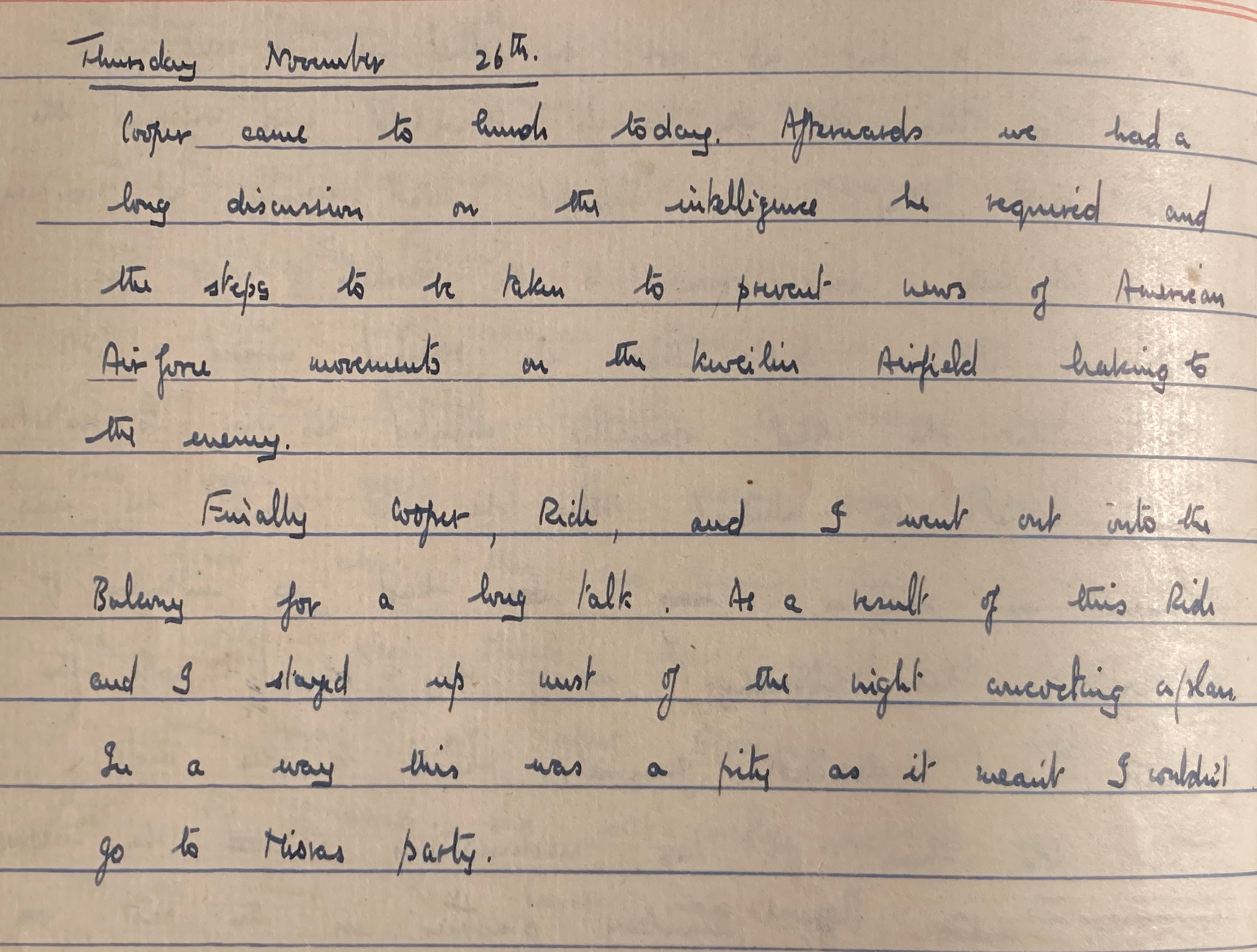
After Dad’s escape from Hong Kong he was posted to the wartime capital, Chongqing, as Assistant Military Attaché in August 1942. I had seen, in his diary entry for November 26th 1942, a few sentences about his ‘Great Thought’ – a plan to liberate the Hong Kong PoWs. The plan was worked up between Dad, Col Ride of the British Army Aid Group (BAAG) and US General Chennault’s Chief of Staff, Col Merian Cooper.

Text from Major John Monro MC RA  diary entry dated November 26th 1942: Cooper came to lunch today. Afterwards we had a long discussion on the intelligence he required and the steps to be taken to prevent news of American Airforce movements on the Kweilin airfield leaking to the enemy. Finally Cooper, Ride and I went out onto the balcony for a long talk. As a result of this Ride and I stayed up most of the night concocting a plan.

I knew that the plan had been approved at the highest level, finally agreed at the Washington Conference in May 1943 by the heads of the Allied Powers. I also knew that the plan had been scuppered by a spat between Generals Stilwell and Chennault, that resulted in resources being diverted away from the USAAF to serve the needs of the land war in Burma. Without air support the plan was impossible to execute. But I had never seen the plan or had any idea what it actually involved.

Yesterday I received details of the plan from a colleague in Hong Kong. It seems that the intention was to liberate all the PoWs held in the various camps in Kowloon and on Hong Kong Island, using British paratroopers, with Chinese BAAG and guerrilla forces and Allied air and sea support. It needed a co-ordinated, top secret, surprise attack, with air control being key to success. The Japanese believed they were entirely secure in Hong Kong and had a limited ‘occupying’ force rather than a ‘defence’ force. To succeed this would have to be a one-shot effort, as Japanese troops would be increased in response to the first raid, making it much more difficult for any subsequent raid.

Most interesting to me was an original document written by Dad in Delhi, in July 1942, before he even arrived back in China. In it he gives a strategic analysis of the liberation concept, with considerations and pros and cons given for 10 dimensions of the proposal. From my years working in marketing strategy and business planning this seems remarkably familiar! His stated object is “To get prisoners out of the internment camps at Hong Kong.” His analysis considers:

  • Physical condition of prisoners
  • Guarding of camps
  • Reprisals and the use of force
  • Japanese troops defending Hong Kong
  • Terrain
  • Political issues
  • Forces to be employed in a raid
  • Pros and Cons if we go on as we are
  • Pros and Cons if we make a limited raid
  • Pros and Cons if we make a full raid

It is a tragedy that the plan never came to fruition. It might have saved the lives of about 4000 European PoWs and 2500 Indian PoWs held in Hong Kong in 1943. The final ‘no go’ letter from India Command, Directorate of Military Intelligence, dated December 1943, says: “It is regretted that the resources available in the form of air transport preclude such an operation being carried out at this stage of the war against Japan. The implications of this decision are fully realised but there is no alternative.”

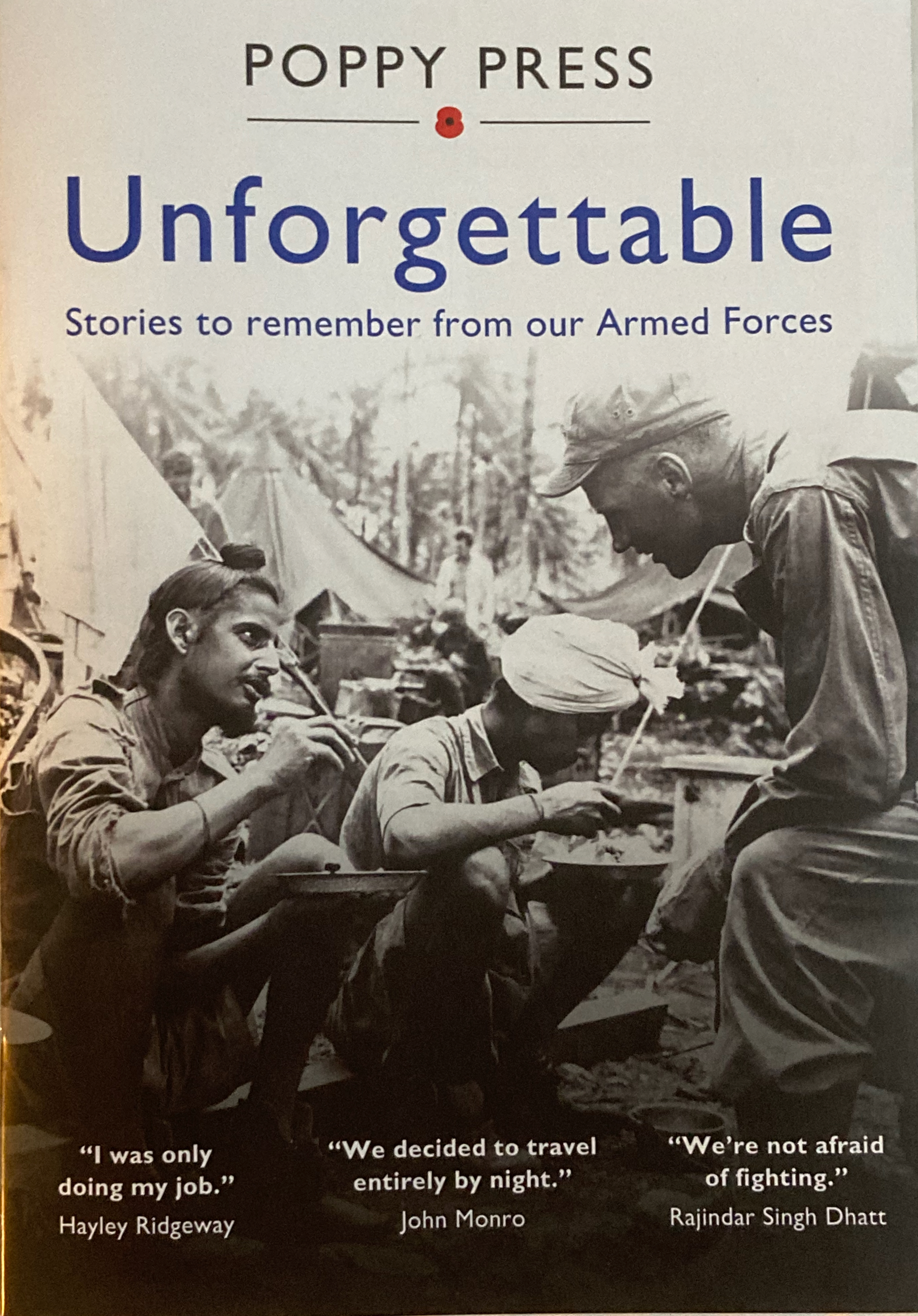
Remembrance Day 2023

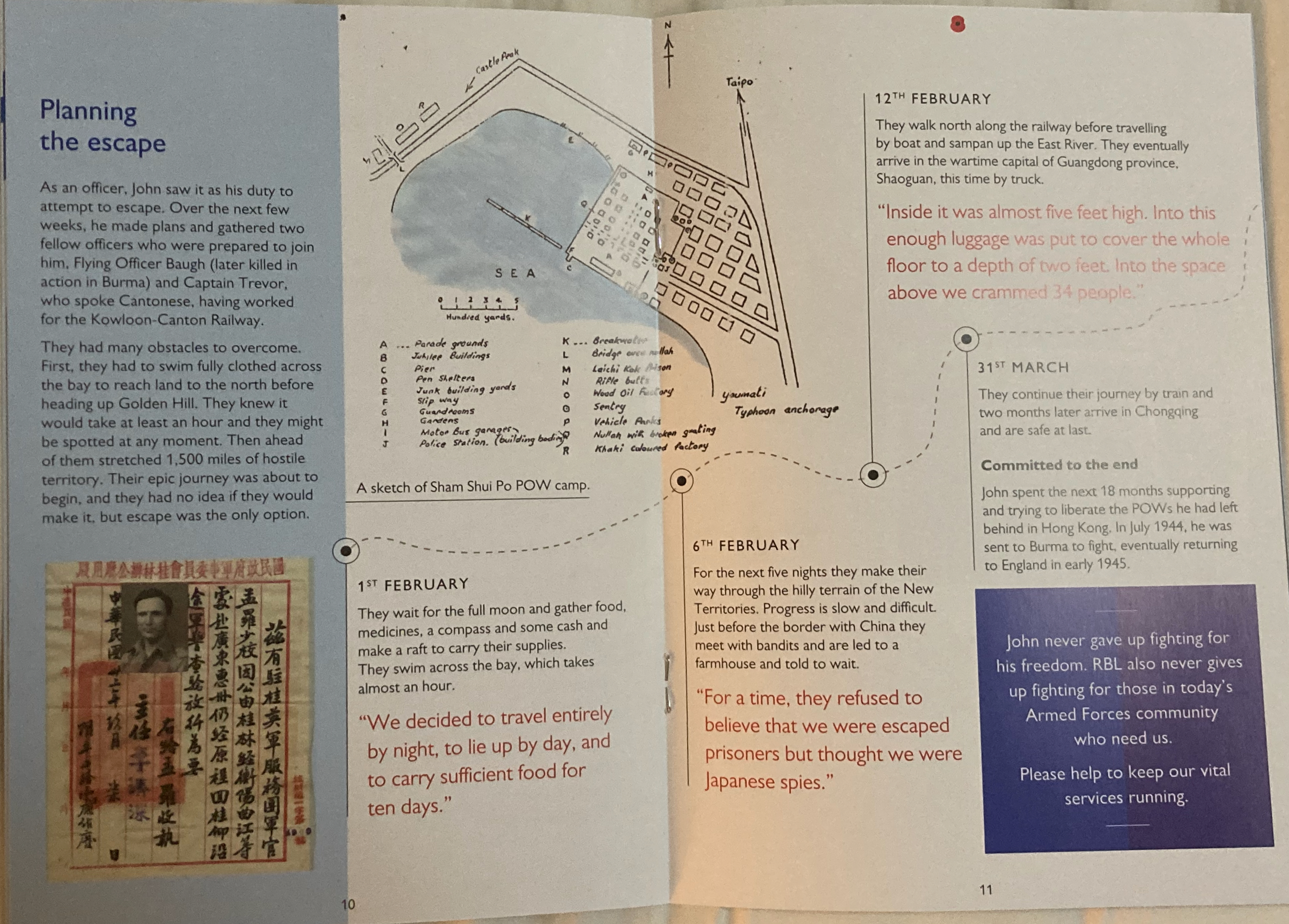
For Remembrance Day 2023, the Royal British Legion have included in their annual newsletter a four page feature on Dad’s story. They approached me back in the summer, asking if they could highlight his adventures in Hong Kong and China in the Second World War. I provided some images and extracts from Stranger In My Heart and they did the rest. They have titled his story ‘The other Great Escape.’ I’m really pleased with it because the Far East is often neglected in remembrance of WW2 and the Battle of Hong Kong almost never gets a mention.

I was pleased to see that the newsletter also includes stories from Commonwealth veterans, another neglected group in the story of the Second World War. The Royal British Legion is dedicated to supporting service veterans and their families, providing support for those with mental or physical health issues or financial worries.

Everyone who has served has made sacrifices and endured suffering for the benefit of all of us. They don’t all have dramatic stories like Dad’s, many suffered as PoWs or have served in supporting roles, but they all did their bit. Let us remember them and show our gratitude. And this year, the poppy is entirely plastic free!

81st Anniversary of the Battle of Hong Kong

On 8th December 2022 it is the 81st anniversary of the Battle of Hong Kong. Let’s just pause for a moment and remember all of those who suffered and died in the battle and in the long years of internment afterwards.

Dad’s diary entries show that right up until the bombing started, there was a sense of denial that the colony could be about to go to war, 6 hours after the attack on Pearl Harbor:

7th December 1941: This morning when I went to the office, I found that the situation had worsened.  I don’t really believe that anyone thinks that it will come to anything.  We have had so many flaps and lived in a state of tension for so long that we have become blasé.  We live only for the day when the rather annoying precautions that interfere with our private amusements are once more considered unnecessary.  This is more serious than most.  The Hong Kong Regiment have been ordered to get their ammunition onto their mainland positions.

About 6:00am on Monday 8th I was woken up, called to the telephone and told that war was imminent with Japan.  By the time I got to H.Q. we were at war.  About 8:00am the first Japanese bombers came over.  They did a lot of damage at the Aerodrome, destroying 7 C.N.A.C. planes, The Clipper, most of the RAF planes and the two Walruses.  They were unopposed.  The volunteer A.A. platoon had drawn no ammunition, I suppose because the day before was a Sunday.  The gunboat supposed to be in the seaplane anchorage was being used for something else.  The Japs made rapid progress down the Taipo Road, and by the evening we were back in Shatin.  H.Q. were gravely disappointed with the Stanley guns.  They have shot too big a line, boasted that they could get almost to Taipo, in actual fact they can only reach about 1500 yards beyond Shatin Station.  We were unable to answer several calls for fire as the targets have been out of range. All the demolitions were successful though we were asked to shoot at the Brothers Point “blow” as the slide had been checked by a retaining wall. Mt. Davis fired five rounds but with what effect we could not tell.

Allied Hong Kong defences were ill prepared and underestimated the enemy’s strength, skill and experience. But Hong Kong’s fall had long been seen as inevitable. In January 1941, PM Winston Churchill had said:

If Japan goes to war there is not the slightest chance of holding Hong Kong or relieving it. It is most unwise to increase the loss we shall suffer there. Instead of increasing the garrison it ought to be reduced. Japan will think twice before declaring war on the British Empire, and whether there are two or six battalions at Hong Kong will make no difference. I wish we had fewer troops there, but to move any would be noticeable and dangerous.

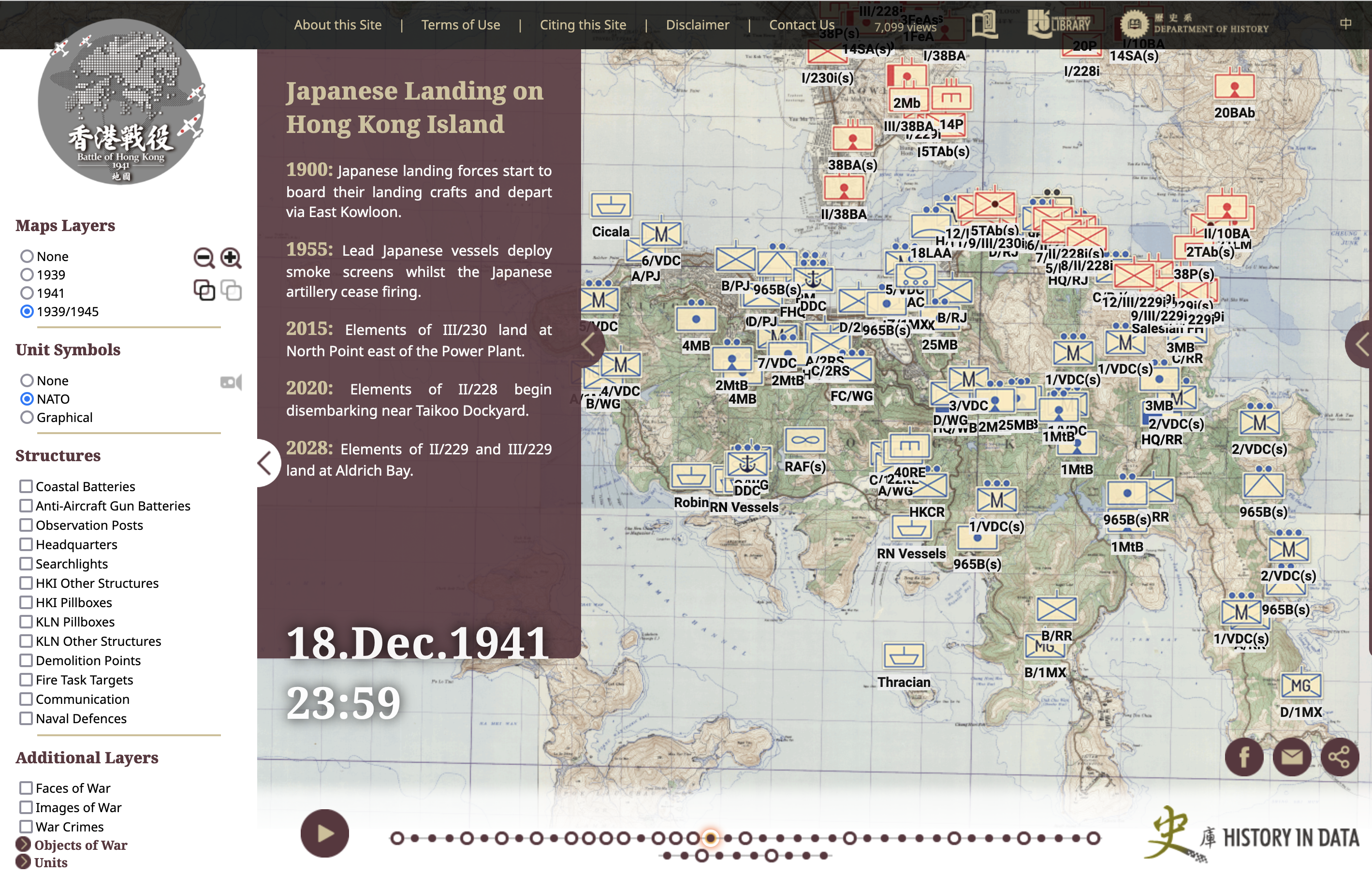
For more first hand accounts of the battle of Hong Kong visit the Gwulo Old Hong Kong Website and to learn how the battle progressed between 8th and 25th December 1941 see the interactive map at Hong Kong Baptist University’s website.

HK80

On 8th December 2021 it is the 80th anniversary of the the Battle of Hong Kong (HK80), the point of Britain’s entry into the Pacific War. To commemorate the day I have written a blog post for the Researching FEPOW History Group website. Please click the link and have a read.

Battle of Hong Kong 1941

You may remember that a wee while ago I appeared on BBCR4’s Saturday Live show. A couple of weeks ago I received an email via the website from a lady called Sarah, saying she’d heard my interview and was desperate for a few copies of my book but couldn’t find any. Unfortunately she hadn’t noticed the opportunity to buy a copy that appears on the sidebar on the right of the page. Anyway, I emailed back, asking how many she wanted and offering to put some copies in the post. I didn’t hear anything for a couple of days and, as she has an unusual surname, I thought I’d look her up to see if I could find an address for her. To my surprise she lives about ten minutes walk from my house! I went to find it but couldn’t find the correct house name. I knocked on a likely looking door:

‘Is this the White House?’ I asked

‘Yes’ said a surprised looking man in his 70s

‘Are you Mr X?’

‘I might be…’ I could see him wondering who on earth I might be and not coming to any happy conclusions.

‘Is your wife called Sarah?’ Now he was intrigued.

‘Is she looking for some copies of this book?’

‘Oh! Come in, come in.’ We had a nice chat and Sarah called me later to say it was the most extraordinary coincidence of their lives. Another happy customer.

I have recently taken part in #HistoryWritersDay on Twitter which generated some interest. It was the brainchild of @books2cover and he managed to get 250 writers/publishers involved to create a bit of a splash. Great idea and one that I hope will be repeated.

Interactive Map of the Battle of Hong Kong

Prof Kwong Chi Man of Hong Kong Baptist University and his fellow researchers have now launched their interactive map of the Battle of Hong Kong. This will be a wonderful resource for anyone searching for information about any aspect of the battle, from the positions of pillboxes to details about key characters in the battle. The map allows you to run the timeline of the battle, with the key events described (in English and Chinese) and shown on the map. You can zoom in and out as you please. Here is a screenshot to illustrate:

interactive map of the Battle of Hong Kong from HKBU

If you click on ‘Faces of War’ at the bottom left, it gives you a snapshot biography of key characters in the battle, showing where they were based or lost their lives. Below is the start of the entry for Dad, as an example.

entry for John Monro on HKBU interactive map of the battle of Hong Kong

This project has taken ten years to come to fruition and it is a very impressive achievement.

Saturday Live

I was thrilled to be a guest on BBC R4’s Saturday Live show this weekend. You can listen to it on BBC Sounds if you missed the live show. It gave me a great opportunity to mention the forthcoming 80th anniversary of the Battle of Hong Kong, as well as talking about Dad’s story and my book. Sadly, they didn’t give me time to talk about Dad’s role as Assistant Military Attaché in Chongqing and his efforts to support and liberate the PoWs he’d left behind in Hong Kong.

My friend Joanna nominated me as a guest for the show, unbeknown to me. She rang me when the producer got back to her and said they were interested. I remember saying WHAT??!! several times, as it came totally out of the blue. I wish I’d thought of it myself when the book was first launched but it seemed over ambitious at the time.

As you can imagine I was quite nervous about appearing on the show. The BBC sent me a headset to use and we did sound checks beforehand, so far, so good. Then at 3 minutes to 9am Zoom dropped me out of the meeting. I had to force quit Zoom, reload it and then rejoin the meeting in time to go on air at 09.02am. By this time my heart was pounding in my chest and my system was flooded with adrenaline and cortisol! They’d told me I would be first guest but I was very relieved that in the end they interviewed me just before the 10am news. Safe to say that’s the first time I have spoken to an audience of 2.4 million listeners.

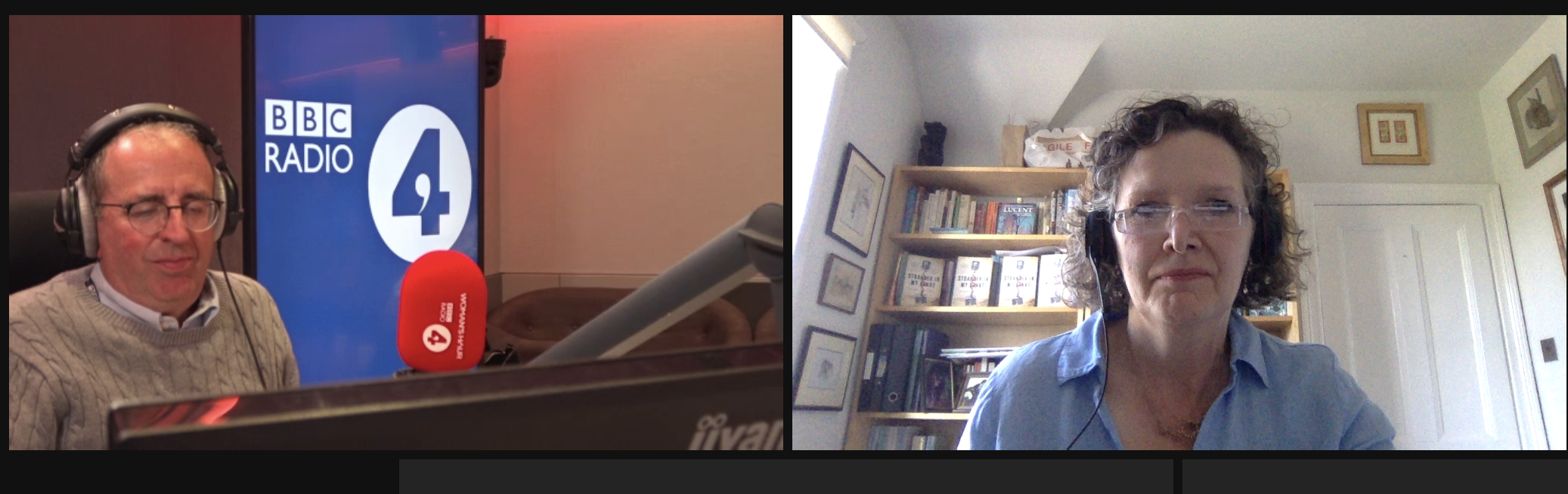
Rev Richard Coles and Mary Monro, Saturday Live 28/8/21
Interview with Rev Richard Coles on BBC R4 Saturday Live

I had a photograph of Dad next to the computer screen to remind me that talking to people on the radio requires less courage than escaping across China during a war. He smiled at me encouragingly and I hope he’d think I did a good job.

Anniversaries

It’s the 76th anniversary of VJ day on Sunday 15th August 2021, and the end of the Second World War. This year there are going to be actual live events, after the pandemic induced difficulties of VJ75 in 2020.

This December it will be the 80th anniversary of the Battle of Hong Kong, 8-25 December 1941. The Chinese government is unlikely to have an appetite for commemorations but I have been in touch with Professor Kwong Chi Man at Hong Kong Baptist University. He is creating an interactive map of the battle, showing the “Faces of War”, to which I have contributed a summary of Dad’s story. The map will be available to view in English and Chinese. As soon as there is a live link I will post it here.

It was the 40th anniversary of Dad’s death on 25 July 2021. I happened to be in England that weekend so I visited my mother at her nursing home on the anniversary. She has severe dementia and doesn’t recognise me, not helped by the fact that I haven’t seen her for a year and covid precautions meant I had to wear a mask, gloves and an apron. I must have been quite an alarming stranger to find in her room! I showed her a photo of my father in dress uniform, taken in 1952 when they were first married. Sadly she didn’t seem to recognise him either. It was very distressing for me to see her oblivious to the love of her life. I understand that memory recedes to further and further back in someone’s life, but I thought she might still have Dad in her mind. She lost the grandchildren first, then us children and now her husband and brother. It’s unbearably sad to witness and it must be very lonely for her.

John Monro 1952
Lt Col John Monro MC RA, 1952

This just strengthens my view that we must preserve the stories of our loved ones as they may otherwise vanish with the death or memory loss of those who knew them personally. What do you know of your parents’ lives? Your grandparents and other relatives? Find out and write it down! Research what they can’t tell you or remember – it’s never been easier with all the resources of the internet at your disposal. I promise you, there will be some amazing stories in there.

Birthday Gift

9 June is the birthday of Stranger In My Heart (2018) and Dad (1914). I’m offering a birthday gift of a signed, dedicated copy of the Stranger In My Heart paperback for the special discounted price of £9.99 including UK postage. You also get a free SIMH bookmark with each copy. Limited period only, order via the Paypal link in the sidebar and message me via the Contact page if you want a dedication for anyone other than the purchaser.

Military historian Kwong Chi Man sent me this picture of Dad via Twitter. He found it in the WWII Veteran Association Clubhouse in Hong Kong. Dad looks very young and the photo was taken at the “Vienna Studio Bombay” so I am guessing it was taken on his way out to HK in 1937, when he was a young Second Lieutenant on his first posting.

John Monro MC RA, probably taken 1937, Vienna Studio Bombay

The book has been an interesting way of connecting with all sorts of people – distant relations, families of men mentioned in Dad’s account of the battle of Hong Kong and his escape, military historians and the many veterans’ families who share a connection to the Pacific War. I hope the book contributes to a more complete history of the Second World War, along with the many other stories that families are now able to discover for themselves about their ancestors. It’s not all about the big battles and the strategic moves – it’s a human history of bravery, resilience and suffering. We shall remember them.

Another Chance to See…

The production company who made My Grandparents’ War have been in touch to say that the Mark Rylance episode is being shown again on Saturday 4 April at 7pm on Channel 4. I know you won’t be going out, so why not watch the show?! It gives a real insight into the role of the battle of Hong Kong in World War II and looks at the conditions of the PoWs from all angles.

Far East PoWs behind bars

In other news, Unbound are promoting ALL of their e-books to give people a good value read to fill the ‘staycation’ hours. Mine is on offer at £5 if you would like a copy of the digital edition. Check out the other great titles on there while you are at it – I have read several Unbound books now and they are a diverse bunch of interesting ideas: fiction, non-fiction, graphic books, all sorts. If you would like a copy of the paperback of Stranger In My Heart, I have a stash at home that I can send you, for £12 each including post and packing. Signed by the author, naturally. Contact me via the website.

It is well worth reading these stories from the Second World War at this strange time. Whenever I start feeling cooped up and grumpy at the restrictions on my lifestyle, I just think of the lot of the PoW. No food, no medicines, no entertainment, no work, no prospect of release, every chance of dying in captivity. Their fortitude is humbling and a lesson to us all.