Arrival

Kunming is known as the Spring City as it has a spring like climate all year round. It is a very pleasant 20 degrees just now. After my experiences in China last time I made sure I maxed out on English Breakfasts and Coffee between London and Hong Kong, as it will be tea and congee (watery rice porridge) till I transit through Hong Kong again. At Hong Kong airport I had a reflexology treatment – I have found in the past that it really helps with jet lag. I complimented my therapist on her strong hands (subtext: that’s a deep enough massage thanks) and she said “Strong? I am being soft soft with you”. Yikes.

Sadly, old Kunming has been dynamited into oblivion, so Dad’s description of his entrance into the city through the North gate cannot be replicated. Still, it is an attractive enough place with plenty of greenery in between the featureless tower blocks. I will explore tomorrow. Meanwhile you can see that my gadgets are working and I have successfully climbed the Great Firewall of China with my crafty VPN software.

The Jinjiang hotel is one of a chain in China. It has many advantages: “the comfortable intelligent air-condition control system offers you the best care; the perfect and advanced network service satisfies your every requirement of world communication. Finger square, peace, harmony and warmth; naturalness delicacy and coziness”. Who could want more?

Yunnan

I leave for Yunnan province in South West China next week. This will be another journey connected to my Dad’s time in China. At the end of his posting to Chongqing, in January 1944, he and a friend flew to Kunming and then drove up the Burma Road to Dali (see Kunming page). He tried to climb a mountain (Cangshan, over 4000m) near Dali but was unable to summit due to deep snow. Obviously, there’s a cable car now so I will be able to go up whatever the weather.

Yunnan lies at the eastern end of the Himalayan uplift and has borders with Vietnam and Laos to the South, Burma to the West and Tibet and Sichuan to the North. The tropic of Cancer crosses the middle of the province. Yunnan has the highest biodiversity in China and about a third of the population comprises ethnic minorities.

I am flying to Kunming, then heading south to see the tropical rice terraces and to meet some of the minority peoples. I return to Kunming and then take the train to Dali, following the path of the Burma Road. From Dali I continue northwards, visiting Tiger Leaping Gorge and the first bend of the Yangtse river, before reaching Shangri-La near the Tibetan border. It should be a really beautiful journey!

I have prepared all my gadgets and I hope I will be able to post lots of photos and words as I go along. Packing is going to be a challenge – tropical to arctic gear needed – but I feel much better prepared this time. My dear friends at My Odyssey Tours are once again providing guides. I have continued to study Mandarin and I hope to have slightly more interesting conversations this time. Six hours on a train should provide some opportunities for practise!

Reflections on China

This has been a perfect time to visit China. Visas are easy to obtain, transport links are good, hotels are becoming westernised, internet access and mobile phones keep you in touch with home and enough English is spoken to enable you to get by in most situations. My tour operator, China Odyssey, has been absolutely faultless. The Chinese are charming, gentle, friendly, helpful and everything is scrupulously clean and well organised. They also spit, sniff, slurp and belch for a pastime. I was warned of smoky hotel rooms, but there seems to be a major clampdown on smoking and now it is only allowed in limited places.

Travel essentials include loo roll, hand sanitiser, a torch, a local adaptor (2 vertical flat sided prongs), VPN software for bypassing big brother on the internet, a China SIM card, character reading app (e.g. Pleco), your own alcohol/chocolate/treats of choice, nasal spray to counter poor air quality, digestive aids. Try not to be vegetarian. Always get a hotel card on check in, with the name and address in characters, in case you need to get a taxi home. You will also need fully functioning knee joints – there are western toilets only in posh hotels. Everywhere else you have to squat, even in brand new airports and stations. The Chinese find squatting a relaxing position and so it is no hardship for them, but for us it can be more of a challenge. On the plus side, the toilets are invariably clean.

I have had nothing but fantastic experiences – the landscape is magnificent, the journeys have been easy, the people endlessly kind and helpful. I feel safer here than at home. It really is a land of yin and yang extremes. Everyone’s heads are in variations of extreme flexion (for the cranial osteopaths); ancient and modern rub shoulders but don’t connect; everything is utterly foreign but comfortably familiar; the streets are swept clean but the air is almost unbreathable; the culture is laid back but ‘face’ rules make being polite a minefield of unexploded inter-cultural disasters; they use poetic imagery and gentle ways of giving instructions, but bulldoze whole villages out of the way to make progress; they give some autonomy to the minority peoples while taking their world out from under their feet. They are indeed inscrutable.

As for Dad, well, I feel I know him better. I think his daring escape must have been one of the most exciting events of his life. Terrifying at first I’m sure, but then an explorer’s dream. This makes it even more of a puzzle to me that he never mentioned it. I can only guess that by the time I was up to listening to the story he was in his 60s, much water had passed under the bridge, he was living a different life and perhaps it didn’t seem relevant in sleepy Shropshire. Perhaps I just wasn’t listening. A dear friend of my sister’s once said to me “your father was one of the 20th century greats, you know”. I had no idea what she meant at the time.

I know I’ve had it easy, with guides, plush hotels and efficient transport but it has still been an absolute revelation. Rural China is largely intact and I have been privileged to meet a wide variety of peoples, when you consider that only 5% of the population are not Han. I can’t compete with Dad for adventure but my friend Angus calls me ‘una viaggatrice intrepida’ and I like to think I live up to the title, a little bit. My ambition as a child was for Dad to say ‘well done’. Men of his generation never said any such thing, of course, but I hope his spirit appreciates my small attempt to forge a closer bond with him through this journey.
Wow!

Well what a show that was! (It’s called Era, check it out). The troupe of acrobats showed what the human body is capable of if you know how to work it right. It was as beautiful as it was extraordinary. For kick off we had a man balancing on 4 trays, separated by glasses positioned at each corner, on top of a rolling cylinder. Then he kicked a rice bowl onto his head, then another, then 2 more, 3 more, etc, till he had the whole dinner service on his head. The finale involved motorbikes whizzing around inside a metal mesh ball, about 6m in diameter, ridden by men in samurai style outfits. Up and down, round and round at speed – 8 of them!

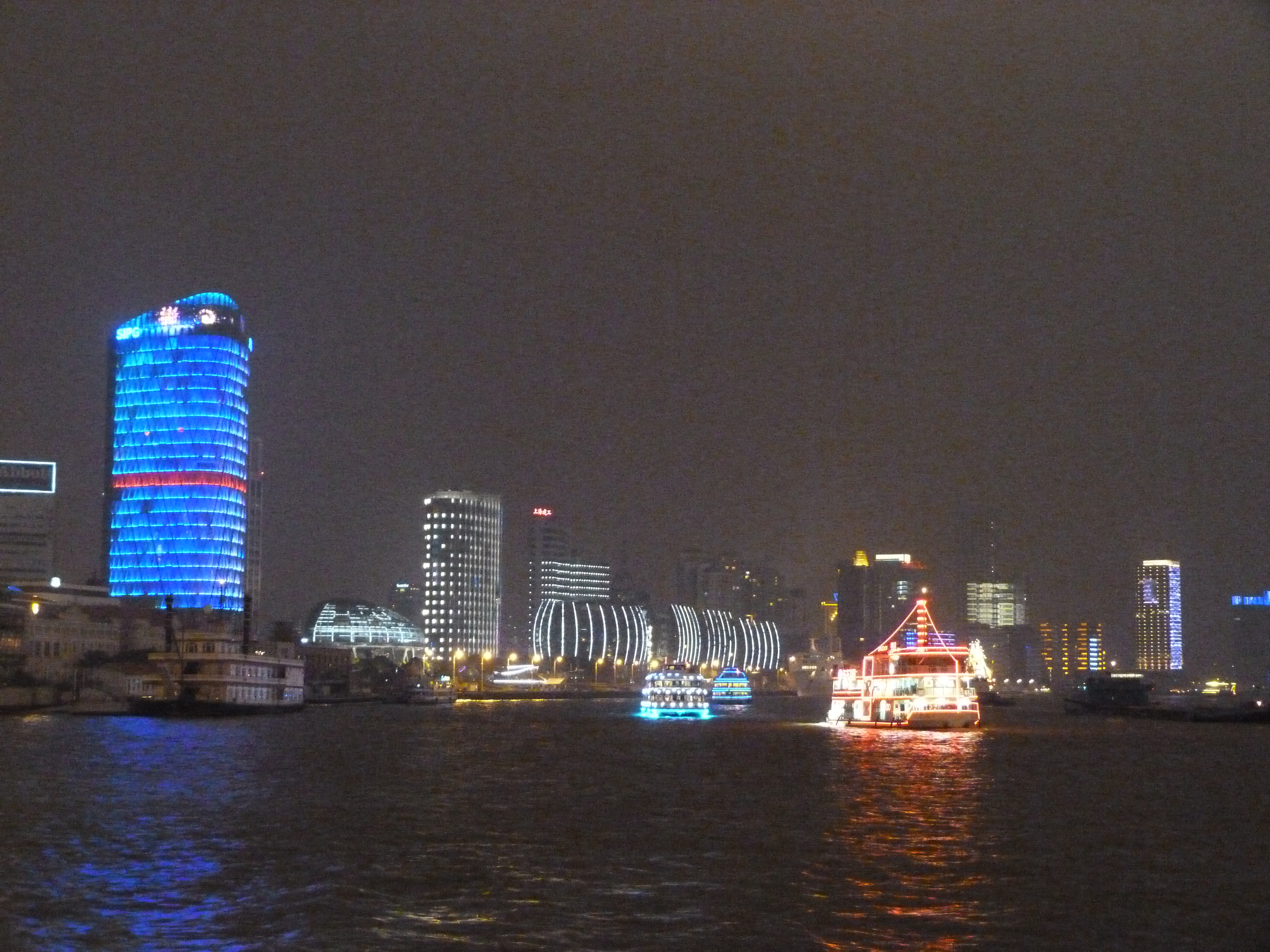
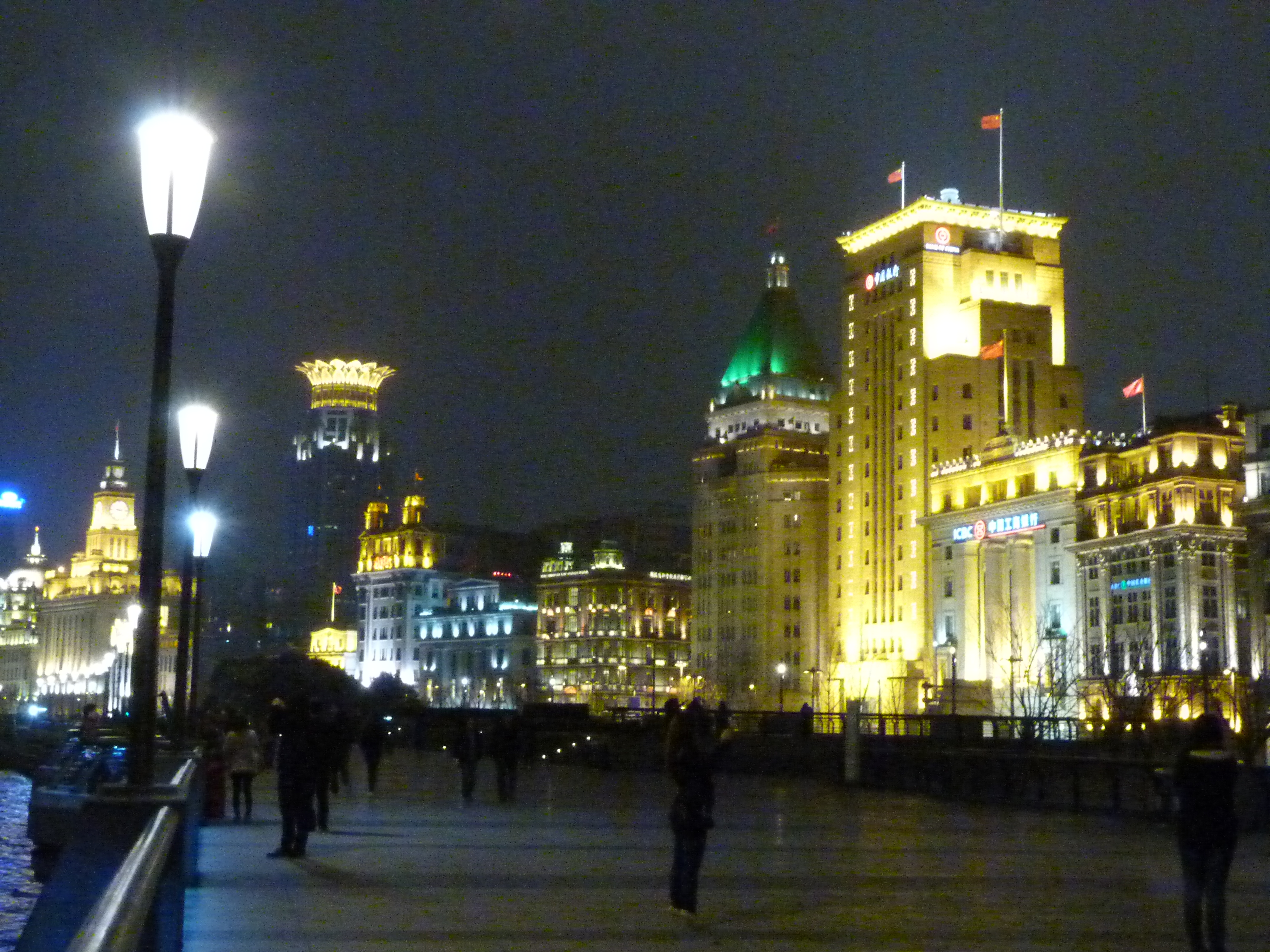
Alright, big cities, all is forgiven. You don’t get shows like that any old where. In fact it has to be here in Shanghai at a dedicated theatre. Plus, this city may look gloomy by day, but it looks gorgeous by night. I’ll be back. Right now I need to pack though.

P1030523

P1030528

P1030531

Last Day

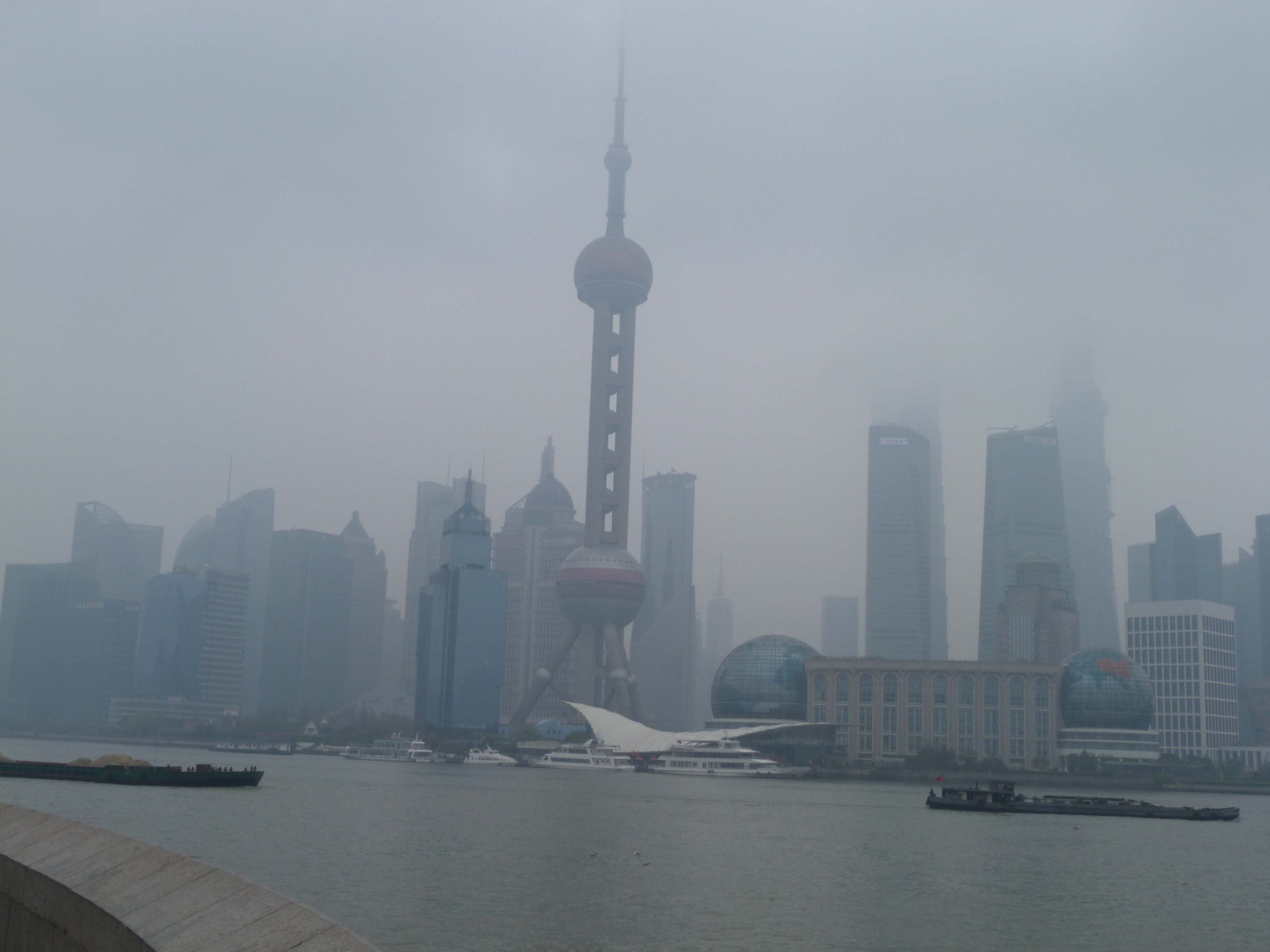
Shanghai gloom

Shanghai gloom

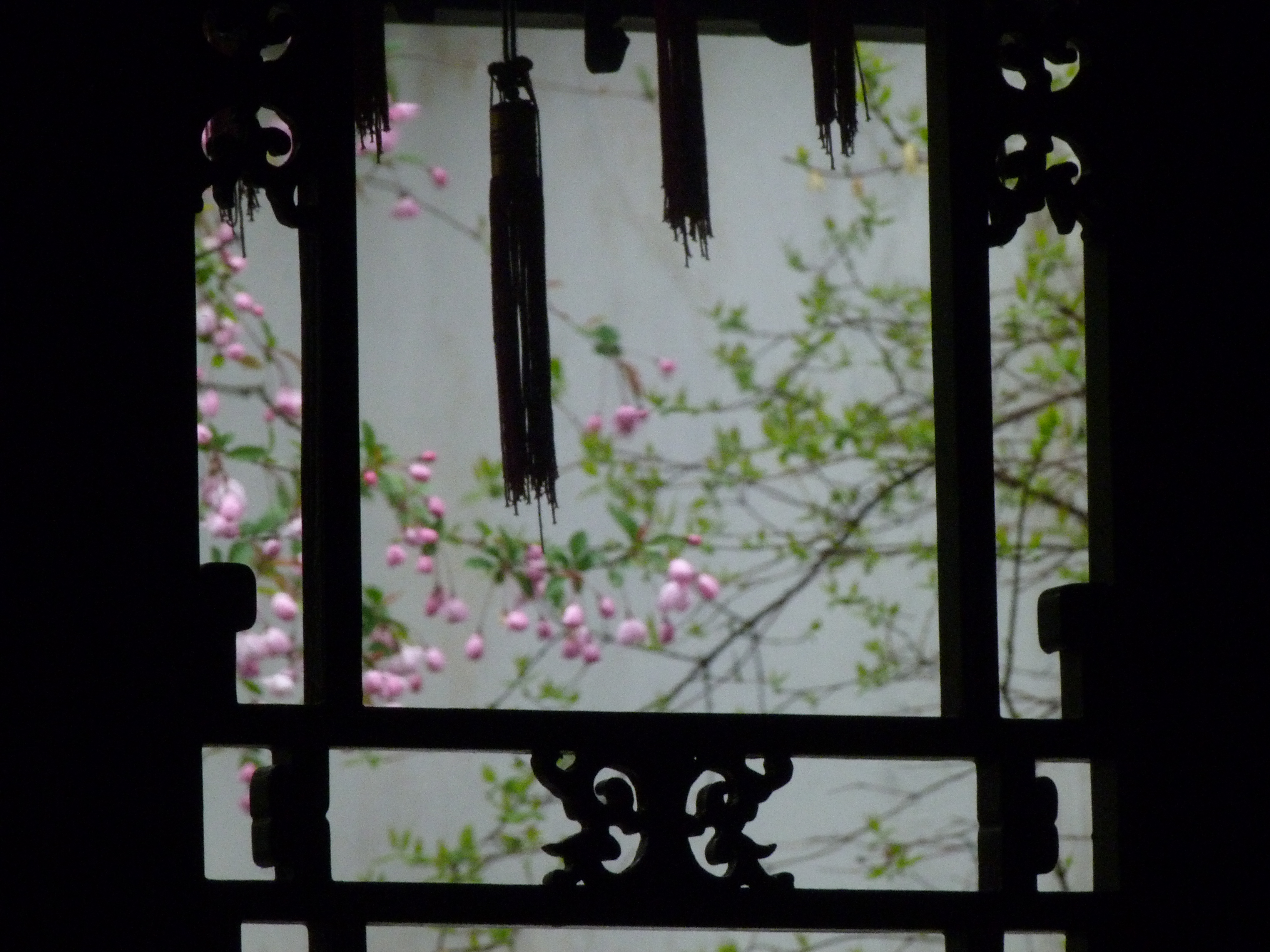
This morning dawned cold and wet, with much of Shanghai barely visible in the gloom. It was milking time at the cash cow farm and I was taken to a series of ‘historic attractions’ which rapidly dropped their pretence and tried to squeeze the last of my RMB out of me. I did buy some silk – it is one of the leading manufactures here, but resisted the jade, the pearls, the tea, the knick-knacks, the assortment of unrecognisable foodstuffs and the rest. The highlight was the Yu garden, a pleasure garden built in the centre of the city between 150 and 400 years ago. It was a delightful oasis, even in the pouring rain.

Yu Garden

Yu Garden

Cherry blossom

Cherry blossom

This afternoon’s treat was a trip to the ‘Venice of the East’, Zhujiajiao.

Zhujiajiao canal

Zhujiajiao canal

We had a cruise on the canals for a few minutes and then a walk through streets of old houses, entirely lined with taterias.

Beida Street

Beida Street

It would have been more charming on a sunny day and without the interminable traffic jam on the way back to town. I am really off big cities, their advantages don’t quite overcome the costs. No matter, for my grand finale I am going to see a Chinese acrobatic show.

Shanghai

A travelling day today, getting to Chongqing airport took an hour, then the flight was delayed, it took 2 hours to fly to Shanghai, an age waiting for luggage and then an hour into the city centre through the sprawling suburbs, spreading like algae on the rich nutrients of the Chinese economy. The appalling smog must have made landing the aircraft tricky and my nose has gradually withdrawn its services since I arrived. My guide tells me it’s the sandstorms from Mongolia that cause the problem. Oink, flap.

A visit to another Buddhist temple was made into a highlight by the white jade statue of a sitting Buddha. Carved from a single stone in Burma, this magnificent artwork had a glowing serenity to it, a sentience of its own (no photos allowed – see http://www.yangtzeriver.org/yzgallery/shanghai-pictures/jade-buddha-temple/ for picture – scroll through slideshow till you get to sitting Buddha). I could have stayed for hours but we had to leave as it was closing time.

Jade Buddha temple

Jade Buddha temple

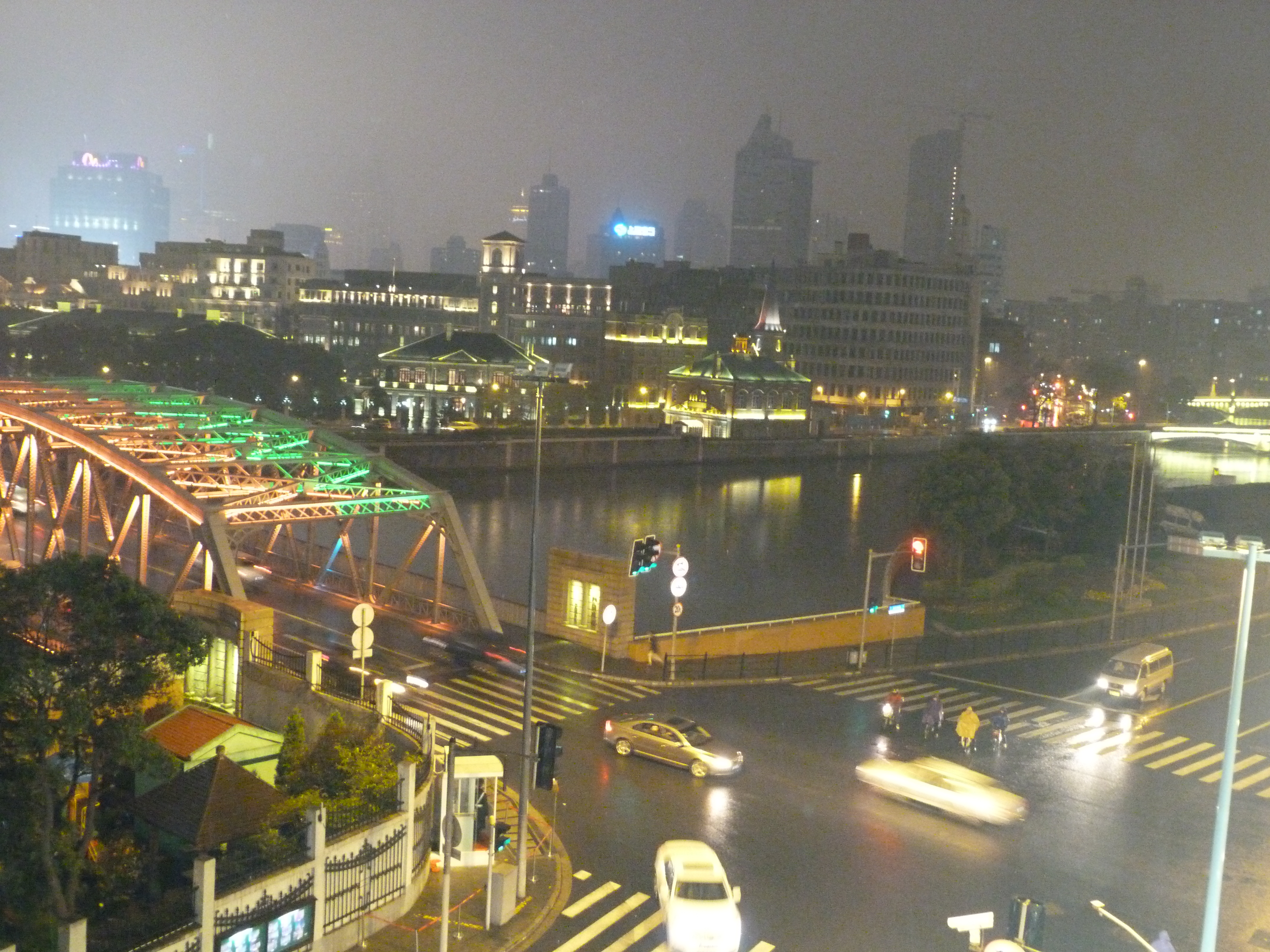
On to the Nanjing Road – Shanghai’s Oxford Street. It is pedestrianised, but don’t let that fool you. Just as zebra crossings in China serve only to lure the unwary, so the Nanjing Road is crossed by several trafficked roads, whose drivers think the pedestrians are there for sport. Eventually I was allowed to dive into the sanctuary of the Astor House hotel, a Victorian building right by the river in the centre of the old part of town. Previous guests include Bertrand Russell, Albert Einstein and Charlie Chaplin – and now me! The hotel maintains a certain hauteur and, though she is a little aged, she straightens her back, keeps her make-up on, juts her chin and ignores the young upstarts across the river.

View from my room at Astor House Hotel

View from my room at Astor House Hotel

Chongqing

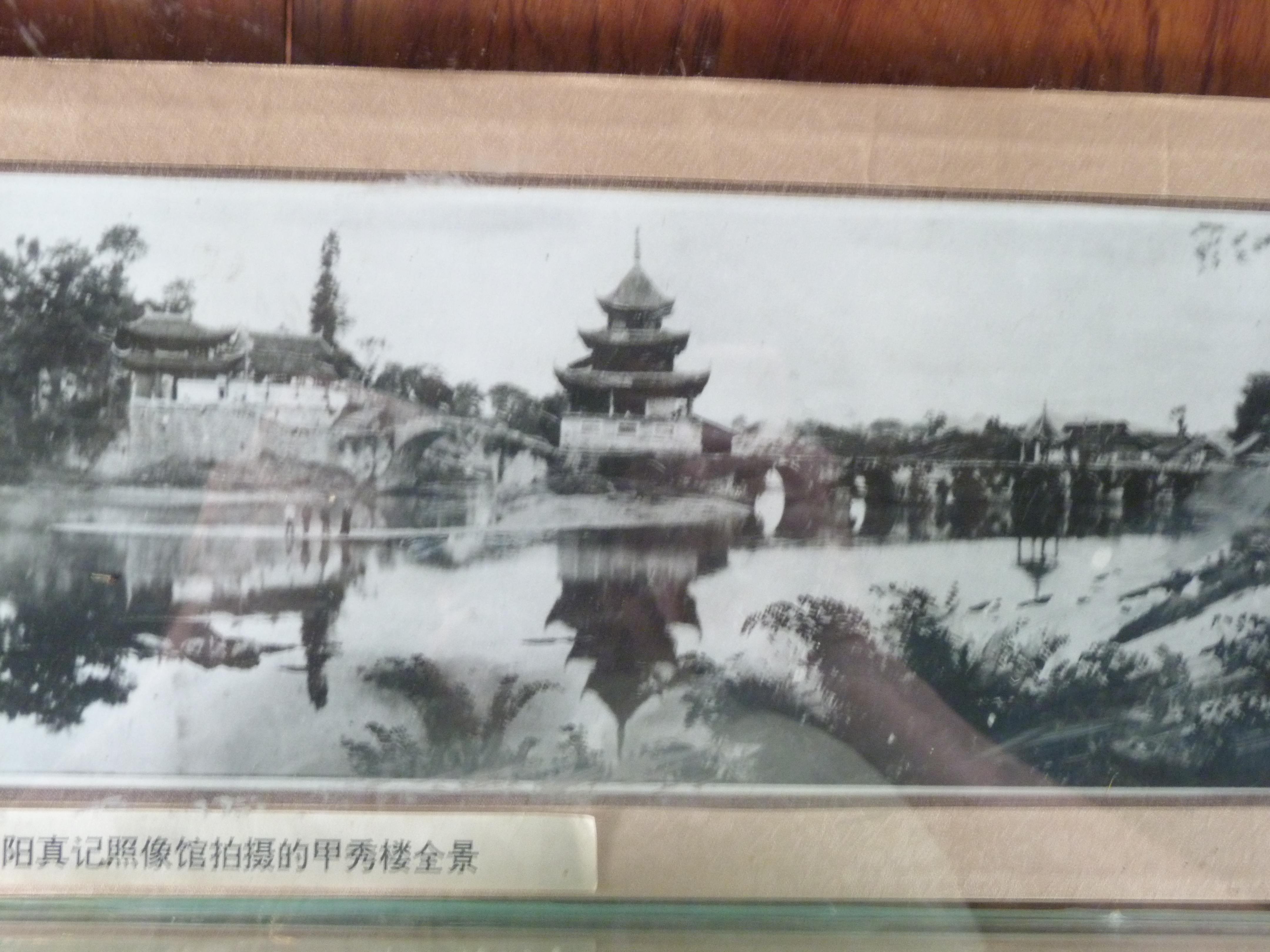
Before leaving Guiyang, we visited the Number One Scholar Pavilion, on an island in the river and linked to a Buddhist temple on the far bank. This is pretty much all that’s left of the old city. A photo from the 1930s and from today shows the march of the tower block. I’m sorry to leave this province and Guiyang – there is much to explore and I’ve enjoyed this city more than any other in China, so far.

Pavilion in 1930s

Pavilion in 1930s

Pavilion today

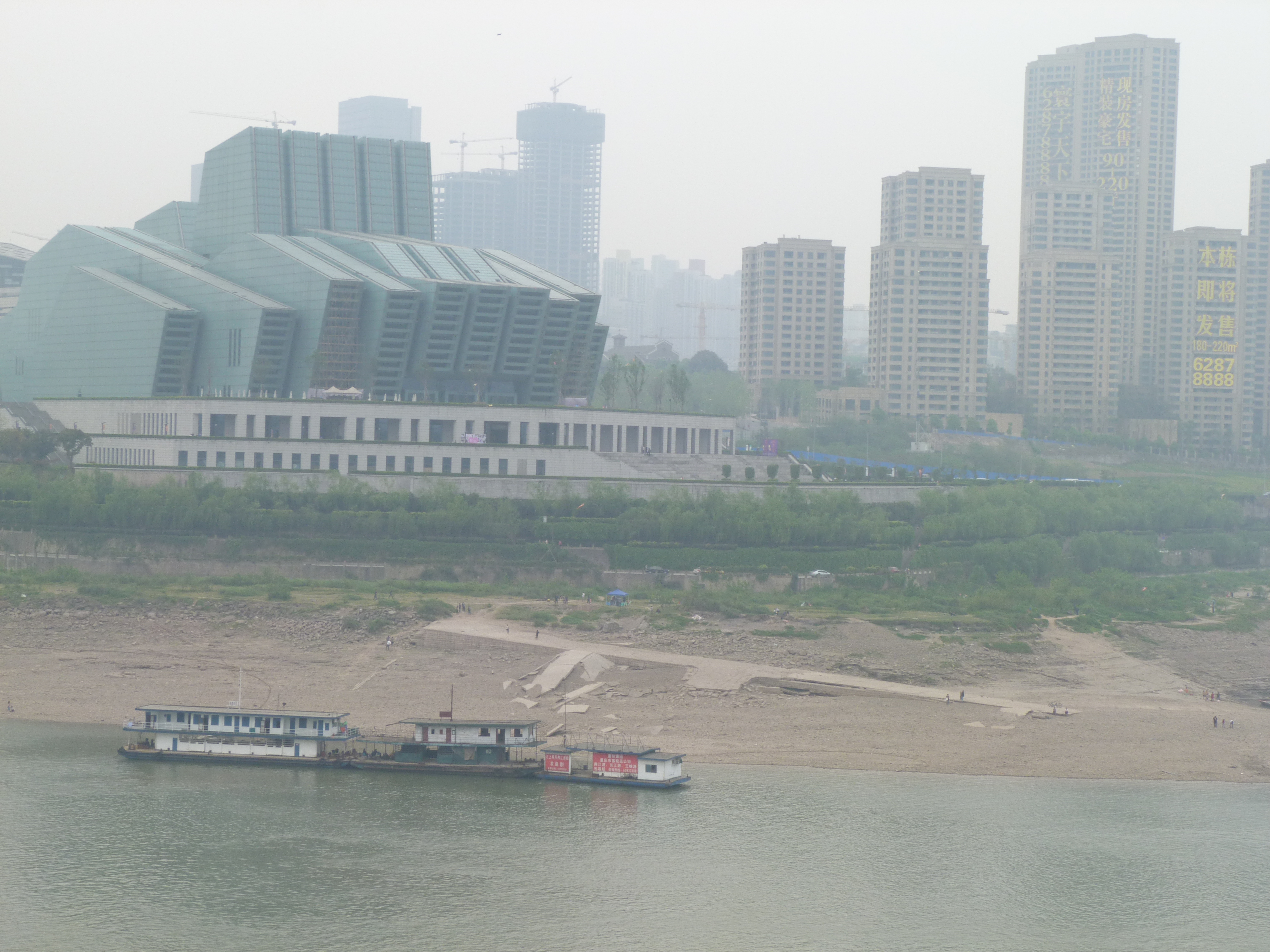
Chongqing has special status as an area for economic development. It is now home to over 30 million people and is a mess of concrete flyovers, sullen ranks of tower blocks and choking traffic. Depressingly ugly. Even the opera house is ugly. I think they may have had Sydney opera house in mind but something terrible happened in translation.

P1030476

The opera house is the green building on the left

I visited the former residence of General Stilwell, the American commander here in WW2. I don’t know if he met Dad but they probably went to the same parties. It was good to see his office and meeting rooms, intact with furniture and equipment of the period. There was a photo of Generalissimo and Madame Chiang Kai Shek (Leader of the Nationalist Party) whom Dad met on a couple of occasions. He tells of a British diplomatic mission in November 1942: “Madame speaks perfect English; her speech of welcome on behalf of the women of China was a masterpiece; not a word wrong and beautifully delivered. It was painful to listen to the halting and rather tactless utterances our representatives made in reply”.

Chiang Kai Shek, Madame, Gen. Stilwell

Chiang Kai Shek, Madame, Gen. Stilwell

Chongqing was comprehensively bombed by the Japanese from 1941-44 and nearly 12,000 people died. Details from a painting in the museum show the nightmare it must have been. Dad describes the effect: “At one time or another most of the city has been bombed flat. When it has been rebuilt they have taken the opportunity to build fine wide streets but, having no cement or tar available, you can imagine how disgustingly slimy and muddy they become in wet weather. Though the main streets are kept clear of refuse and human ordure, the paths and alleyways are not. Mothers bring their children out of the house and hold them over the gutters when they wish to relieve any and all of the calls of nature. Kitchen refuse is just thrown on the nearest heap of rubble. The city swarms with rats of a portliness that has to be seen to be believed”.

Wartime Chongqing painting

Wartime Chongqing painting

I was also taken to the ‘old town’ which dates back 300 years and is now a shopping opportunity. I’m glad I’m not staying too long. Chongqing means ‘double celebration’ but I think that spirit must have been killed in the bombing. Even in the ‘40s Dad says that Chongqing was regarded as a terrible place, yet he is positive about it: “It is true that the climate is foul, prices astronomically high, the amenities of civilised life few and facilities for recreation almost non-existent; but it has its compensations”.

Roof of Qing dynasty building

Roof of Qing dynasty building

News just in: a large gin and tonic was murdered this evening! At last. I thought I’d follow it up with dinner but the buffet restaurant was offering chicken’s feet, pig trotters and fly blown sushi, so I had the complimentary packet of dried peas in my room instead. There’s limits you know.

Guiyang

The city is the capital of Guizhou province. Until recently it was the poorest province in China, poorer even than Tibet. Central government decided that development was needed and has taken a 3 pronged approach. Tourism, mainly domestic but hopefully international, is one prong, the discovery of epic quantities of coal and phosphorus is another and, finally, fiscal incentives to investors are sweetening the deal. They say the national bird of China is the construction crane! As we drove out of the city it was evident that there is a massive boom going on here and I swear the city was a little bit bigger by the time we got back this evening.

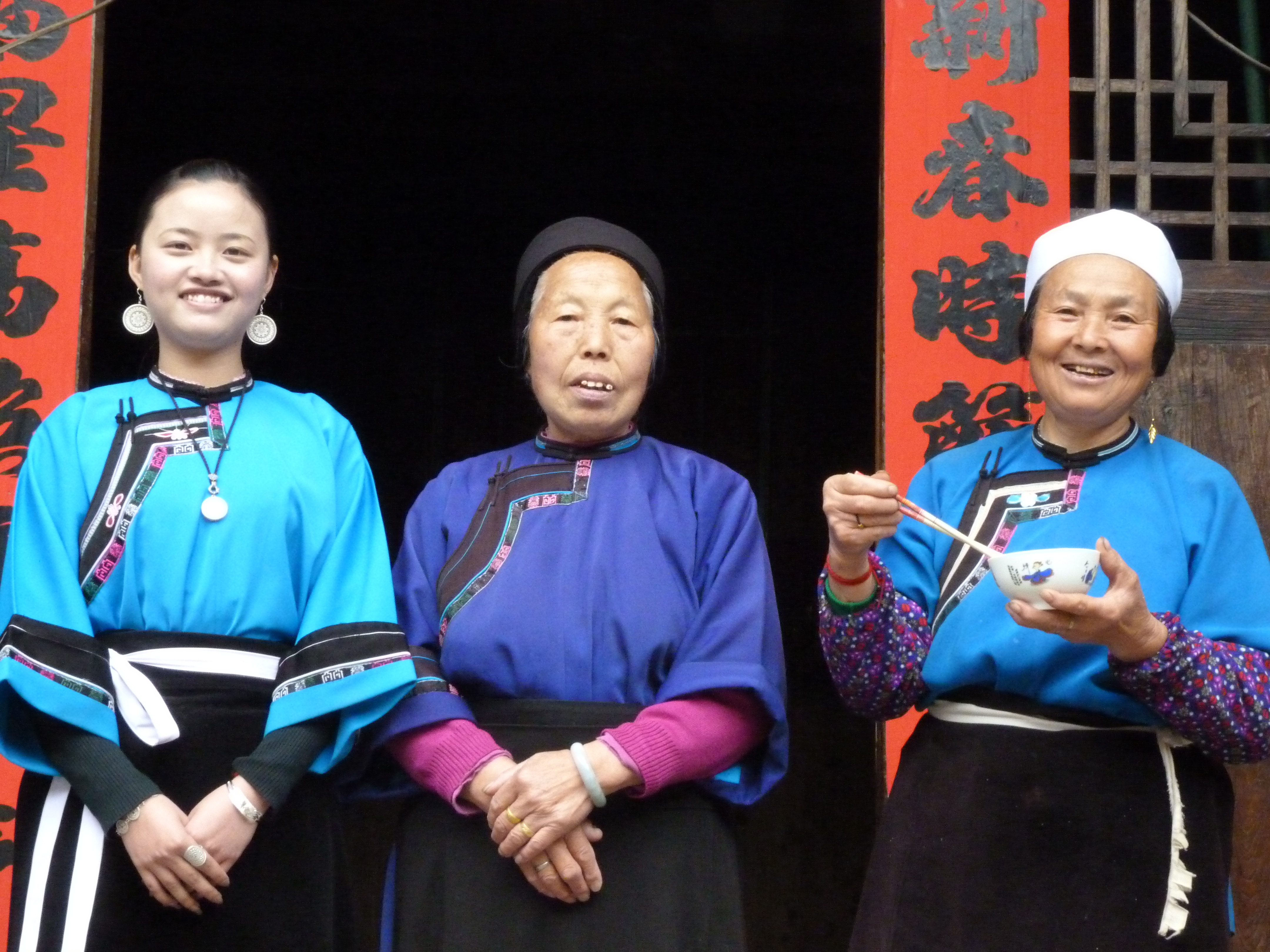
Meanwhile out in rural China we visited Tianlong Tunpu, an ancient town founded 600 years ago, when 300,000 soldiers of the Ming dynasty were told to stay put after a battle and bring their families with them. Today it is occupied by one of the minorities, the Miao people. The lifestage of the women is easy to identify – young women wear no headband and have a full head of hair. When a woman marries she wears a white band and plucks the hair from her forehead, when she becomes a grandmother she wears a black headband.

Miao Ladies

Miao Ladies

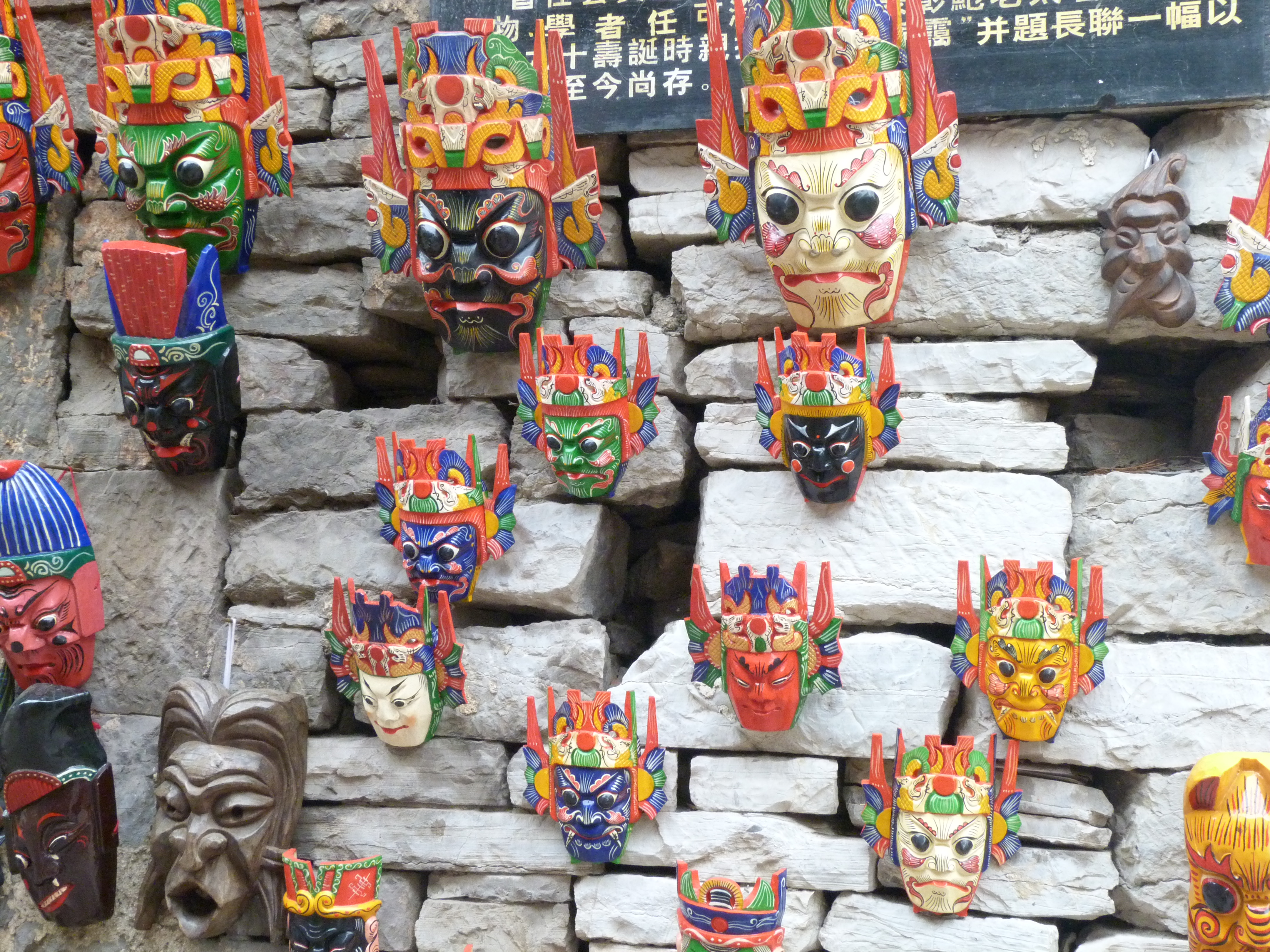
The Miao are famous for their handicrafts (I bought a pretty silver pendant) but also for their Dixi (pronounced dishy) or ground opera. The idea is that the performers are on a stage lower than the audience and in fact they are performing to the gods above rather than for people. They wear masks on their forehead rather than covering their faces. We watched a short performance, to drum and gong music.

Dixi Masks

Dixi Masks

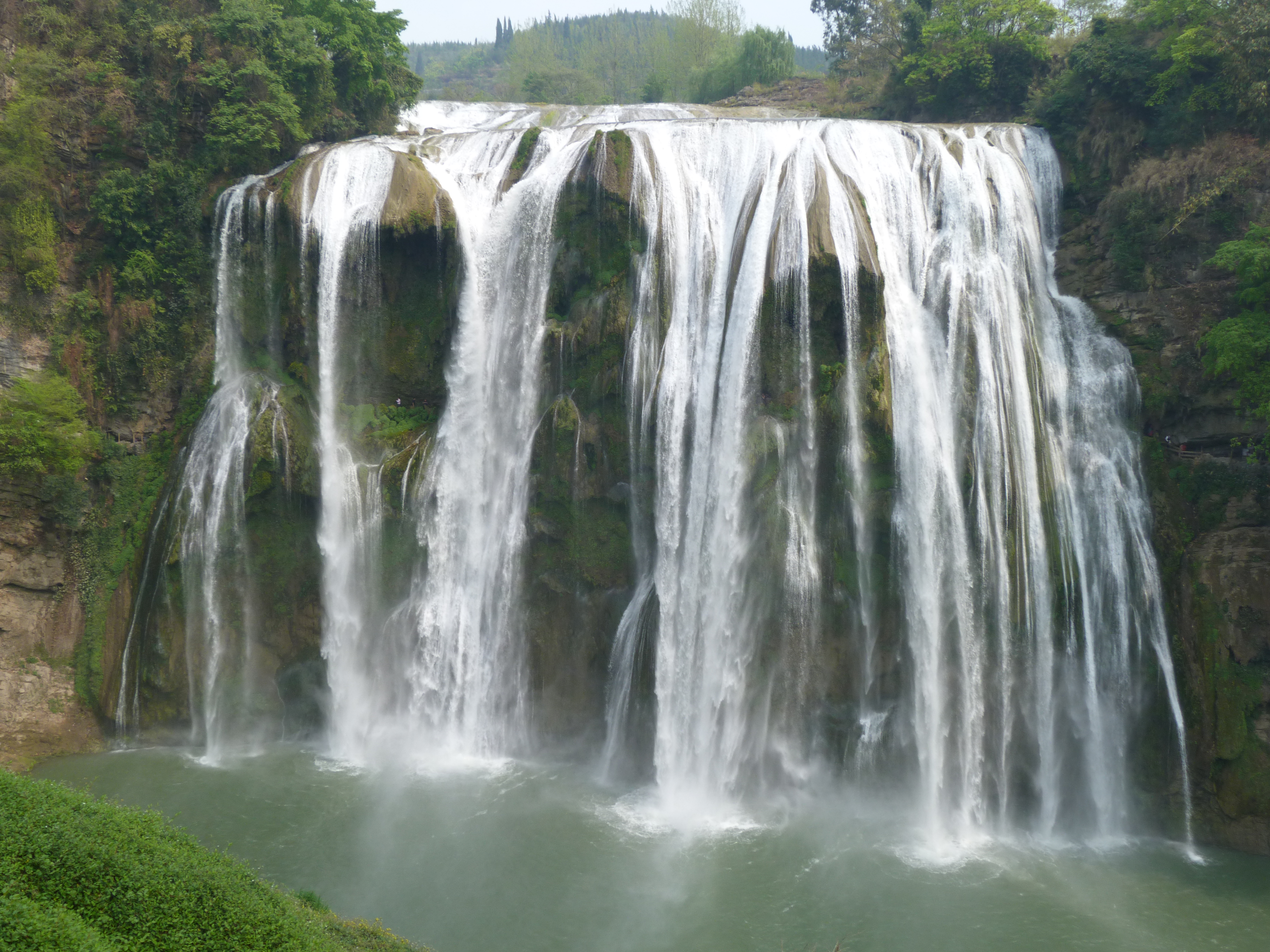
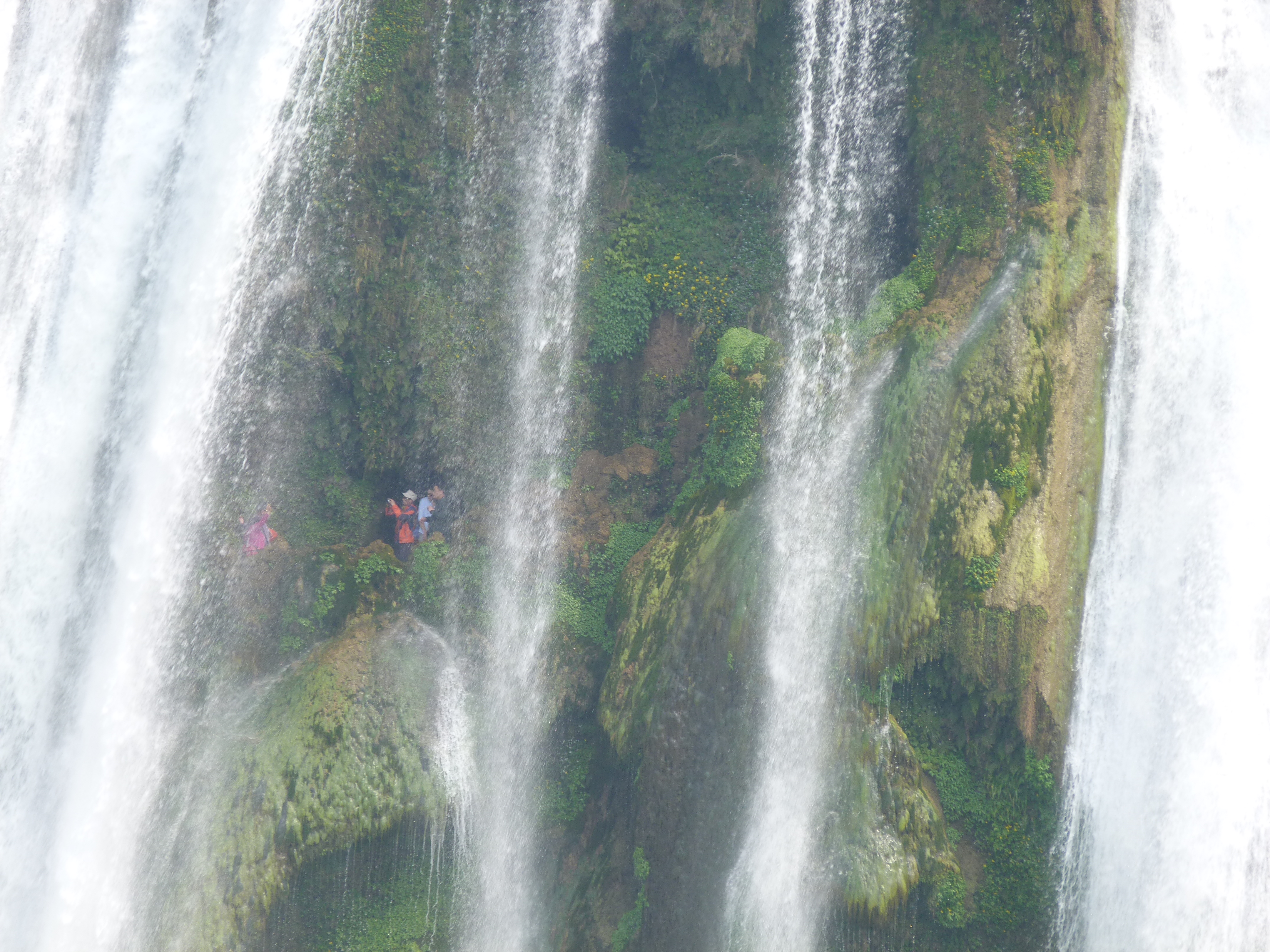
Onward to Asia’s largest waterfall at Huangguoshu. As Ted (my Guizhou guide) said, “if Niagara is a strong man, then Huangguoshu is a slim girl”. It’s fair to say the waterfall is not huge, but it is beautiful and it is rather lovely to walk behind it.

P1030440

P1030439

Tiny figures walking behind the waterfall

It was first discovered several hundred years ago by Xu Xia Ke, the Chinese Marco Polo.

Xu Xia Ke

Xu Xia Ke

The Chinese are justly proud of their scenic jewels and I think many more westerners will come to see them if the PR gets organised. I have been absolutely blown away by everything I’ve seen and experienced and thankyou, Dad, for not going to the touristy places. If I’d stuck to the beaten track I’d have missed some amazing and wonderful things. However, they do like to ‘enhance’ the natural beauty with a fair amount of concrete walkways (why should you change out of heels to look at a waterfall?) and plenty of coloured lights (think Santa’s grotto). It’s another fine contrast – on the one hand the signs don’t say ‘keep off the grass’ they say very gently ‘make the little grass smile by going round about’ and at the same time they think nothing of brutally bulldozing through natural features in the name of tourist convenience.

I’m staying at the Trade-point hotel (located at the Guiyang equivalent of Oxford Circus, yet there is still a nearby cockerel who crows the dawn) which has the comfiest beds in China and the BBC. Bliss! The news here today is that 20 people were killed (and 140 injured) by hailstones in Dongguan, the town between HK and Guangzhou that the train stopped at on the way. Glad I missed that.

Guilin

The city is well designed for defence, armed with both a ring of hills and two rivers that form a sort of moat. Nonetheless, the Japanese bombarded the city in 1944 and occupied it successfully.

At the centre is a tall hill with a pagoda on top.

Central Guilin

Central Guilin

Dad mentions that he visited a cave that was used as an air raid shelter and could hold about 15000 people. He is referring to Seven Star cave, which is another feature of the extraordinary limestone landscape. It continues on and on under the hills and at one point it is on two levels so that, if you stamp your foot, it sounds hollow underfoot. These days the cave is lit up like a Christmas tree.

One small part of Seven Star cave

One small part of Seven Star cave

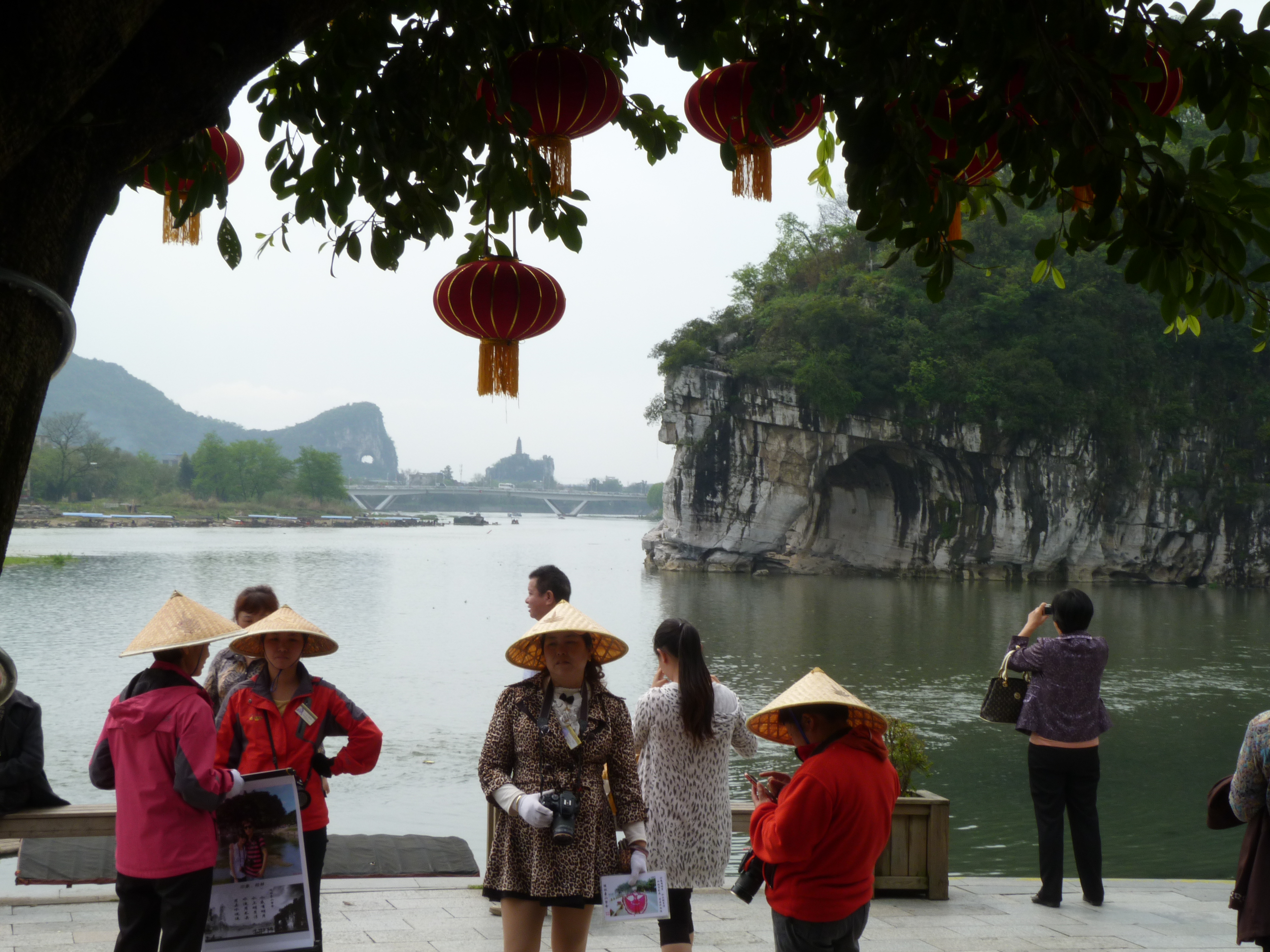
We also visited Elephant Trunk hill, which looks like an elephant dipping its trunk into the river. We had the most delicious lunch at Chunji restaurant  – scallops with chilli and garlic, with beans, aubergine and spring onion, followed by water chestnuts in toffee batter – yum (I think I’m going a bit native)!

Elephant Trunk hill

Elephant Trunk hill

I couldn’t resist the opportunity to see a panda, in the zoo at Guilin. They seem to engage with people and have rather similar body language, particularly when it comes to lounging postures.

P1030384

The flight to Guiyang was delayed and then turned out to be more like a bus, with a 10 minute stop on the way. Turned out that the stop made the journey equivalent to flying from London to Edinburgh via Paris. Didn’t get in till midnight, but Guiyang looks much more modern and sophisticated than I was expecting. It is on a plateau at about 5000ft and is the meeting place for cold winds from Siberia to the west and warm winds from the pacific to the east. The result? Near constant cloud and fog. Super.

Wind & Rain Bridges

Think “Bridges of Madison County” but Chinese style – further into the mountains north of Guilin are remote villages with these iconic bridges. The one at San Jiang (3 rivers) is the oldest and most impressive.

San Jiang Wind & Rain Bridge

San Jiang Wind & Rain Bridge

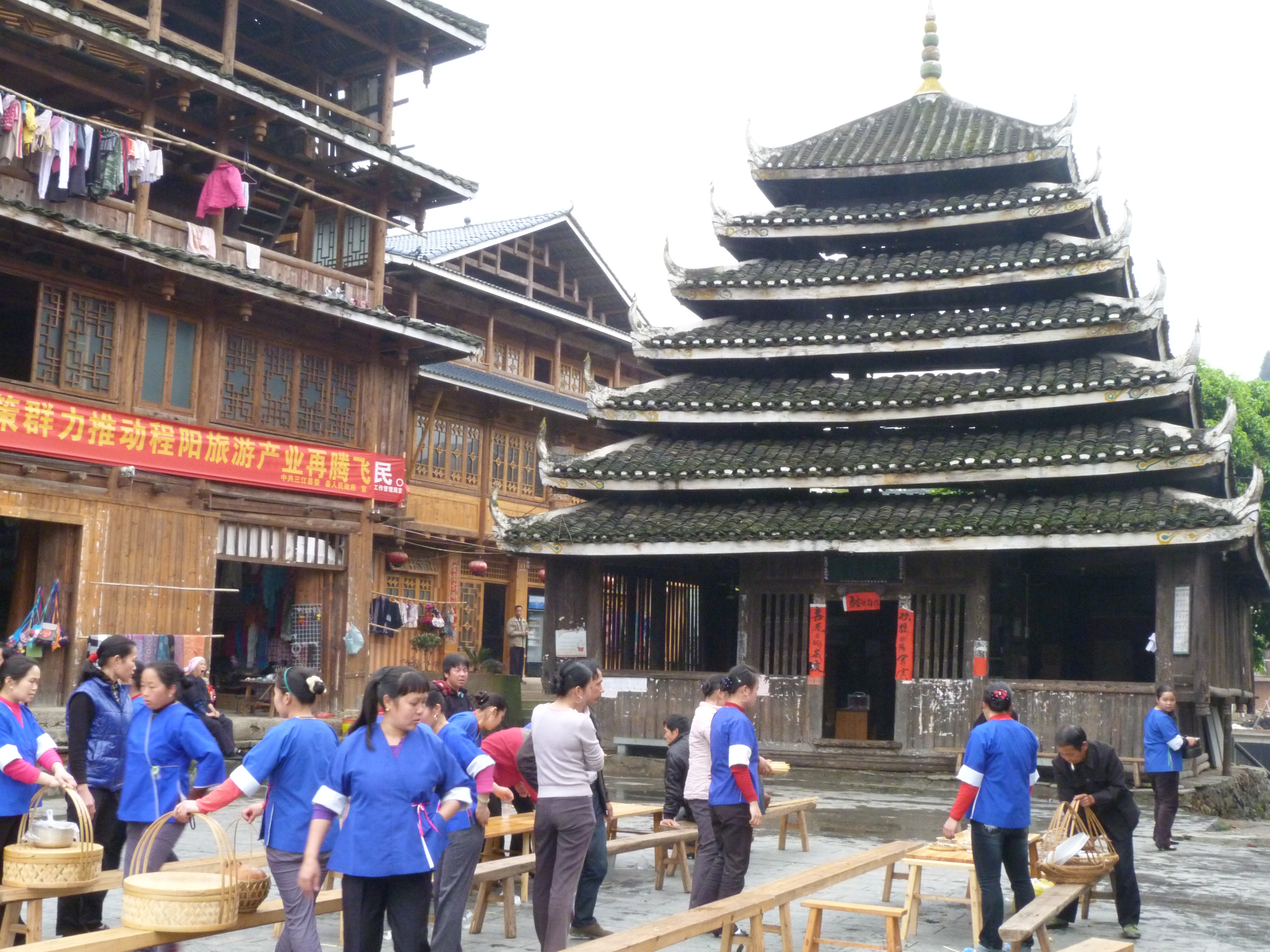
We drove along narrow lanes through tea fields, rape fields and rice paddy, all shoe-horned in between steep mountains, to see another local feature – the drum tower.

Drum tower and local banqueters

Drum tower and local banqueters

These square pagodas are the equivalent of town halls, where the villagers meet to discuss complaints, settle disputes between families and to generally lay down the law. It is considered poor form to have to pass up an issue to State authorities. Nowadays they also contain a TV and the local menfolk sit watching sport, smoking and drinking beer, while the women work. Some things are universal. Sigh. It was a long journey back to Guilin and I can’t recommend being on the road after dark. At least in daylight you can see the hazards.

Dong people

Dong people

The Dong people, who live in the valleys, have some rather strange customs. When they marry, the woman doesn’t sleep with her husband but instead finds a boyfriend. She is expected to get pregnant and have a baby. She is then allowed to sleep with her husband having proved that she is fertile. The first born does not inherit and has no status. I know it’s good to have a trial run and ditch the first attempt – when making pancakes – but it seems pretty tough when applied to a baby.