New Edition

Stranger In My Heart was published by Unbound in 2018. The rights have now reverted to me and I have created a new edition of the book. Unbound ran out of copies and I only have a few original, author signed copies left to offer (see sidebar for details). The new edition is available as an ebook or paperback on Amazon.

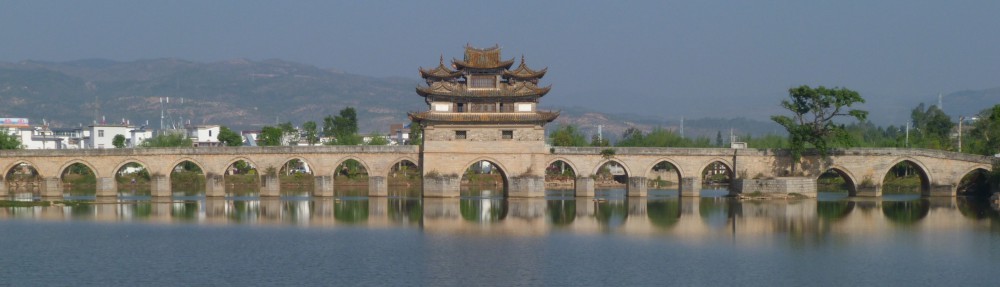
I corrected a few mistakes from the old edition and created a new cover, based on a photograph that I took in Yunnan in 2015. For me it represents the bridge between generations, spanning time and space and connecting the people at each end. The building in the middle is the meeting place, where we can learn about each other and build our relationship. Red is the colour of luck, joy and celebration in Chinese culture, so I wanted to include that in the design.
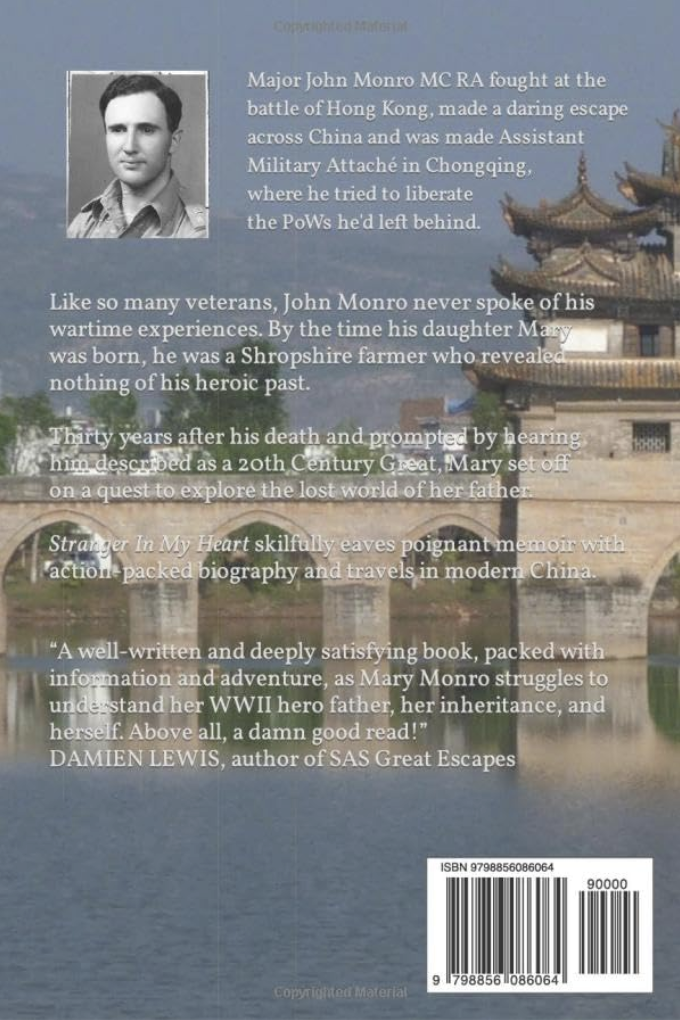
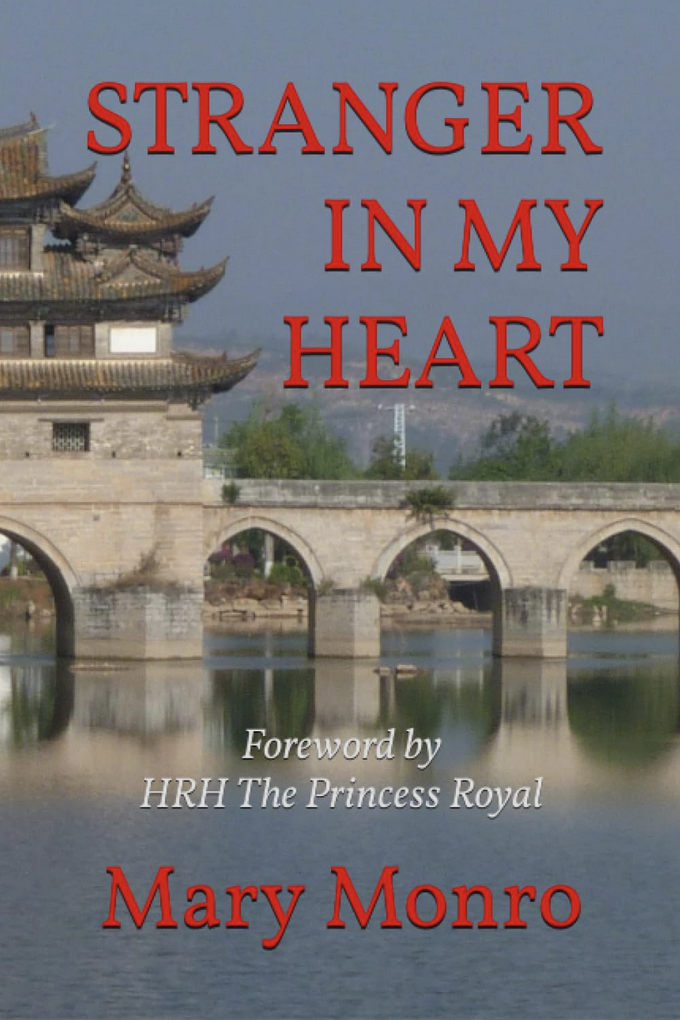
The content is as it was before, but I wanted to ensure that the book remains available, even if distribution is limited to Amazon. I have learned a lot about how to format a document for ebook and paperback! It is quite fiddly and extremely time consuming, but Kindle Direct Publishing (KDP, Amazon’s publishing arm) provides helpful explanations of how to do it all.

In October the Royal British Legion will be sending a newsletter out to all their supporters, in preparation for Remembrance Day. It will include Dad’s story, which is quite an honour. I hope some of the readers will find their way to this website to learn a bit more about Dad. He was a lifelong member of RBL and I think he would be pleased to see his story reach an audience of his peers.

81st Anniversary of the Battle of Hong Kong

On 8th December 2022 it is the 81st anniversary of the Battle of Hong Kong. Let’s just pause for a moment and remember all of those who suffered and died in the battle and in the long years of internment afterwards.

Dad’s diary entries show that right up until the bombing started, there was a sense of denial that the colony could be about to go to war, 6 hours after the attack on Pearl Harbor:

7th December 1941: This morning when I went to the office, I found that the situation had worsened.  I don’t really believe that anyone thinks that it will come to anything.  We have had so many flaps and lived in a state of tension for so long that we have become blasé.  We live only for the day when the rather annoying precautions that interfere with our private amusements are once more considered unnecessary.  This is more serious than most.  The Hong Kong Regiment have been ordered to get their ammunition onto their mainland positions.

About 6:00am on Monday 8th I was woken up, called to the telephone and told that war was imminent with Japan.  By the time I got to H.Q. we were at war.  About 8:00am the first Japanese bombers came over.  They did a lot of damage at the Aerodrome, destroying 7 C.N.A.C. planes, The Clipper, most of the RAF planes and the two Walruses.  They were unopposed.  The volunteer A.A. platoon had drawn no ammunition, I suppose because the day before was a Sunday.  The gunboat supposed to be in the seaplane anchorage was being used for something else.  The Japs made rapid progress down the Taipo Road, and by the evening we were back in Shatin.  H.Q. were gravely disappointed with the Stanley guns.  They have shot too big a line, boasted that they could get almost to Taipo, in actual fact they can only reach about 1500 yards beyond Shatin Station.  We were unable to answer several calls for fire as the targets have been out of range. All the demolitions were successful though we were asked to shoot at the Brothers Point “blow” as the slide had been checked by a retaining wall. Mt. Davis fired five rounds but with what effect we could not tell.

Allied Hong Kong defences were ill prepared and underestimated the enemy’s strength, skill and experience. But Hong Kong’s fall had long been seen as inevitable. In January 1941, PM Winston Churchill had said:

If Japan goes to war there is not the slightest chance of holding Hong Kong or relieving it. It is most unwise to increase the loss we shall suffer there. Instead of increasing the garrison it ought to be reduced. Japan will think twice before declaring war on the British Empire, and whether there are two or six battalions at Hong Kong will make no difference. I wish we had fewer troops there, but to move any would be noticeable and dangerous.

For more first hand accounts of the battle of Hong Kong visit the Gwulo Old Hong Kong Website and to learn how the battle progressed between 8th and 25th December 1941 see the interactive map at Hong Kong Baptist University’s website.

Move Over Dad

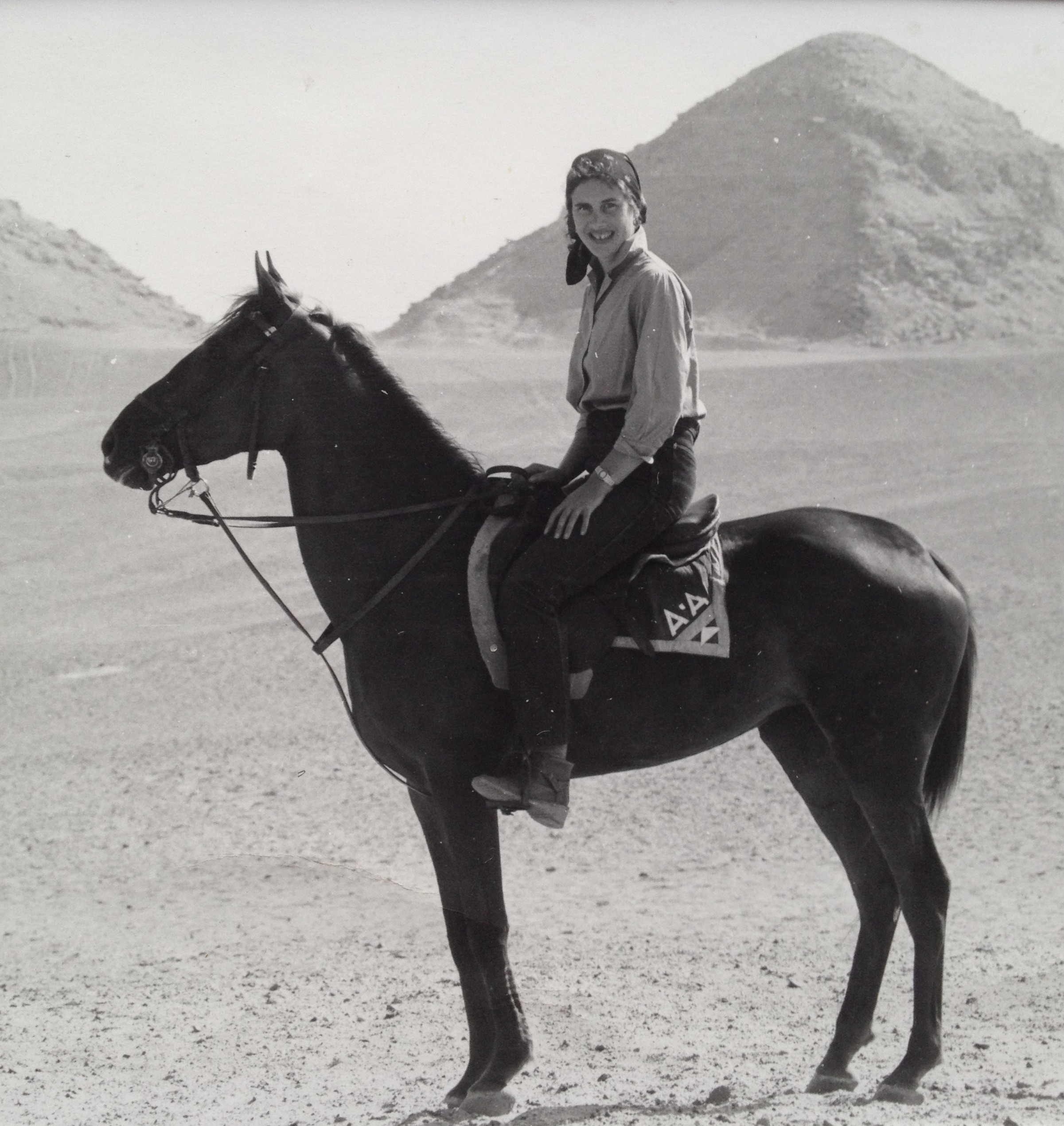
I realise that it is almost Remembrance Day, 11 November, when we commemorate our war dead, but I’d like to remember my sister Kathy on what would have been her 70th birthday, 9 November 2021. Her life was cut short by cancer at the age of 35, so she has now been dead almost as long as she was alive.

Inevitably one remembers the last few years, from the shock of diagnosis, the determined liveliness that followed, before the gradual shedding of her powers that led inexorably towards her parting. She died at home, very early on the morning of 2 January 1987, surrounded by family. She spent much of her illness at home on the farm, running a Christmas tree business and travelling to Hungary with our mother for a last adventure. The house almost became a hotel, with streams of Kathy’s friends visiting her, usually with a challenging range of special dietary requirements that Mum gallantly catered for.

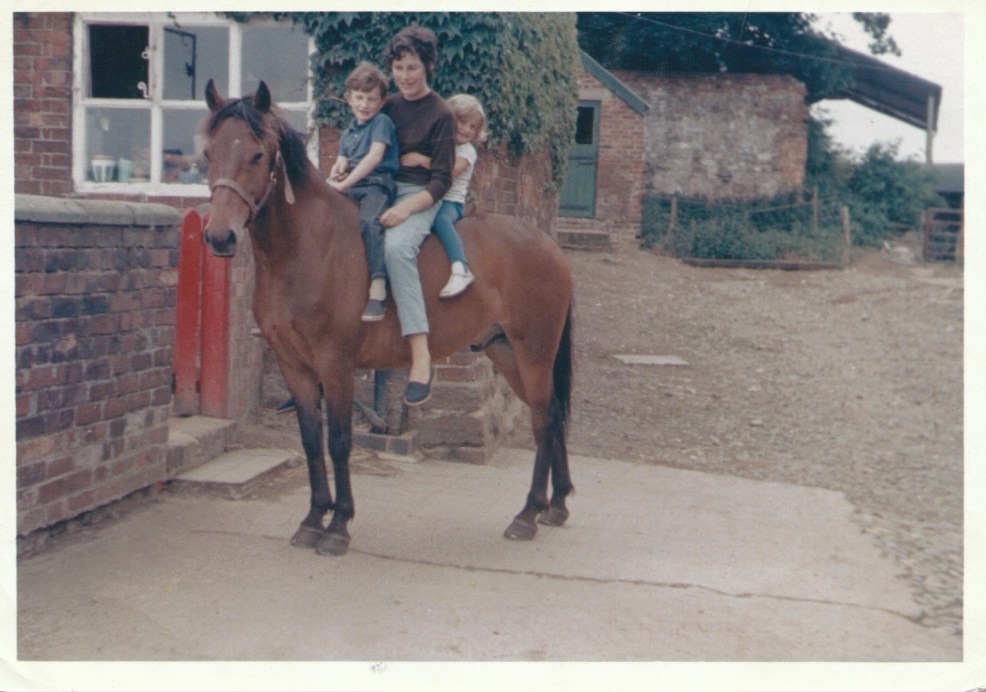
Kathy, centre, with James in front and me behind

We didn’t have an easy relationship. Kathy was feisty and contrary, bright and adventurous and she thought I was the most boring, unimaginative person alive, contentedly plodding along life’s conventional track. It’s true that I had it easy – she was 12 years my senior and shook our parents to the core with her tempestuous and unconventional nature. She blazed a trail that handed me freedoms that she had had to fight for. I was in awe of her and some of her ardent feminism rubbed off on me, along with her outrage at injustice to the vulnerable and dispossessed.

Kathy travelled widely, doing whatever work she could find. She worked in Falkirk as a seed potato inspector and she also lived in Leith for a while in the 1970s. I work at a clinic in Leith – now the swanky port area of Edinburgh but in those days a slum following the decline of its industries (whaling, lead, herring fishing, shipbuilding). Leithers are a proud and independent people, with an international outlook and culture, probably making Kathy feel quite at home. Latterly Kathy lived overseas, in Hong Kong and Egypt, after training as a teacher of English as a foreign language. Egypt and Arabic fascinated her and it was when she was studying Arabic and Islamic Studies at Durham University that she was diagnosed with pancreatic and liver cancer. She completed her degree, gaining a 2.2 in spite of feeling extremely unwell. Her ambition had been to go to Yemen to work with women’s groups there but her illness denied her this opportunity.

Kathy at Giza

She never married or had children and I wonder whether she would have been a perpetual nomad, had she lived. Friends and boyfriends were fiercely loyal to her but she was restless, always had itchy feet. I also wonder if she would have mellowed at all. I sort of hope not – I can picture her campaigning for refugees, or women’s rights, determined to make the world a better place. I’d like to think she’s resting in peace, but that’s not really her style.

Did Allied Strategy Prolong the Suffering of FEPoWs?

The Researching FEPOW History Group (RFHG) blog has published a post written by me about how Allied strategy prolonged the suffering of the Far East PoWs. Dad had what he called a ‘great thought’ about liberating the PoWs he’d left behind in Hong Kong. He teamed up with the US Air Force, who had a much bigger plan to win the war against the Japanese with air power. Retaking Hong Kong was part of their plan and this represented an opportunity to rescue the long suffering PoWs. Sadly, the plan was subverted at the highest level, in a battle of personality and attitude. If it had been properly resourced and supported it might have shortened the war by a year, saving millions of lives, in Europe and the Far East.

The RFHG was due to have a conference this June, at which I was going to discuss this. Sadly, it was a victim of Covid19, along with so many other events. I was looking forward to meeting fellow FEPOW families and hearing about their experiences. I hope there will be other opportunities to meet up and share these hidden histories of the Second World War.

You can still buy a signed copy of Stranger In My Heart in time for Christmas if you’re quick! 2020 has been so strange and sad, I’m sure we will all be glad to put it behind us. Whenever I start to flag with the relentlessness of it all, though, I have only to think of those brave souls who endured the privations of WW2 and I revive a little. Wishing all of you peace and joy at Christmas and looking forward to a Happy New Year.

Stranger

Originally this blog was intended to keep friends and family up to date with my travels in China. It worked far better than sending postcards and it was great to be able to share photographs and videos of my adventures. Now, though, I am going to start blogging about my publishing journey. The book is written but that seems to be a relatively small and simple part of the process – a journey from ‘twinkle in the eye’ to embryological development. I now have to get through the gestation process.

I am anxiously awaiting the return of the manuscript of “Stranger In My Heart” from the editor. I was expecting it last week but nothing has turned up yet. This is like the 12 week scan, when I shall see if there is a healthy heartbeat and the right number of limbs. After that I will have to do a lot of work. Everyone says that you have to ‘kill your darlings’ – allow cuts and changes even to your favourite passages – in order for the book to work well. I will try not to be too defensive but I hope that there isn’t a total rewrite to do as I am rather busy doing other things. I am also looking for people who might write reviews for me. I have contacted some celebrity supporters of the Riding for the Disabled Association (I’m donating some of the book proceeds to the RDA) and I have a well known author or two up my sleeve, but any suggestions gratefully received.

I am going to the Greek Islands in a couple of days for a holiday – it has been a tough year for me, healthwise, and I am hoping to come home with renewed vigour. I may or may not post while I’m away, depending on WiFi availability, inclination and newsworthy news!

On the road to Shangri-La

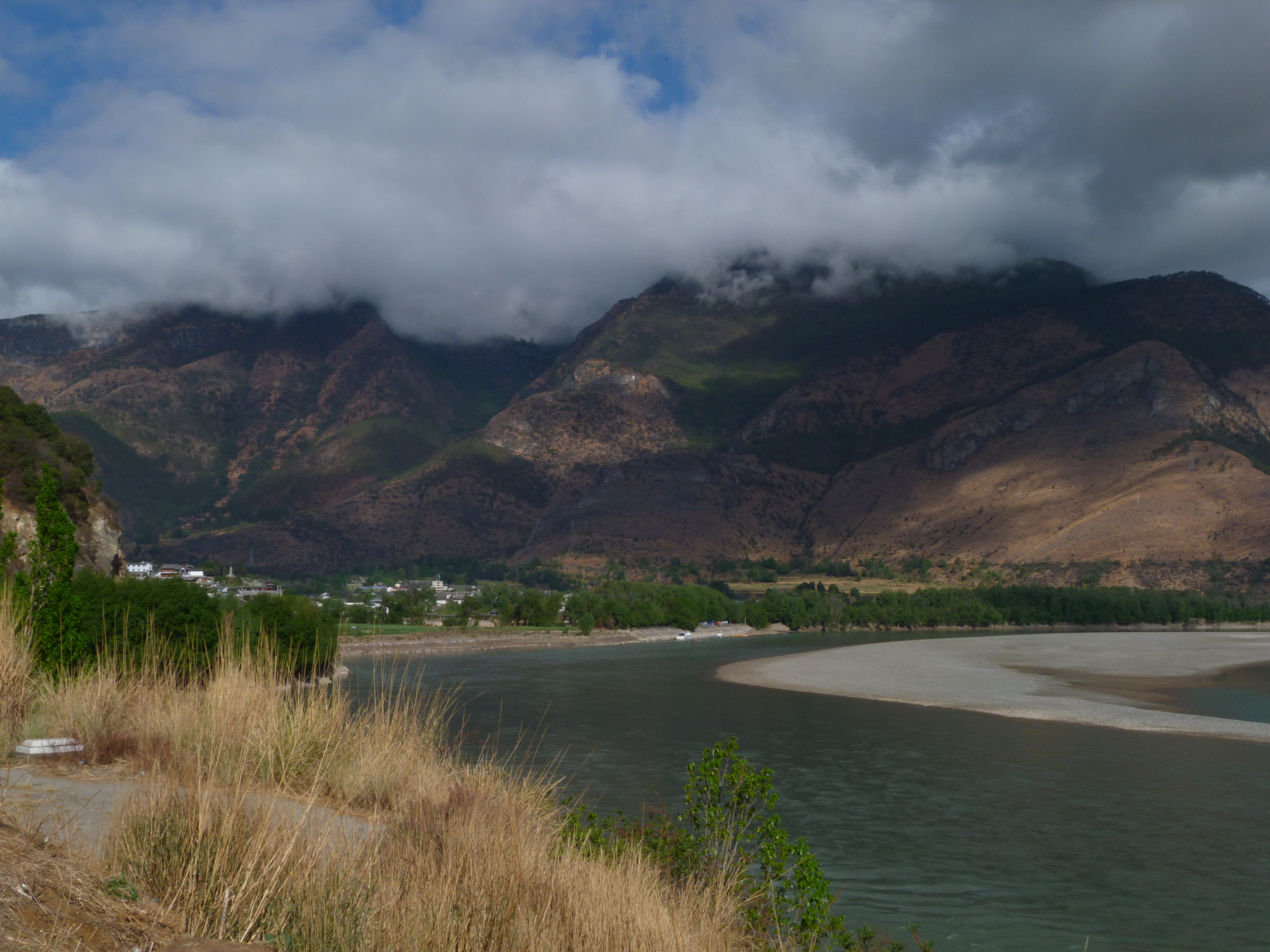
Today we headed north towards the snowy peaks of the Himalayas. First stop was the ‘first bend of the Yangtze River’. Three rivers rise in the north and head south through the mountains. Two of them continue south and join the Mekong, emptying in the South China Sea. The Yangtze makes a different choice – at this spot it makes a U-bend that then leads it eastward across China, ultimately reaching the sea at Shanghai. At this season, before the rains, the river looks charming and benign, but in a month or two it will be an iron-red raging torrent. We strolled through the little town next to the bend and snacked on deep fried potatoes with chilli.

P1040606 P1040598 P1040611

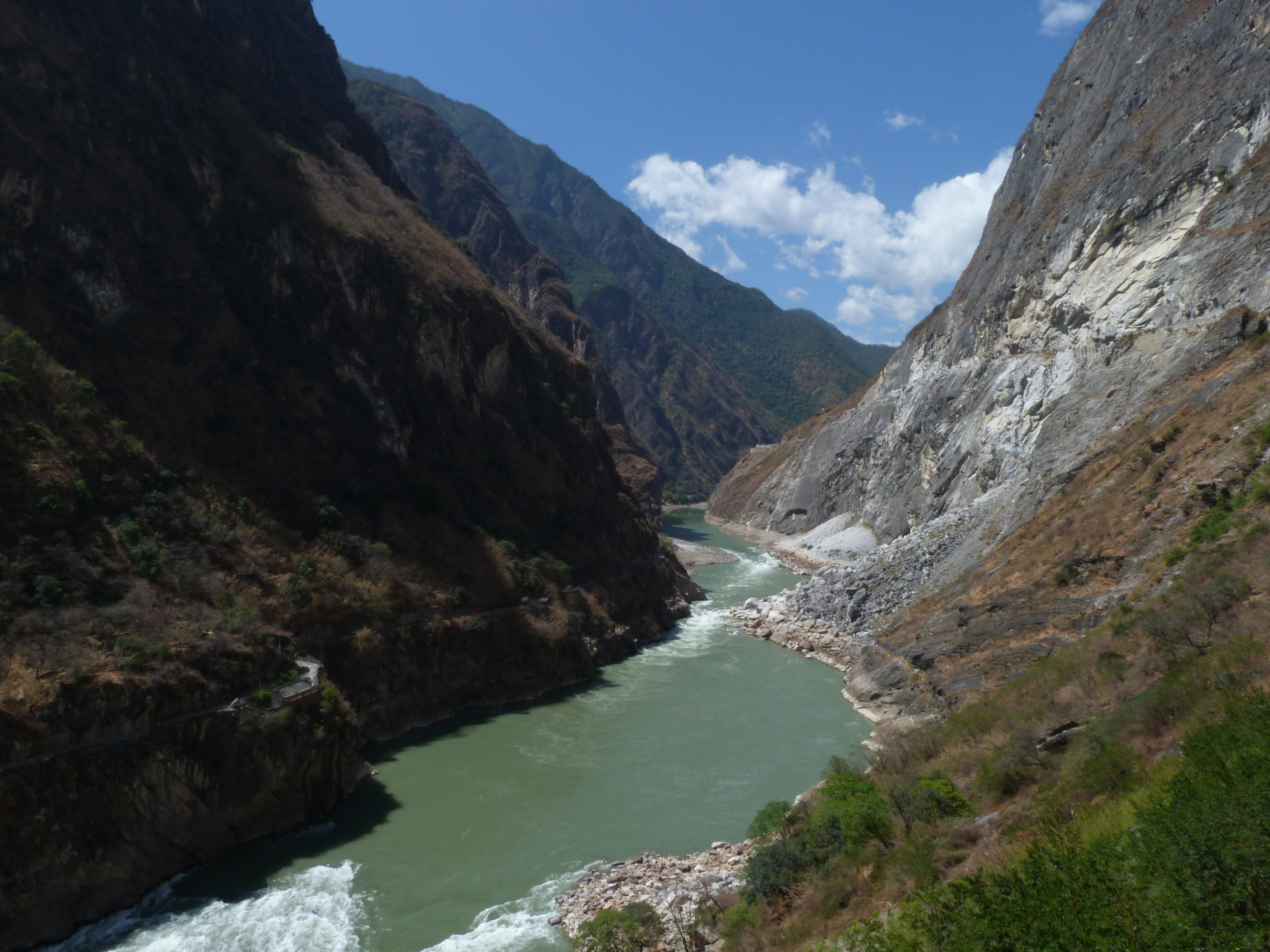
We continued on to Tiger Leaping Gorge (still the upper Yangtze, here known as Jinsha river). I had toyed with the idea of hiking the gorge for a couple of days but all the guidebooks say it is extremely steep and demanding, especially on the knees. Not for me these days. Instead we drove to the inevitable visitor centre, with walkways, viewing platforms and tat shops. Even so it was a considerable descent to reach the river and a stiff climb back up. No matter all the trappings of tourism, it is still stunning. Hydro power is growing massively in China and there was talk of flooding the gorge to create a dam. As well as affecting tourism, this would have displaced about 100,000 Naxi people. In a rare response to public outcry, the dam project has been shelved. However, there are still plans for dams higher up and lower down, so it is not all good news.

P1040614 P1040634 P1040620

We climbed from 2400m at Lijiang to 3200m at Shangri-La, via spectacular mountain scenery. We are close to Tibet here and the flavour of the town is very much Tibetan rather than Chinese. Goats gave way to yaks, pagoda style roofs disappeared and traditional Tibetan houses started to appear, signs started to be in Tibetan script as well as Chinese characters and prayer flags were flying everywhere. It’s also much colder here, but still good weather. There was a major fire in Shangri-La last year that destroyed about 400 houses in the old town. I’m not sure how much that will affect the look of the place.

P1040635