Remembrance Day 2025

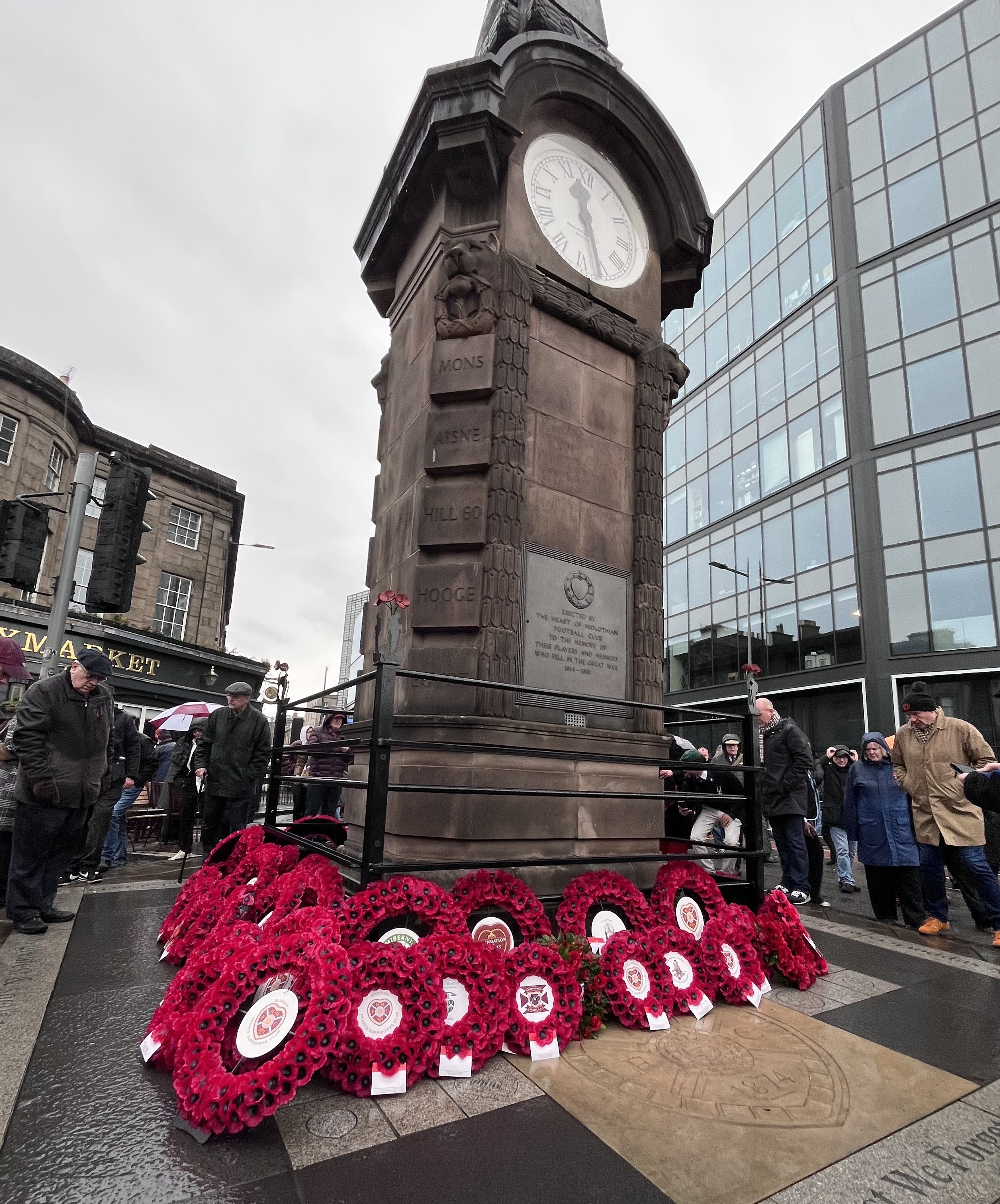
I was fortunate to be invited to attend a Remembrance Day service by the Depute Provost of Edinburgh, Councillor Lezley Marion Cameron, at the Hearts’ Memorial Clock. The wet conditions didn’t interfere with a beautiful service, led by the chaplain of Hearts Football Club. He reminded us that, in the First World War, many members of the team signed up to fight in the war, sacrificing their chances of winning the championship in 1914 and several of them ultimately sacrificing their lives. A piper played as representatives of numerous organisations laid wreaths around the clock, remembering Edinburgh lives lost in war.

In this 80th year after the end of the Second World War, I want to remember not just British forces but also our allies in the Far East war, China. Today when we think of China we think of:

  • Chinese students at our universities: 167,000 in 2023/24 came from China and Hong Kong (Higher Education Statistics Agency), a large increase since 2014/15 and second only to India in terms of overseas students
  • China (including Hong Kong) is the UK’s third largest trading partner for goods and services after the US (£310.4 billion) and Germany (£144.7 billion), with total trade amounting to £125.2 billion in the year ending Q2 2025 (China Britain Business Council)
  • Chinese-owned firms across services, manufacturing and energy employed over 57,000 people in the UK and generated £98.7 billion in revenue in 2024, while British exports to China supported an estimated 370,800 jobs in the UK in 2020 (CBBC).
  • Almost 650,000 Chinese tourists visited the UK in 2024 (CBBC) while relatively few Brits visit China.
  • In the news we tend to only see the political face of China. Imagine how you would feel about the UK if you were a foreigner only seeing a few headlines!

The post-war ascendancy of Japan as an economic and political ally of the West and the disappearance of China behind the Communist “bamboo curtain” has perhaps led us to forget the importance of our relationship with China during the Second World War. It’s estimated that as many as 20 million Chinese lives were lost during the war, many of them through famine and disease, along with appalling atrocities such as the rape of Nanjing.

Remember that Japan’s full scale invasion of China began in 1937, yet they only began to receive Allied support after the Pearl Harbor attack in December 1941. China, with its defending troops (eventually supported by US and British & Commonwealth forces) and challenging terrain, kept approximately half the Japanese military forces engaged throughout the war. If the Allies had faced the full force of Japan’s military might in South East Asia, things might have gone differently.

In Hong Kong, the only reason why Allied prisoners of war (PoWs) received any news or supplies was because of a network of Nationalist and Communist guerrilla forces aiding the efforts of the British Army Aid Group (BAAG). In China, the difficulty of disguise for British and Allied forces meant that only Chinese people could hope to liaise between PoWs and BAAG without Japanese detection. Although many PoWs suffered in Hong Kong, their experience would have been even harder without this connection to the outside world.

We owe a huge debt to the Chinese people and I ask you to remember their resilience and sacrifice, along with your own more personal memories.

Happy 110th Birthday!

It’s Dad’s 110th birthday today. I have been watching the D-Day commemoration and a dramatisation of tape recorded interviews with men who were there (BBC: D-Day the Unheard Tapes). The eye witness testimony was shocking and chilling. I hope, but doubt, that the men being interviewed were given psychological support as they were clearly being re-traumatised by telling their stories. It did remind me of the saying “there’s three sides to every story – yours, mine and the cold hard truth.” These young men, British, American and German, experienced something that no news report on either side ever told.

I was recently sent a newspaper cutting (possibly The Times or The Telegraph) regarding the situation in Hong Kong at 17 December 1941. The article includes the following statements:

Conditions of full siege exist. The colony is in good heart, with plenty of food, arms and ammunition, and the garrison is confident of the outcome.”

The Governor, Sir Mark Young, is stated to have declared that British subjects and those who have sought the protection of the of the Empire can rest assured that there will never be any surrender to the Japanese.

The Tokyo Radio states: Hong Kong is doomed to destruction within three months according to Japanese experts. The announcer claimed that the troops defending the colony were completely cut off, and that the island was faced with starvation, even without any further attacks.

Meanwhile Dad’s eye witness account states, on 16 December 1941:

For the past three days the Japs have been shelling us very heavily indeed.  Mt. Davis have had the worst of it.  One of the A.A guns has been knocked out.  About 11 men were killed when the enemy scored a direct hit on one of the shelters.  A dud shell hit the muzzle of the upper 9.2” gun and it appears to be slightly bent.  The plug gauge bore will no longer pass through it.  A shell (9”) came in through the old canteen along the passage into the plotting room and came to rest under the command exchange.

On 18 December 1941 he says (‘RA East’ refers to the Royal Artillery’s division of Hong Kong Island into 2 parts – East and West. A ‘3.7 How’ is a 3.7″ Howitzer gun, designed for use in mountainous terrain, that could be dismantled for transport. First introduced in WW1) :

Ted Hunt has been doing very well at R.A. East.  He has got a 3.7 How up on Sai Wan Redoubt to try and deal with the enemy guns and troops on Devil’s Peak.  Sai Wan has had the hell of a pasting today.  The A.P.C. oil tanks at North Point have been hit and are now in flames.  An enormous cloud of black smoke darkens the whole atmosphere (people go about with a worried, scared look on their faces).  It reminds me of pictures I have seen of the last day at the end of the world.

It was only a week later that the colony surrendered to the Japanese.

Many thanks to Nick Trevor (mum’s godson) for sending me the cutting.

Stranger in National News

Stranger In My Heart featured in the UK national press last week, with articles in the Daily Mail, The Mirror and The Sun. I’m guessing they think the target audience for the book is elderly as the piece appeared next to ads for hearing aids and Stay Dry Pants! The coverage seems to have caused an increase in sales and the book has now gone for its second print run.

I have just received a draft of the photos that will appear in the Society pages of Bath Life’s next issue. I’ll add a link once it actually appears. I will be doing a radio interview next week for China Radio International’s Ink & Quill show. They have sent me lots of searching questions to ponder, so it should be an interesting listen. The tour operator who guided me round China, Odynovo Tours, is also featuring a story about me and Stranger In My Heart in their next newsletter.

Um, so, in other news…a TV production company in LA has been in touch about making a series about the book! As far as I can tell I’m not dreaming, but I’m not getting too excited just yet. Watch this space…

Blog Tour Reviews

Review Highlights

SIMH poster

I simply loved it so, so much it was just beautiful. Secret World of a Book Blog

Throughout the book I was always impressed with the care and fine attention to detail. Jaffa Reads Too

Stranger in my heart is a well written and fascinating story…

Her writing drew me in and held me connected to the story throughout… This remarkable little book is one you should read. Books are my Cwtches

A revealing testament to wartime bravery and one’s place within the generations Books Life and Everything

This book has everything you would want from a memoir and packs so much in addition to this. Bibliobeth

If you liked Dadland about Tom Carew’s escapades in World War II then this is another book that will appeal and that fills in the patchwork of personal stories about a war that changed the world. Halfman Halfbook

An easy, gripping read.

This is the first book that Mary has written and I hope she was write more as she has a great style of writing that makes history very interesting. Over the Rainbow Book Blog

Stranger in My Heart is a beautiful book, both personally insightful and rich in historic detail. The Literary Shed

Reviews in Full (click the link to see the original review for each blogger)

The Secret World of a Book Blog

This book is my favourite now of the year. I was overwhelmed by the amount of love and affection put into the writing. Mary picked me up and carried me throughout her journey through China and you follow in her father’s footsteps. I was full of emotion both happy and sad but most of all just felt that he was a true hero and his endeavours should never ever be forgotten. Lieutenant Colonel John Monro’s story should and must be shared. All stories from the war should be shared and we need to learn from them.

Mary’s writing was so passionate but respectful towards the dignity of not only her father, his friends, colleagues, Chinese people and Japanese people. I simply loved it so so much it was just beautiful. I hope Mary does not mind but I have both shared the book and have told pretty much everyone I know that they need to read this book as it has really touched me and I don’t think it’s a story that will ever leave me. Thank you Mary, you should be proud of this amazing book.

As a military wife and with many of my family members having fought in wars, I have certainly learnt a lot and will always share their stories to anyone willing to listen.

Jaffa Reads Too ⭐️⭐️⭐️⭐️⭐️

In order to know where we are going, we need to know where we have come from and in this interesting biography of Lieutenant Colonel John Monro, his daughter, the author, has given us a glimpse into the life of a courageous man who was caught up in the events leading up to, and during, WW2. Lieutenant Colonel Monro was heavily involved in the Battle of Hong Kong in 1941 but was captured by the Japanese and interred as a prisoner of war. In 1942, he made a successful escape, travelling over 1200 miles of hostile country to reach China’s wartime capital at Chongqing.

When the author was growing up her father was a Shropshire farmer and she had no reason to be curious about his wartime exploits. However, as is so often the case, we never really know someone until they are gone from our lives, and following his death, the need to discover more about her father’s past life turned into this fascinating biography. Putting together the missing pieces of Monro’s life meant that some considerable research was needed, and by following in his footsteps and travelling across China, the author has written an intricately detailed portrayal of what made Lieutenant Colonel Monro into the person who was awarded the Military Cross for courage.

I read this biography over the course of several days, reading a chapter here and a chapter there, as the narrative is complex and intricately written, so to do the book justice I found it best to take my time with it, and not rush through it at top speed. Throughout the book I was always impressed with the care and fine attention to detail which gives so much fascinating information about a period in world history of which I knew absolutely nothing.

Researching the life of her father must have been an emotional journey for the author and, to her credit, she has succeeded in doing so in a meaningful and thoughtful way.

Books Are My Cwtches

Stranger in my heart is a well written and fascinating story of a Mary Monro’s journey to discover the mystery of her father’s early life. Colonel John Monro died before she could really get to know him and so this book is as much about her own journey, as it is about the his brave role in the Second World War. Having lost my own father at a young age, I understand the need to fill in the gaps left by the death of a beloved parent and so I instantly felt an emotional connection with her incredible journey to discover her father’s fascinating story. Her writing drew me in and held me connected to the story throughout.
The history element of the book is absorbing and the writer has written it is such a way, you can hear not just her voice and thoughts, but also those of her father. This is done by the insertion of parts of his diaries which make fascinating reading. It is the perfect combination, because it is almost like you’re taking the journey with Mary Monro, as she took it in real life, discovering the man behind the father she thought she knew when he died. As he is revealed to her, he is to us through his words and her provision of back information and feelings.
If you have any interest in history that this remarkable little book is one you should read.

Books, Life and Everything

This is a book which you just know has been written straight from the author’s heart. Mary tells the story of her father, Lieutenant Colonel John Monro and his imprisonment, escape and endurance in the Far East during the Second World War. Mary has pieced together his story from his own writings- his diaries, letters and reports and taken it a stage further by retracing his steps across China. There is so much background detail included, so this biography is best read slowly, so as not to miss anything out.

The most powerful part of the biography is when you hear John’s own accounts and you get a sense of his understatement of the bravery needed. He has respect for the Chinese as human beings and a real sense of his humanity comes through. It is most telling that he did not like to speak of his exploits, particularly with reference to Burma and it reminded me of my own Grandfather who never spoke of his War Service in The Great War at the Battle of Gallipoli.

Mary’s journey into China is interesting in its own right. There is a sense of sorting out one’s place within the family and re-evaluating relationships. She comes to appreciate similarities between herself and her father and it is a very reflective and self-aware account.

In short: A revealing testament to wartime bravery and one’s place within the generations.

Bibliobeth ⭐️⭐️⭐️⭐️

The subject of this memoir, Lieutenant Colonel John Monro was a considerably quiet, private and stoic man and the author of this book, his daughter Mary, knew surprisingly little about his struggles and the danger he faced as a soldier during the Second World War. It is only after he passes away that Mary makes a real effort to dig into his past, reading his diary entries from Hong Kong, marvelling at his escape from a Japanese prisoner of war camp and admiring his bravery as he faced a long trek through China, just to get to a place of safety. Moved by her father’s experiences, Mary takes it upon herself to attempt to carry out the exact same trip as her father, despite many place names in China having changed in the last seventy years. As she walks in her father’s footsteps, Mary feels that she connects with her father in a deeper manner and has such memorable encounters with people and places that can only be described as life-changing.

Stranger In My Heart feels like the reader is given access to a detailed account of the struggles of a very unassuming soldier by means of his diary entries. It was an honour to be a voyeur into John Monro’s life and the incredible journey he made through China, all the while in danger of losing his life. The memoir was all the more touching and authentic for the inclusion of the diaries and for Mary’s own individual trip, many years later. I particularly enjoyed her quiet humour of the author as she described a sign posted at a hotel she stayed at briefly:

“Lecherous acts, prostitution, drugs taking and trafficking, smuggling, gambling, wrestling or any other outlawed activities are strictly forbidden.”

Like Mary, I had to have a little chortle to myself. Wrestling?? This book has everything you would want from a memoir and packs so much in addition to this. As I mentioned, the diary entries are incredibly thorough and so intriguing to read – straight from “the horse’s mouth,” so as to speak. Moreover, we also get a brief history of China (which I particularly loved as a Chinese history enthusiast!) and finally, snatches from the author’s own trip to try and recreate her father’s journey which read remarkably like a great travel book. I had great fun reading it and really appreciate the efforts Mary Monro made in researching her father’s life and recounting it for the interested outsider. By the time I got to the end, I couldn’t help but think that it’s almost as if this journey/book has given Mary peace with both her father’s life and his death and it was a pleasure to be taken along for the ride.

Halfman Halfbook ⭐️⭐️⭐️⭐️

When her father died, Mary was only 18. She never really knew him as a person, just as a slightly remote father figure who had loved running the farm where she and her three siblings lived. She had a happy childhood, grown up fairly self-reliant, had a love of horses and freedom, but his death left a void in all their lives. Mary would never have the opportunity to ask the questions that she wanted too. It was a few years after when she was at a party an old family friend of hers said that he was one of the great war heroes, that she realised that she knew so little about him. This book is the answer to the question; who is my father.

John Monro was born in 1914, at the dawn of the Great War and was schooled in Switzerland of all places. He joined the army as a Gentleman cadet in 1932 and was commissioned in 1934. In 1937 he was posted to the British colony of Hong Kong in the 8th Heavy Brigade of the Royal Artillery and was put in command of a troop of Chinese men. He had an interpreter called Cheung Yan-Lun who was born in Guangdong. They got on so well they were to become lifelong friends. Further appointments and promotions were made and he ended up at the HQ in Hong Kong with the rank of Brigade Major. This was early in 1941 and with the war in Europe there were even more rumours about a possible conflict in the far east but nothing had happened so far.

By the end of the year everything had changed; Japan had invaded and Monro was heavily involved in defending Hong Kong, but it was to no avail and the colony surrendered to the Japanese. Monro was one of those captured and sent to a POW camp. It classic English fashion, it wasn’t long before he escaped by swimming over to the mainland. This was the first in a series of dramatic events as he takes a long and convoluted route over 1200 miles to reach China’s wartime capital at Chongqing where he was once again involved again in the war effort.

All of these details Mary found out in the large envelope of letters and other documentation that was forthcoming from her mother. It was quite a job to collate and organise it, but possibly slightly harder to read his handwriting! To really get a feel for the places that he travelled through whilst evading capture would mean a trip out to China. Even though China is far more open than it used to be and there are the well-worn tourist trails to the Great Wall and the Forbidden Palace, there are parts of it that are still not easy to travel around, but thankfully she found a company and guide who were willing to help her see the place that her father once travelled through and her mother paid towards the trip as she was equally curious as to what had happened in his past life.

These personal histories of family members add so much more to history than the slightly tedious and dry military reports and official histories of events. Not only do you get to see the person in a different light, but the author’s emotional involvement makes for much better reading. It is the same with this journey to uncover the stories of her father John, a private man who like so many of his generation, did his duty and thought no more of it, let alone want to talk about it.

We are all geniuses with hindsight, you can sense her regret about not taking the time when she could to get to know him and understand what he went through during the war. This story of his life is her tribute to her father for all he stood for and all that he meant to all of his family. If you liked Dadland about Tom Carew’s escapades in World War II then this is another book that will appeal and that fills in the patchwork of personal stories about a war that changed the world.

Over the Rainbow Book Blog

Stranger In My Heart is a fascinating book that follows Mary as she tries to find out about her father’s WW2 experience and his heroic actions that he was awarded a Military Cross for.  As with many people from his generation he didn’t talk much about his war experience so, after losing him at a young age, Mary was determined to find out more about her father.

For me I loved the historical element of this story.  The second world war is one of my favourite periods in time and I’m always excited to discover new elements of it that I didn’t know much about before.  I knew little about the war in Hong Kong & China so I found the chapters detailing her father’s experience there very fascinating.  Mary cleverly breaks up the history with passages from her father’s diary which gives the narrative a much more personal feel and means that you feel like you know her dad personally.

Although this is an autobiography it doesn’t seem like one as Mary adopts an easy style of writing that isn’t too fact heavy making it an easy, gripping read.  Maps, pictures and excerpts from her father’s diary helps break up the text and increased my understanding but also my enjoyment of the story.

It would have been easy for this to turn into a gushing story about her father but Mary doesn’t do that.  Instead she just presents the facts to the reader to decide for themselves, although there is no question as to whether her father was a hero- he definitely was.  The hardships and tragedy soldiers had to go through is unbelievable to read about and I have the utmost respect for everyone who fought!

This is the first book that Mary has written and I hope she was write more as she has a great style of writing that makes history very interesting.

The Literary Shed ⭐️⭐️⭐️⭐️

“’Wisdom, compassion and courage are the three universally recognized moral qualities of man,’ said Confucius. And they are probably the three words I would use to summarise my father. He was also conservative to a Victorian degree, patriarchal and emotionally distant. A private man who liked parties. An adventurer who stayed home on the farm. A man who lived in the moment and planted trees that would not mature during his lifetime …”

Mary Monro was 18 when her father, John, a Shropshire-based farmer, died. Yet it was only years later, in 2007, at her mother’s 80th birthday party, that her curiosity about him was piqued, following a family friend’s pronouncement that her father was one of ‘the 20th-century Greats’. 

Mary realised that she knew very little about John Monro, other than he’d been a lieutenant-colonel, had served in the Second World War, escaped from a Japanese war camp in Hong Kong and trekked across hard terrain to Chongqing, the Chinese wartime capital, after which he was awarded the Military Cross for his bravery. But was that really enough to warrant him being labelled one of the ‘Greats’? Thus began a quest to discover more about her father, one that would lead Mary first to his papers, from which she learned about his many heroic achievements, but then to China itself.

The resulting book is both personally insightful and rich in historic detail. The firsthand accounts from John Monro, a man, like many of his generation, entrenched in the day-to-day reality and brutality of war, and yet delighting in the culture and scenery of China, are interwoven with Mary’s own personal narrative, journeying to find ‘Dad and China’, ‘both undiscovered countries … both strangely familiar and impenetrably foreign’. Through following in his footsteps, Mary comes to realize just how courageous her father was, not just in escaping from the Japanese, but also in the work he did afterwards, such as with the BAAG, helping prisoners and refugees. She also begins to see how much his attitudes and mores have shaped her own, and those of her siblings.

During the course of the book, the questions Mary raises are universal: How much are we shaped by our parents? How far do they inform what we do? How we act? How we behave? For those of us, in particular, who have lost parents at comparatively early ages, young enough that we still saw them just as extensions of ourselves and not as independent people with their own personal narratives, these are important and often haunting questions.

Stranger in My Heart is a beautiful book, historically important, it’s true, but more than that, it’s the story of a woman finding her father years after his death and, in doing so, falling in love with him. And how joyous is that?
Yuanyang

On the way here we were stopped at a police checkpoint and I was asked for my passport. Apparently there has been some muslim extremist activity in Yunnan recently and they are monitoring foreigners movements. No problem, but I did think I was out of harm’s way as far as terrorism went!

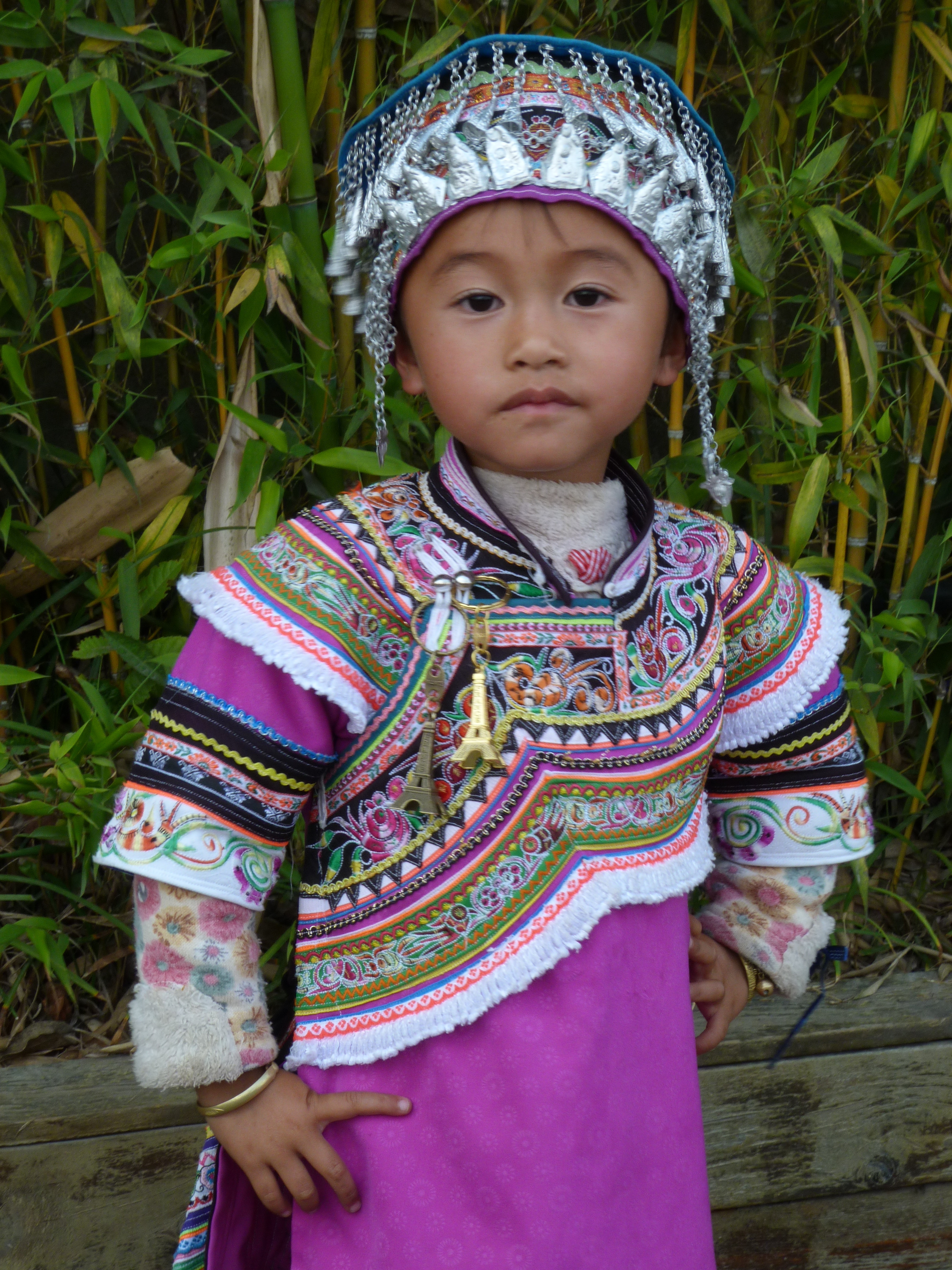
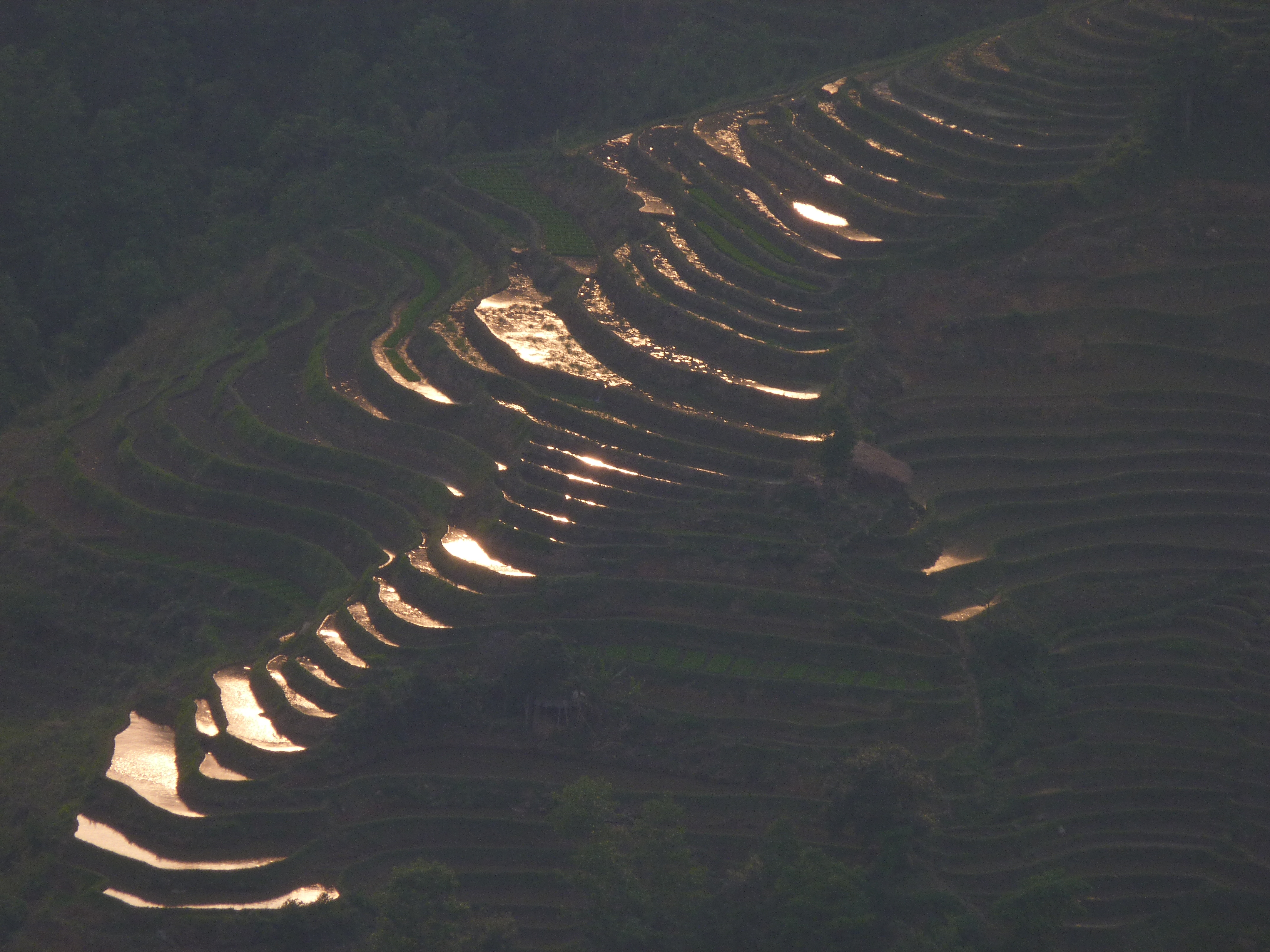
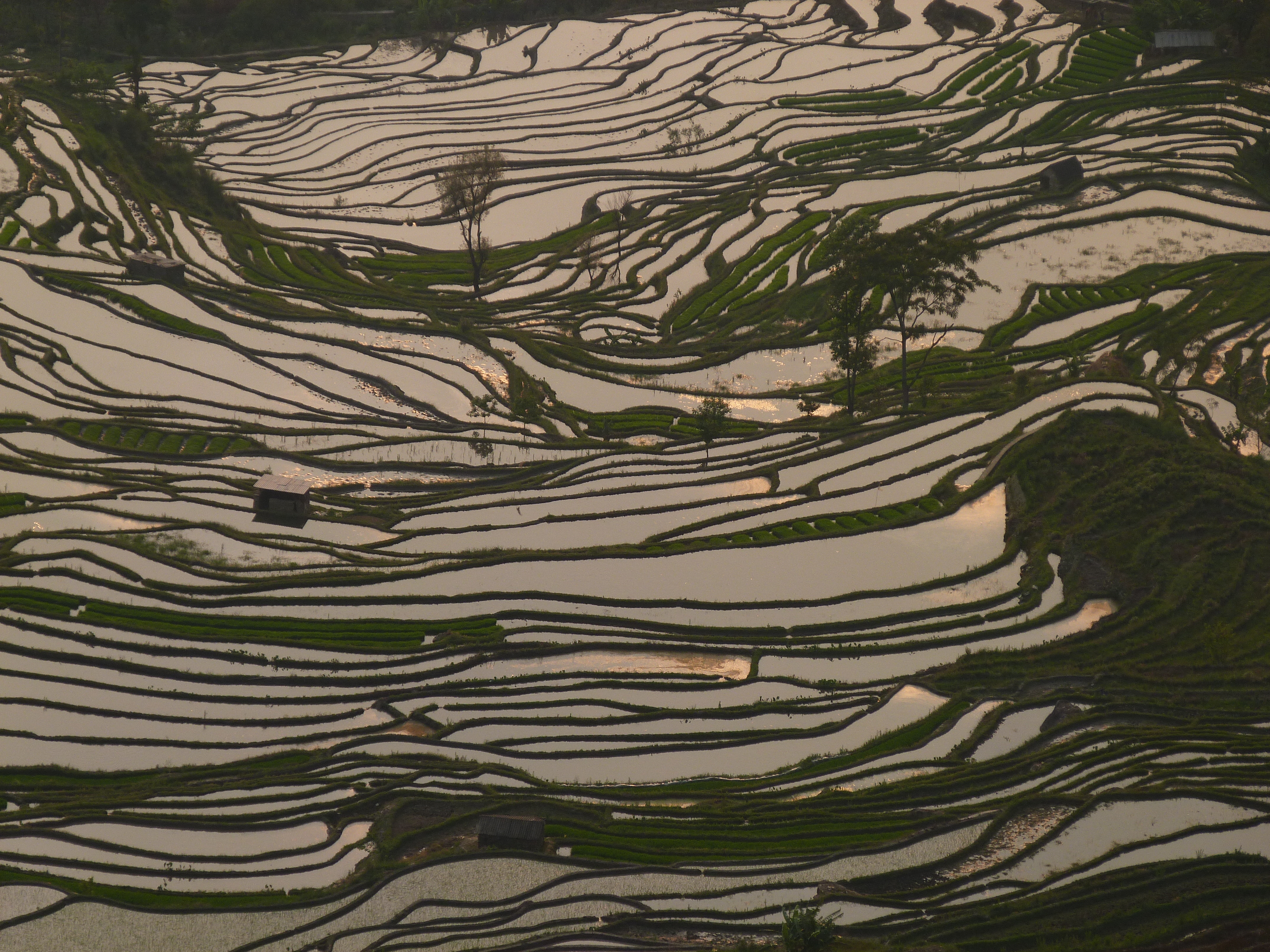
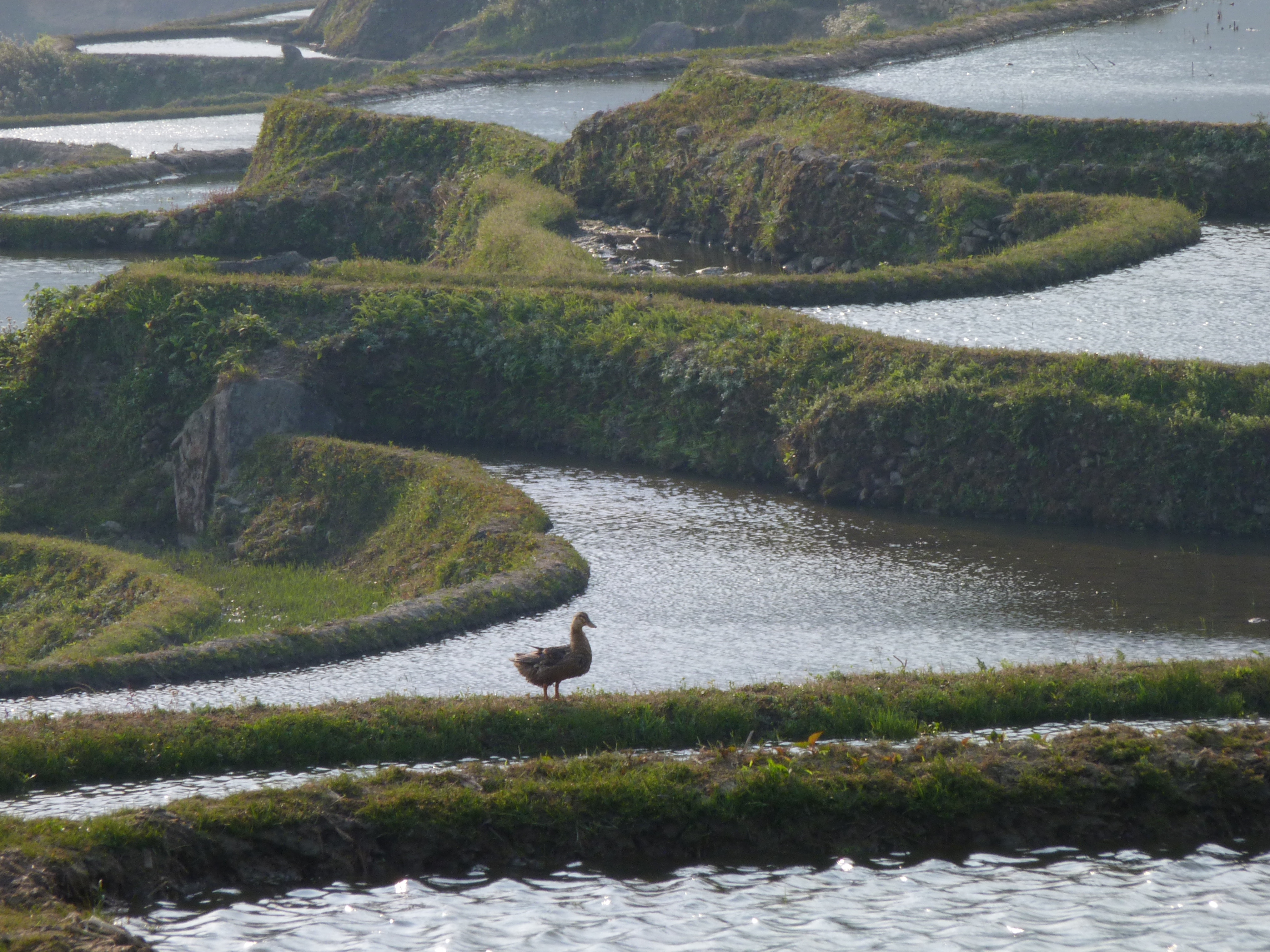
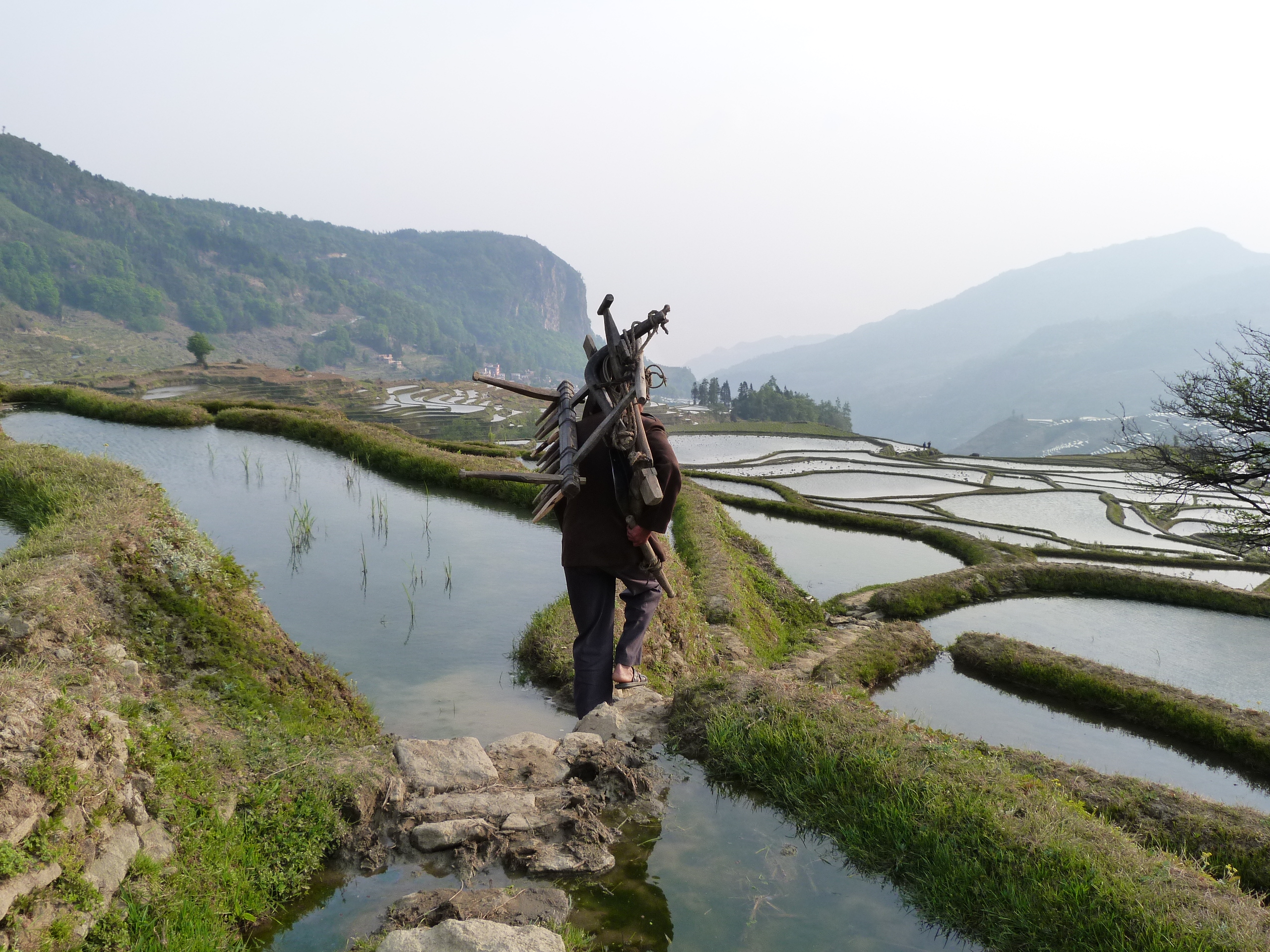
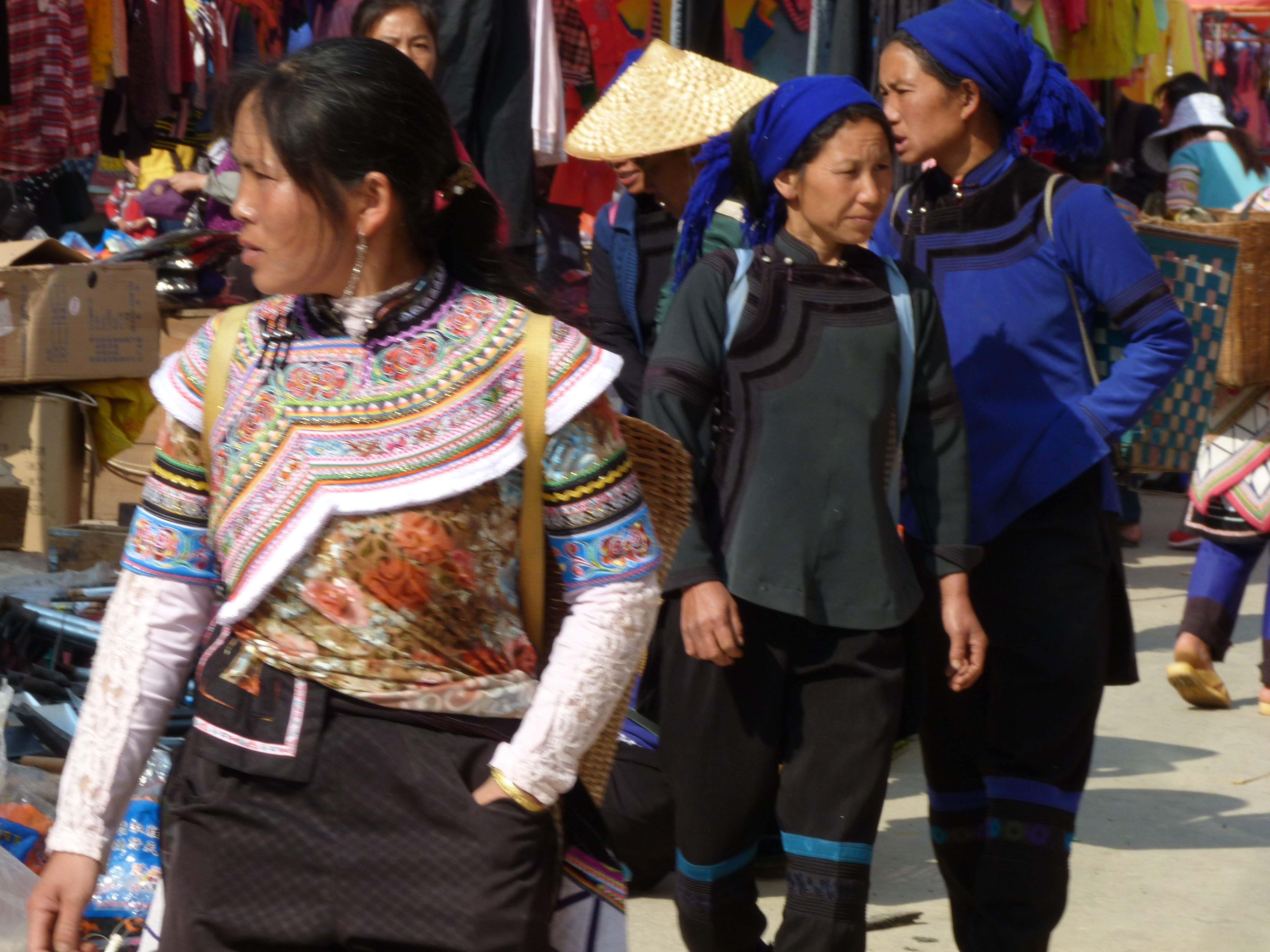
The area around Yuanyang rises to 3000m and lies just 50km north of the Vietnam border. The steep sided mountains have been cultivated for hundreds of years by the Hani people, growing rice that is regarded as among the best in the world. Having had some for dinner I’d say it has a delicious nutty flavour, much more interesting than basmati, say. I also had a delicious dish with meat, garlic, scallions, ginger and chilli. Outrageously expensive meal at £2.50, but then it is a 4 star hotel. The other local minority are the Yi people, who wear gloriously colourful costumes. The rice terraces, now a world heritage site, look stunning at sunset and sunrise. I didn’t use filters or photoshop – these show exactly how it looked.

P1040310

Yi girl, age 3

Sunset at Yaohuzui (the tiger’s mouth)P1040309 P1040313 P1040320 P1040322

Sunrise at Daoyishu (a type of fruit tree)

P1040330 P1040342 P1040348 P1040361 P1040371

Commuting, Yunnan styleP1040364

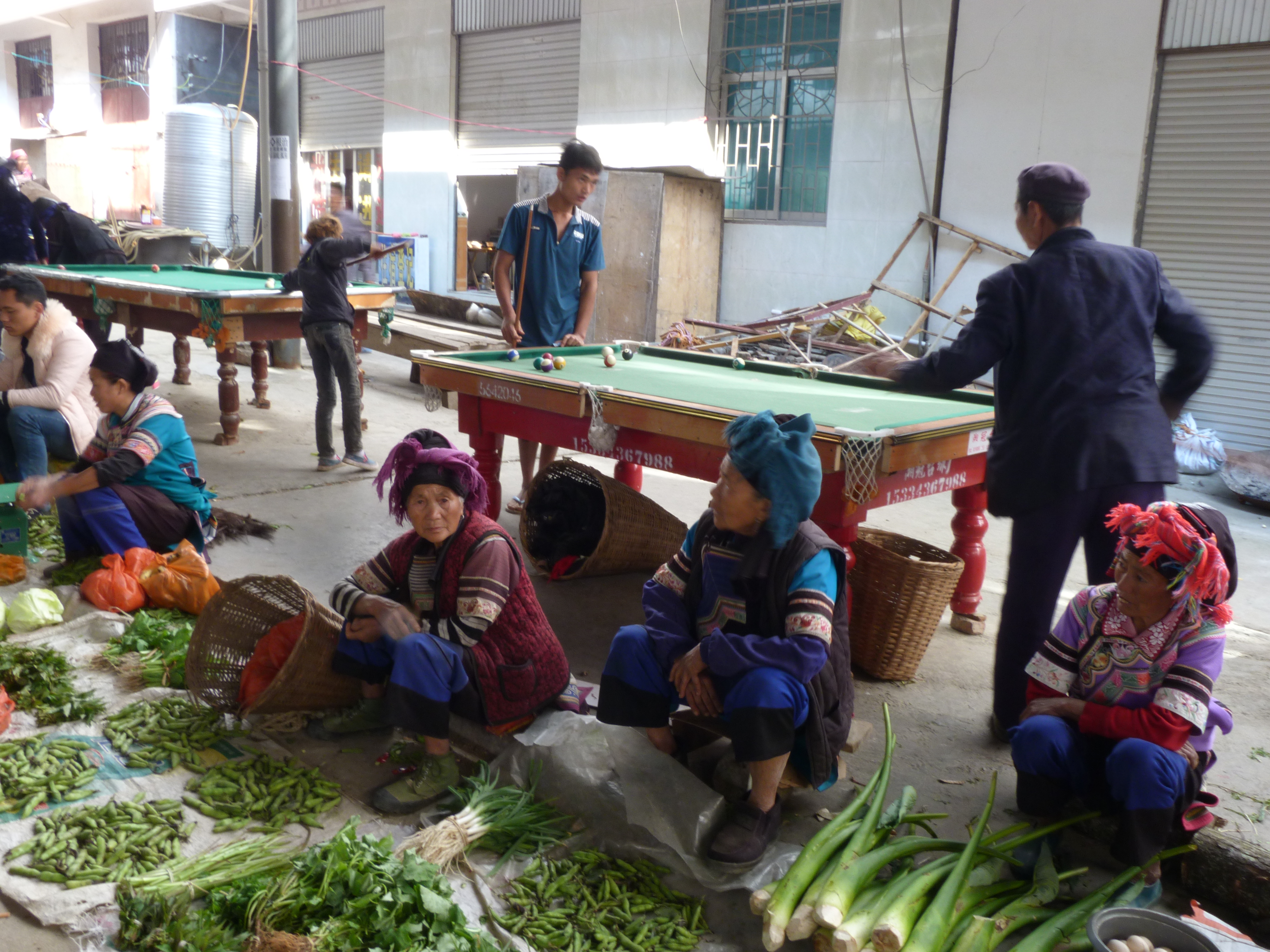
We came back via a farmers market, where the locals can buy and sell vegetables, meat (on the hoof), herbs, household goods, fabric and agricultural equipment.

P1040397 P1040385P1040362

Well, Well..

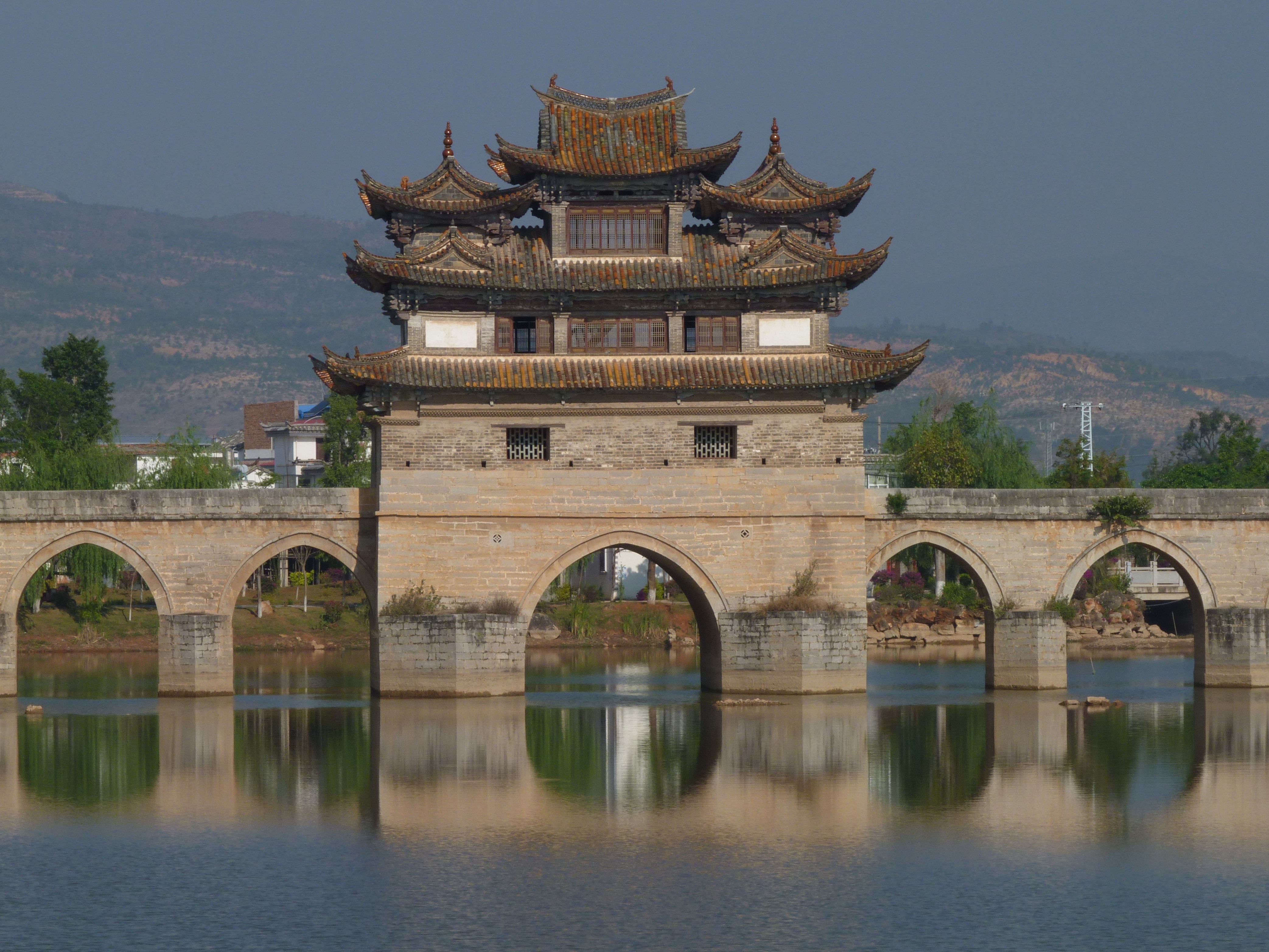
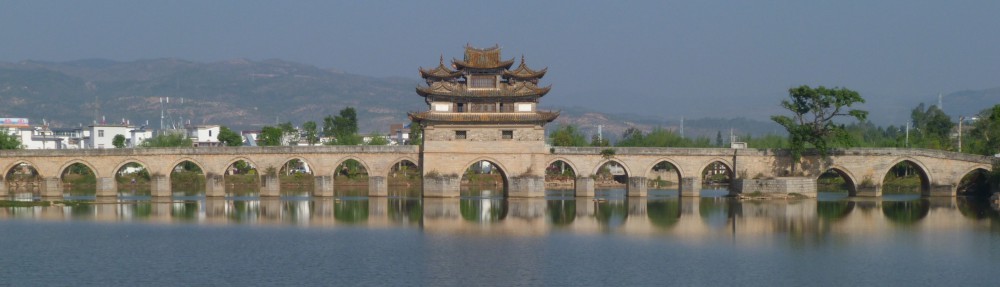
My guide, Lucy, has taken to mothering me (necessary, I have to admit) including taking me out in the evening to search for dinner. In theory I have enough Mandarin to cope with menus, ordering, paying etc, but in practice finding the right restaurant is the biggest difficulty. Plus, no-one, my guide included, seems to understand a word I say in mandarin – the subtleties of correct tonal pronunciation elude me. So – forgive me Laoshi T for being pathetic – Lucy took me to her favourite restaurants where she ordered local specialties. Last night we were in a charming restaurant, popular with locals, and had peanut soup with wild mountain vegetables, along with fried rice. Absolutely delicious and a bargain at £1.50 for the whole meal including tea. The locals’ table manners were interesting to observe. A family at the table opposite left behind a lot of detritus on the floor – packaging from the chopsticks, used tissues and the like – which the staff dutifully swept up before the table was reoccupied. Then a woman at a table in the corner started spitting food onto the floor. Lucy told me she was spitting out the bones from her meal. I explained that we would use a plate for that and this too is usual in China, but not for everyone, apparently. Before we left Jianshui we visited a couple of ancient wells, still very much in use. The quality of the water is regarded as a key ingredient in the making of the local tofu, but people also use it for watering their vegetables, washing clothes and so on. Clothes washing is done by foot as well as hand. P1040278 P1040282 P1040283 Just out of town we visited Twin Dragon bridge, which looked impressive in the morning sun. P1040288 We continued to Tuanshan village, one of only a few traditional walled villages left in Yunnan and now being hastily conserved for tourist consumption. It’s moment in history was at the turn of the 19/20th century the Zhang family made a fortune from mining and had the Yunnan-Vietnam railway built to allow for export. The family were communist sympathisers and so the village and its Buddhist shrine were not torn down in the Cultural Revolution of the 60s and 70s. P1040295 P1040296 Now we’re heading up to the mountains to see the rice terraces at Yuanyang. Can’t wait!

Jianshui

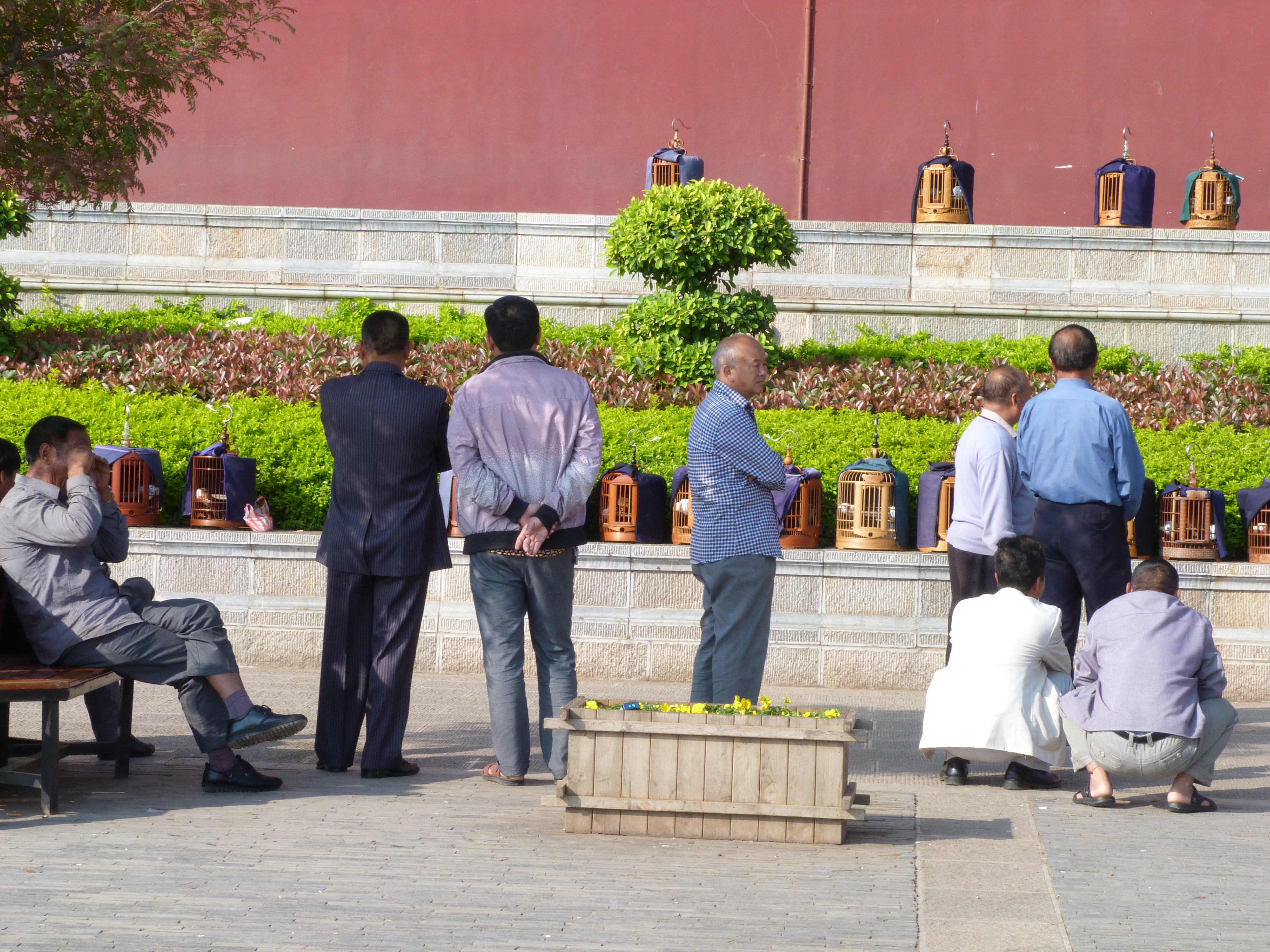
Although I am in a small hotel in a traditional style building, I had coffee and brioche for breakfast! Things are looking up. We went for a stroll to the Chaoyang gate – one of the old entrances to the ancient walled city. Men bring their caged songbirds to the gate for an outing and to chat to the other birds. The men just stand and watch the birds, as a sort of hobby.

P1040242 P1040244

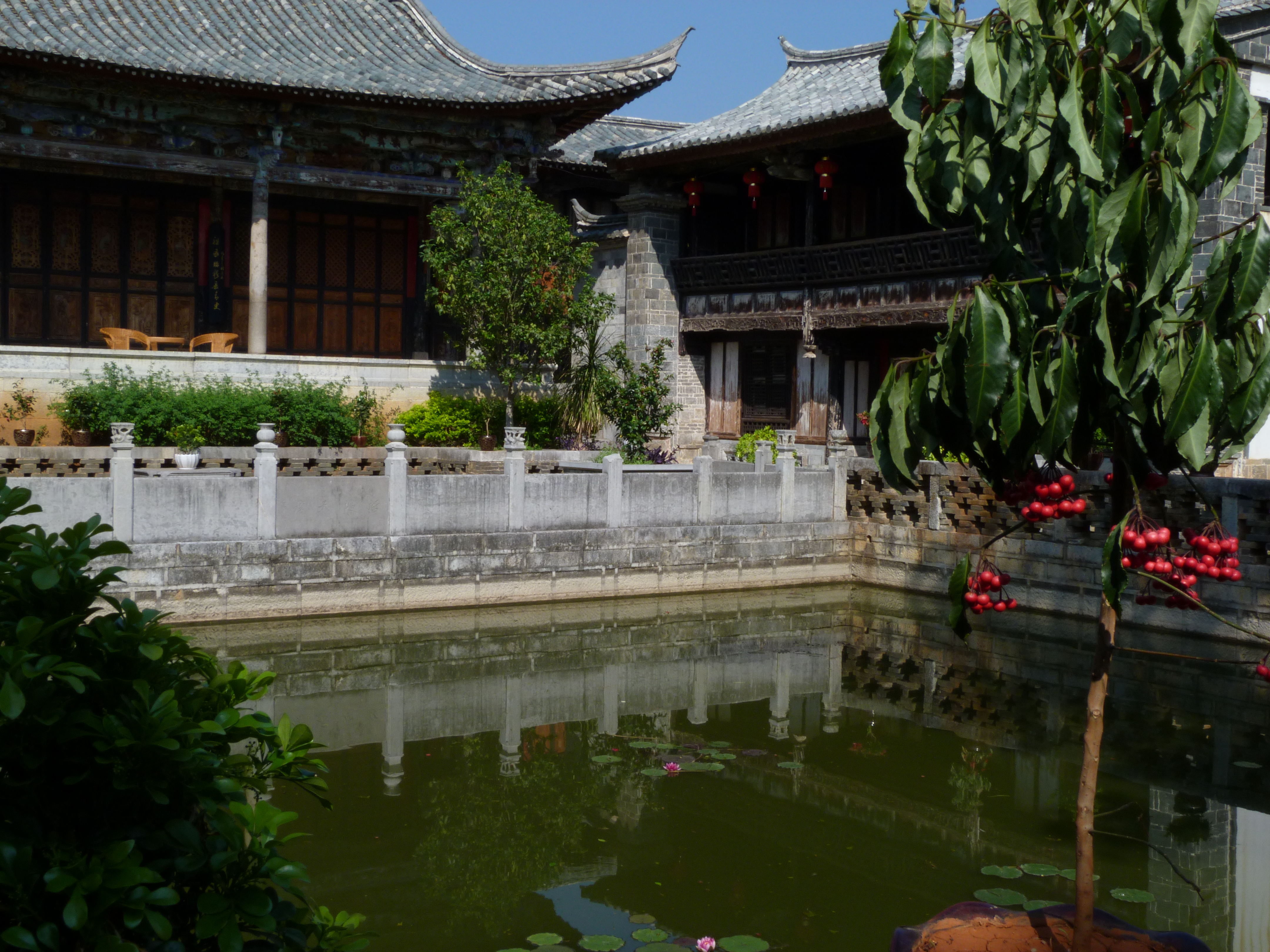
Next we went to the Zhu family garden – the Zhus made their fortune from lead and zinc mining at the turn of the 19/20th century. The complex is a maze of rooms and courtyards built in the traditional Qing dynasty style, with ornate doorways, carvings and bonsai trees.

P1040250 P1040251

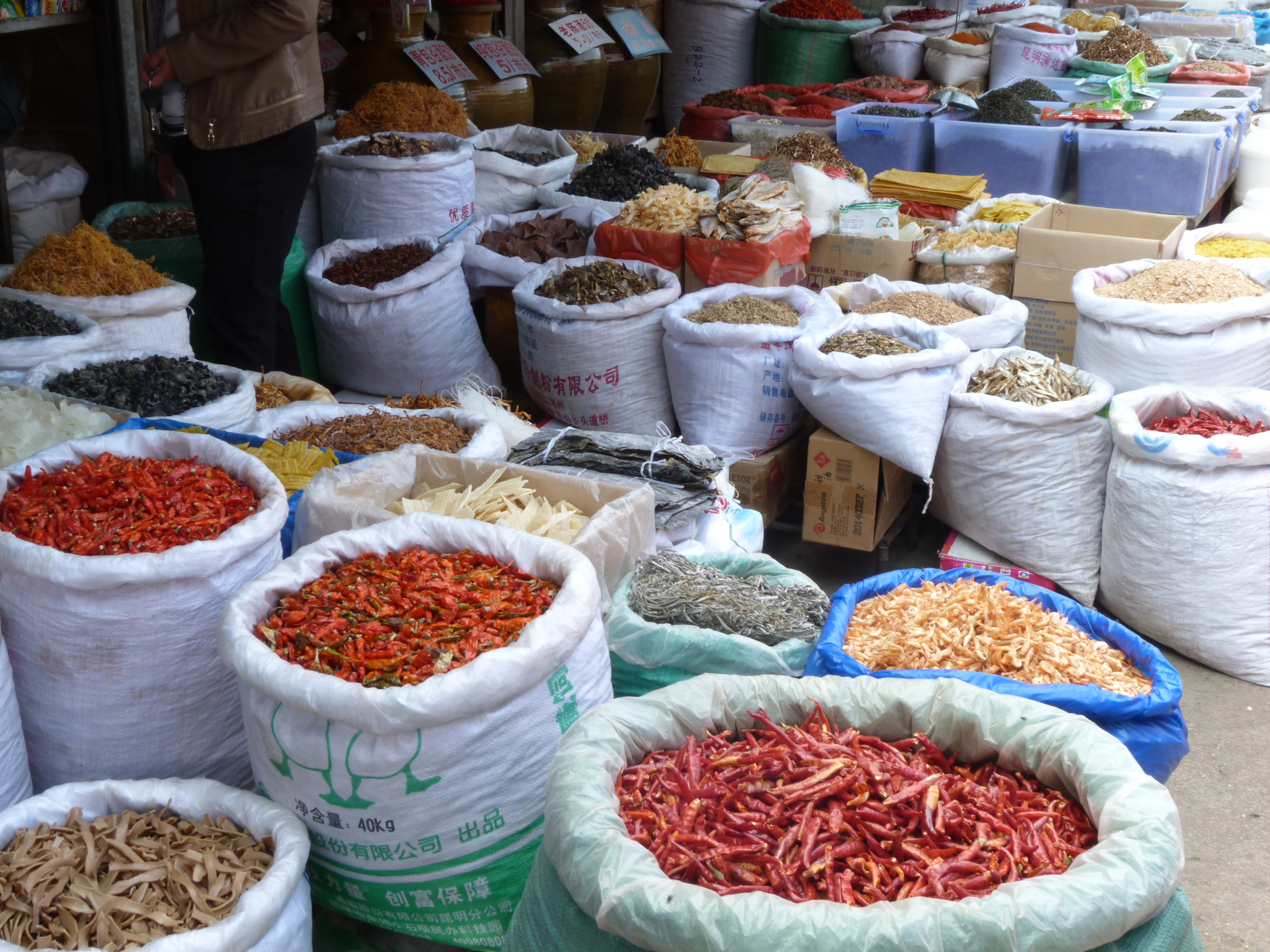
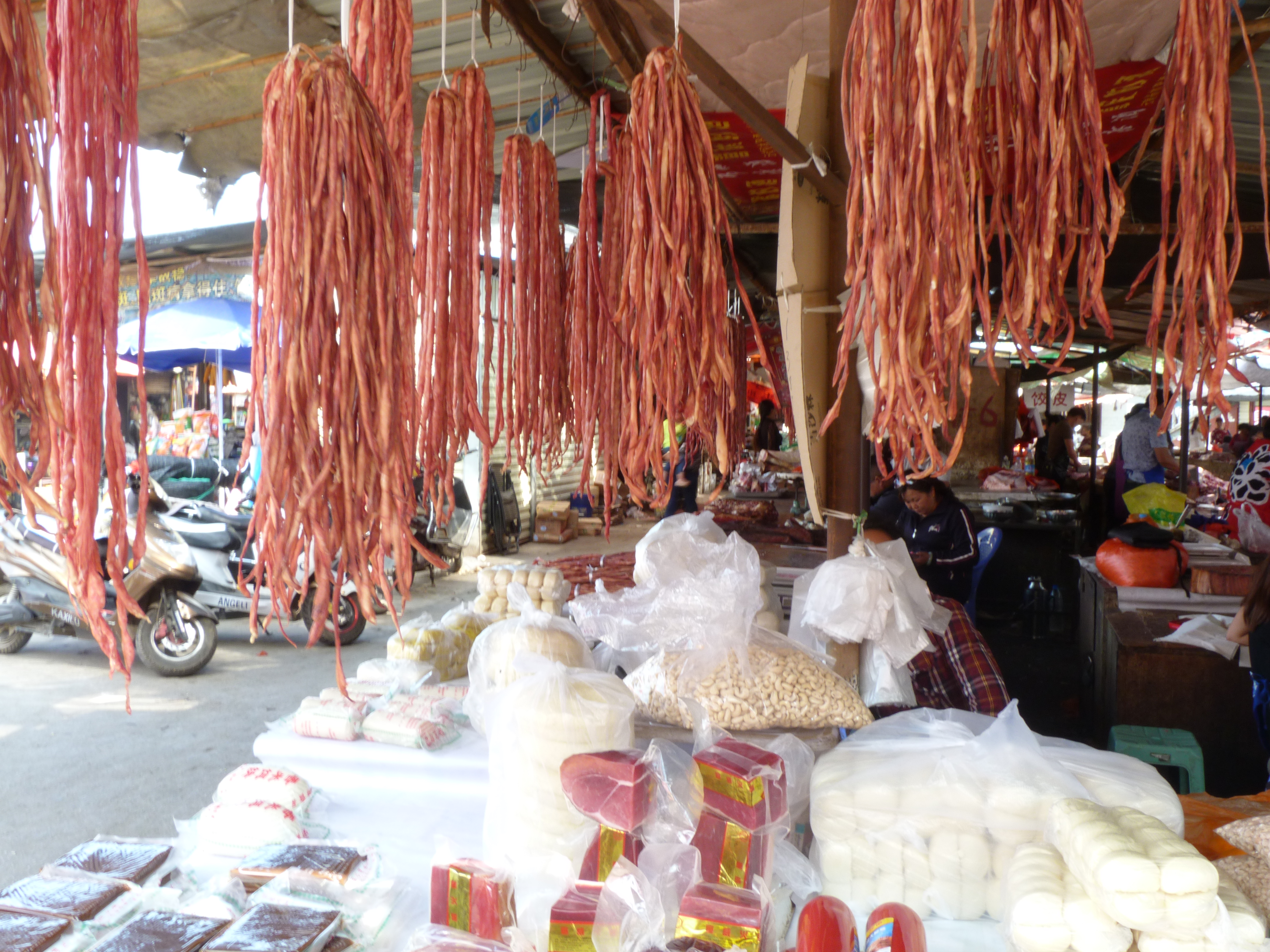
Next up was a wander round a food market – gorgeous fresh fruit and veg, herbs, spices, live fish in tanks, and somewhat less gorgeous pig intestines and dead dogs. Apparently they don’t eat much dog these days – it is only served in specialty restaurants.

P1040258 P1040257 P1040255

Dried pig intestine

Dried pig intestine

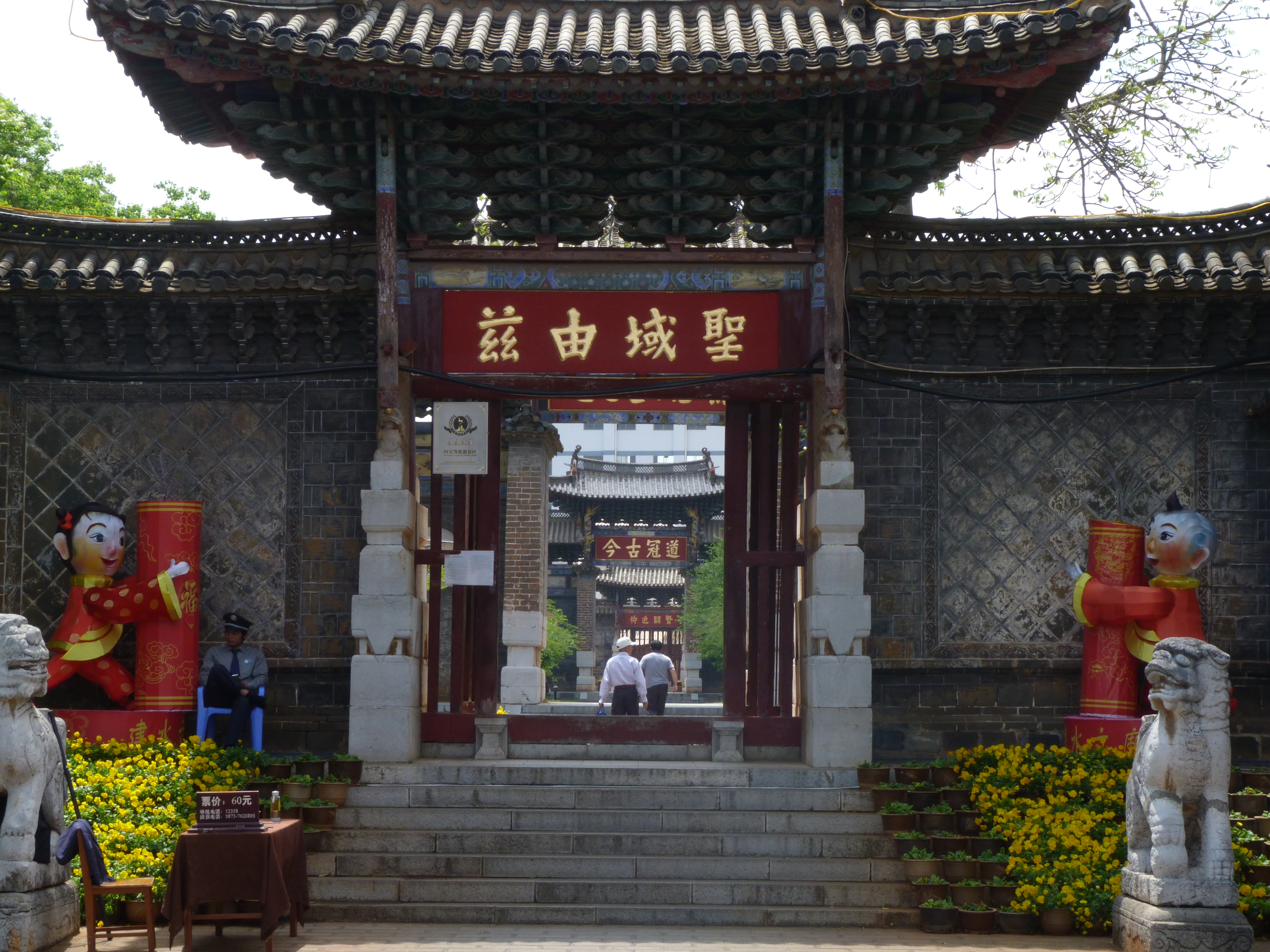
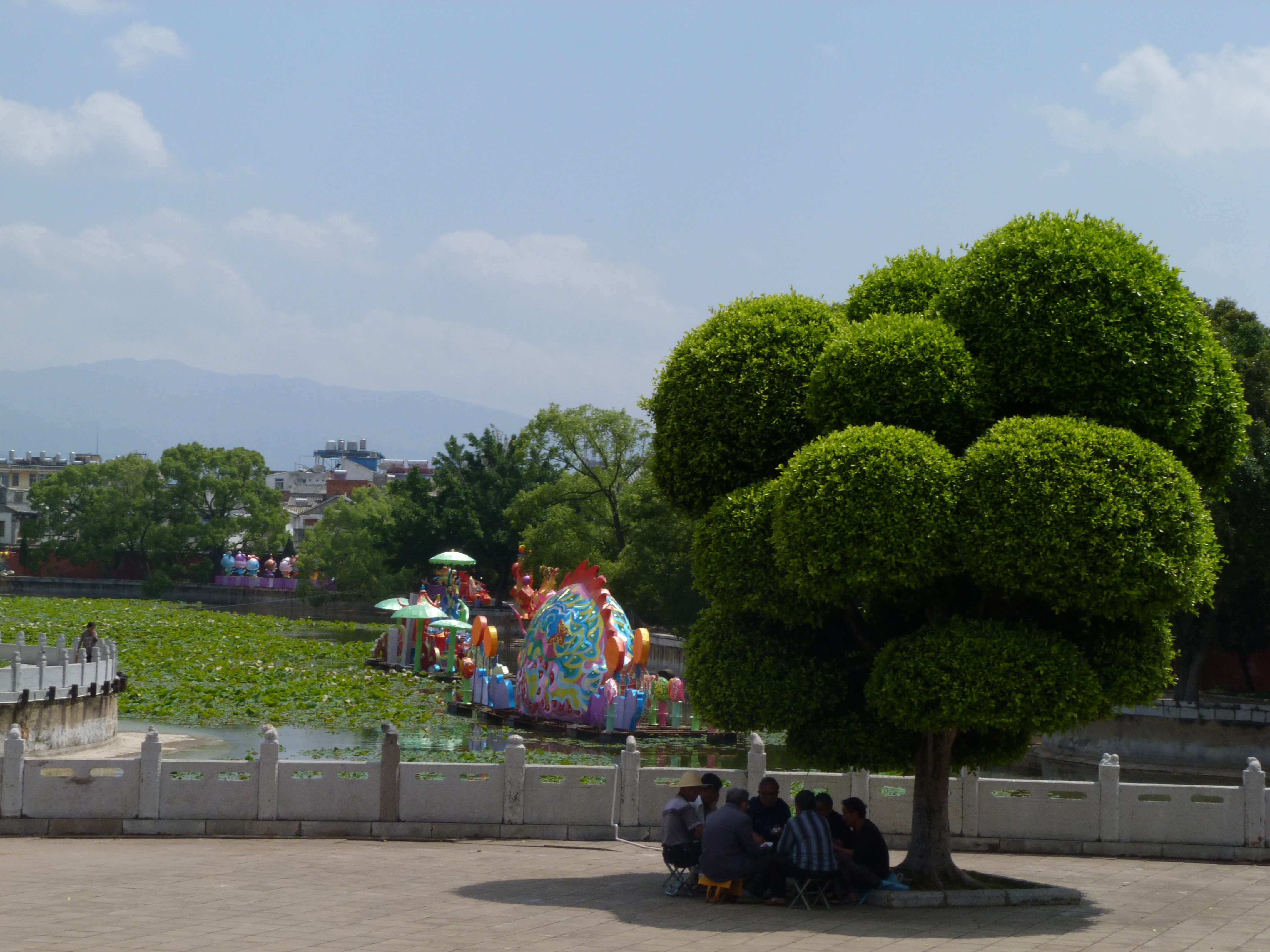
After a nap break we went to the Confucian temple – the second largest one in China. My favourite part was a huge lake covered in lotus plants (see pic). When they are all in flower in June it must be quite a sight. Around the temple groups of old men sat in the shade playing cards or dominoes. Apparently they gamble to make them take the game more seriously and to make them try their best to win. It’s not about the money, in other words.

P1040260 P1040262

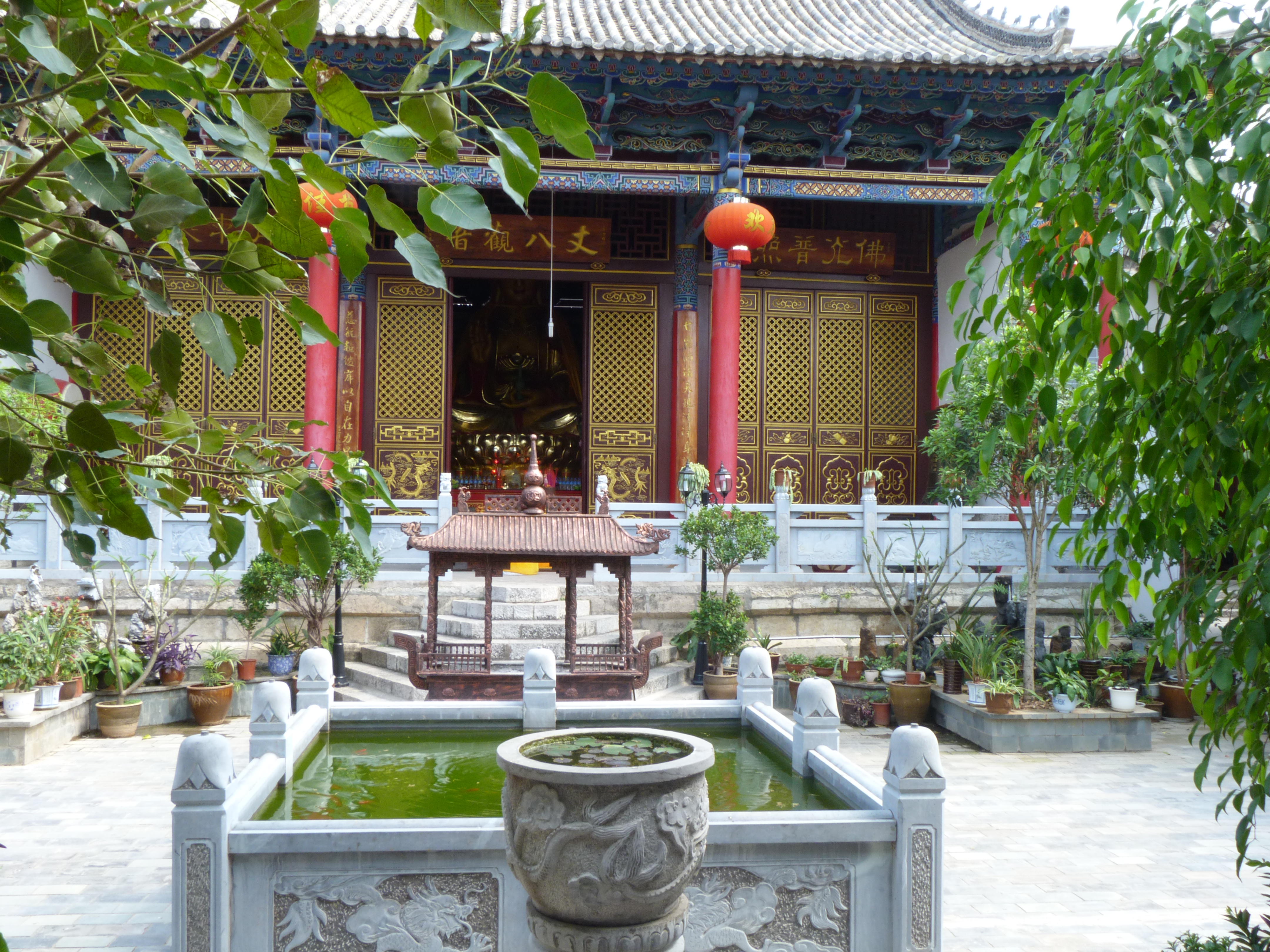
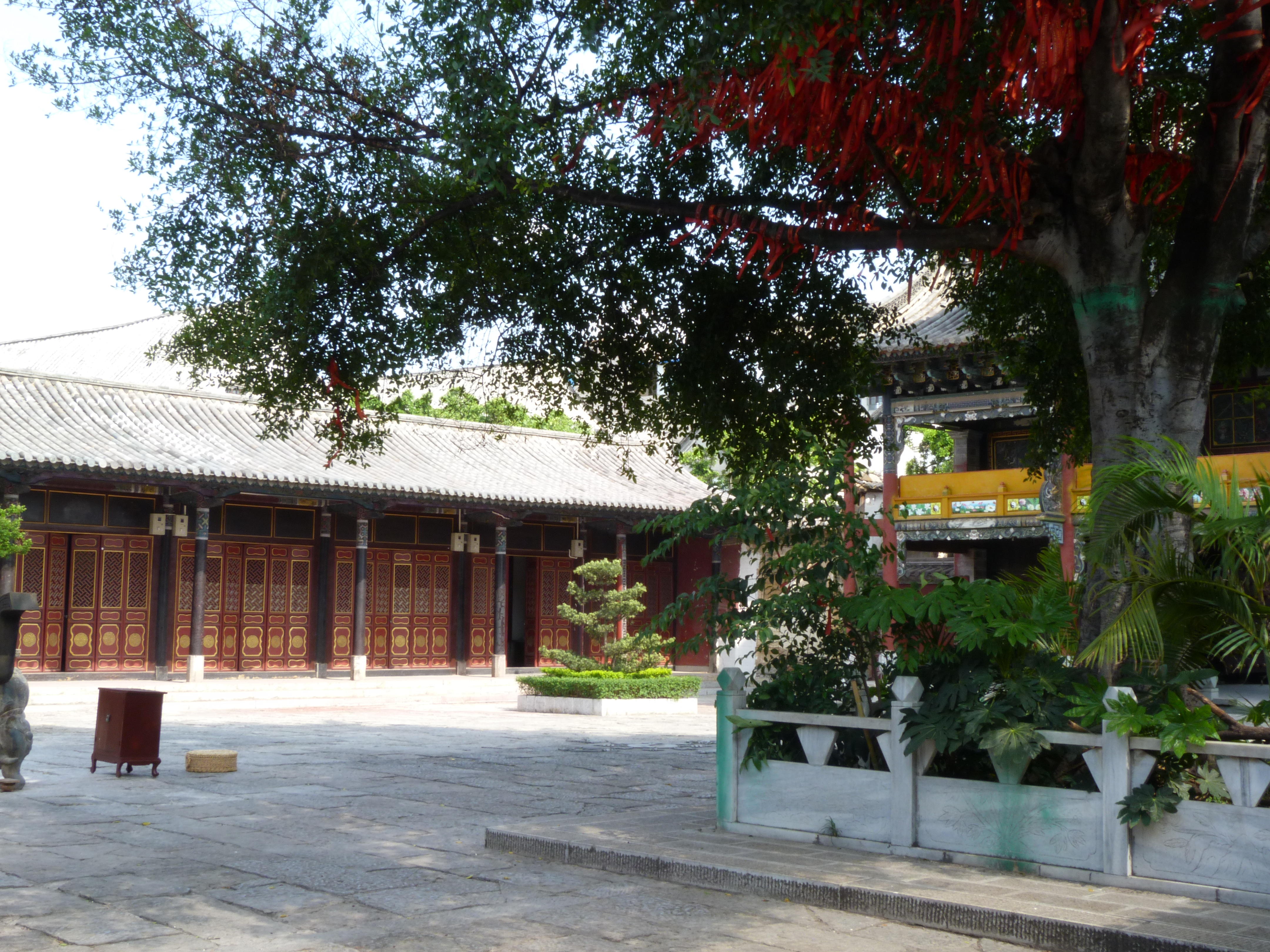
We continued our wander around the old town, popping in to a Buddhist temple and a Daoist temple on the way back to the hotel. Jianshui really typifies the Western mental image of a Chinese town – tree lined stone streets, traditional architecture, decorative archways and red lanterns everywhere.

Buddhist temple

Buddhist temple

Daoist temple - the red ribbons in the tree are wishes

Daoist temple – the red ribbons in the tree are wishes

Apparently Kunming was like this until 30 years ago, when it was all ripped up and started again from scratch. I realize that the modern industrial cities are just as much “real China” as this quaint old town, but I definitely prefer the charm of Jianshui to the traffic choked, smoggy, high-rise, high-speed, high-tech likes of Shanghai or Chongqing.

P1040270

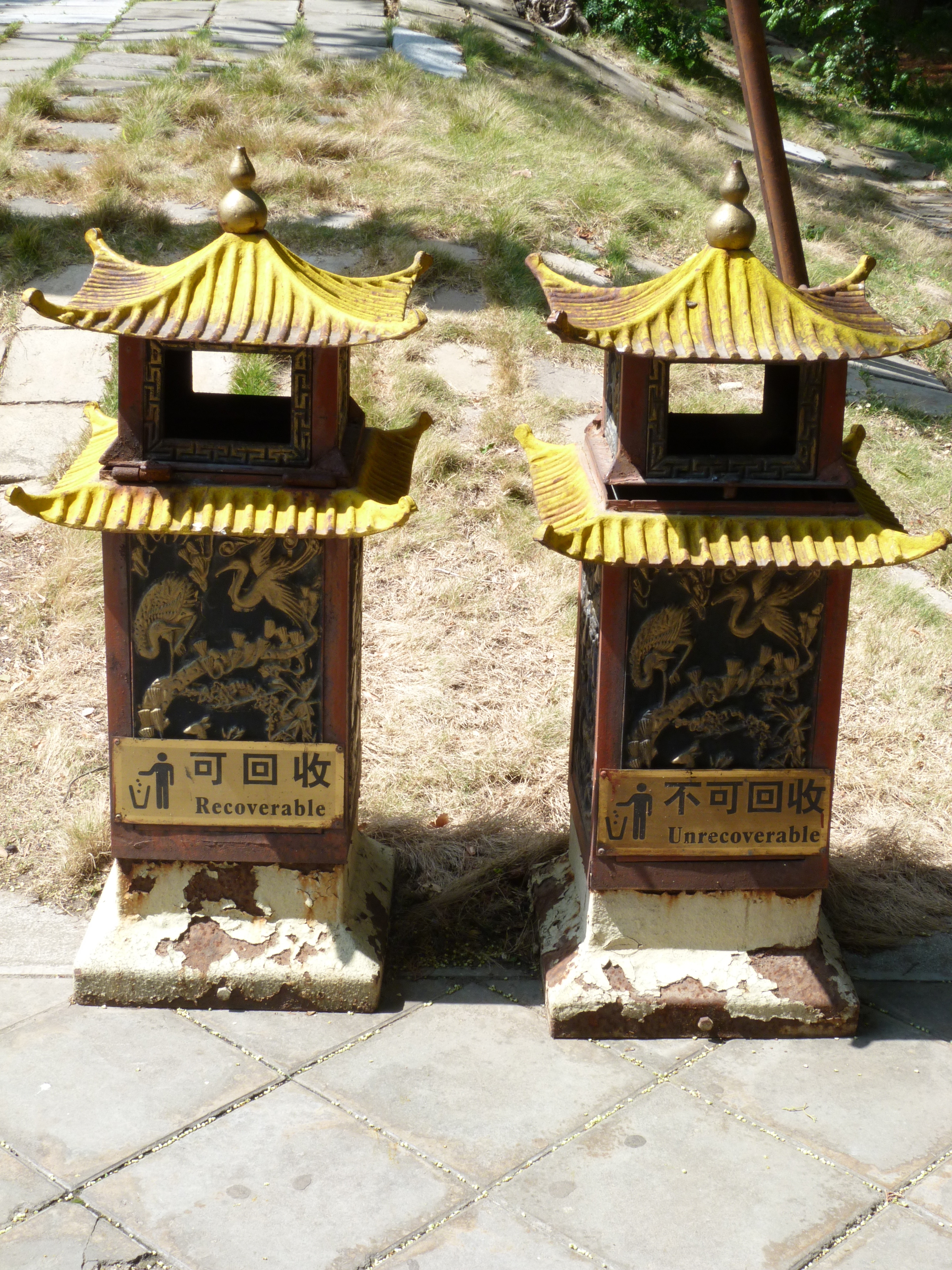
Qing dynasty bins

Qing dynasty bins

Stone Forest

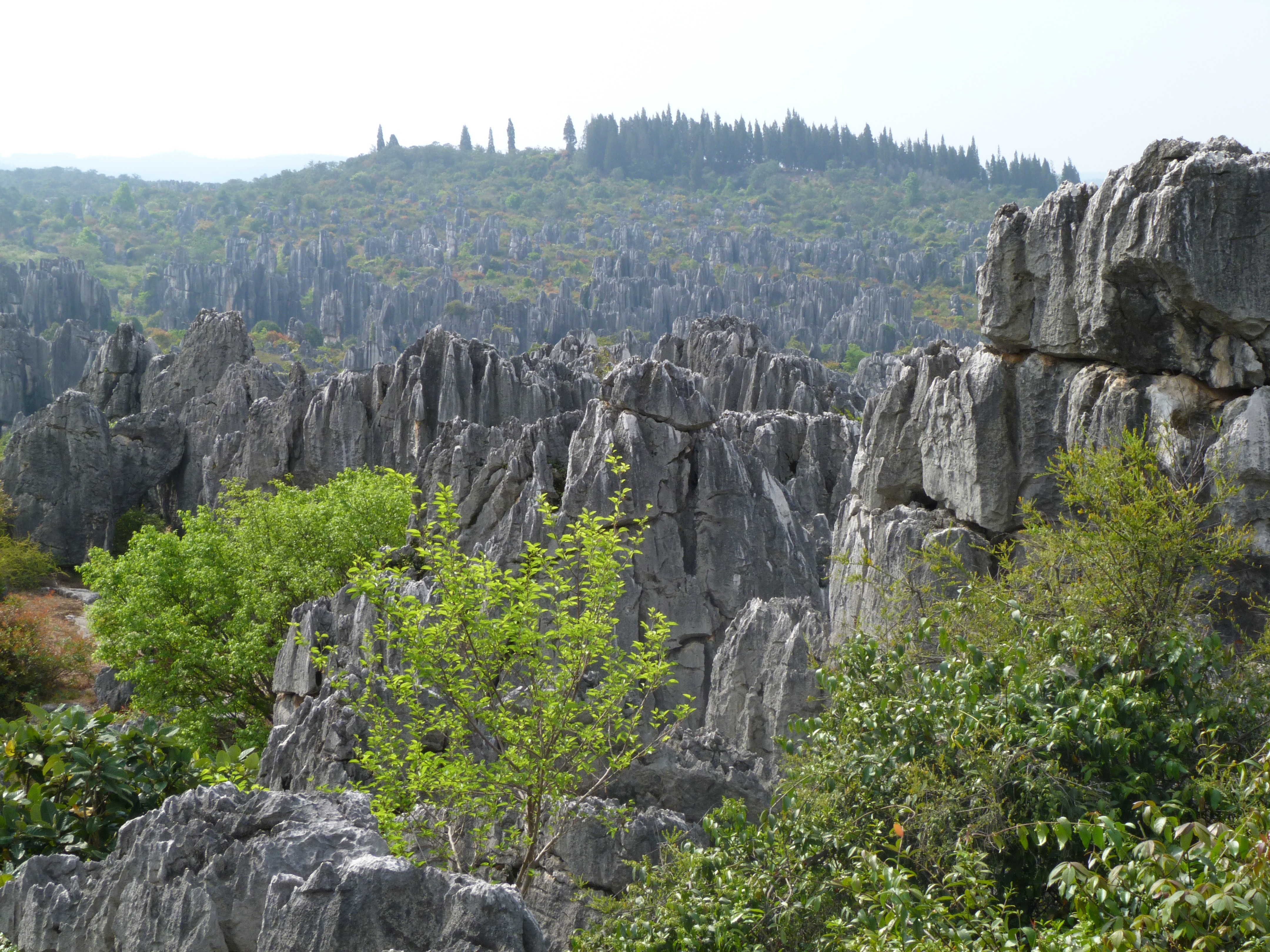
I woke feeling better but as the day went on I developed a streaming cold. I now have Chinese Lemsip equivalent so hope I’ll be less like a limp dishrag tomorrow. In spite of not feeling my best, I enjoyed visiting the Stone Forest outside Kunming. This is a limestone Karst formation covering a huge area. Most of the local visitors whizz round on the electric bus, but my guide suggested a stroll through this extraordinary landscape. The Chinese do love imaginative names for their natural formations, so we admired King Kong, a map of Australia, an elephant and so on. It is a typical Chinese tourist attraction – incredibly well organized, efficient, clean, designed for visitor comfort, but with limited respect for the actual natural beauty. There was a large amount of concrete walkways, man made lakes and inscriptions carved into the rock.

King Kong

King Kong

P1040227

P1040233

P1040224

We then had a long drive to a city called Jianshui, which is on the way to the Vietnamese border. The transport infrastructure in China has expanded exponentially in the last decade and the number of people holding a driving licence has followed suit. In the 30 years to 2008 car ownership increased from 1 million to 51 million. In 2010 China overtook the US as the biggest maker and consumer of cars in the world. Teenagers now tend to buy an electric scooter rather than a bicycle, and you see them buzzing along, sometimes two or three on board, in shorts and T-shirts with no protective gear in sight. Sadly the standard of driving is best suited to empty roads at low speeds. On dual carriageways there is not always a central reservation and, when there is, people are quite likely to do a U-turn without warning. Sometimes the overtaking lane is nearest the central reservation and sometimes it is nearest the side of the road, which causes a certain amount of confusion. Road sweepers, mostly old ladies with a besom, wander along the side of the road clearing debris. There is no hard shoulder. Roundabouts are my favourite – it is the ultimate game of chicken, with no rules other than needing 360 degree vision and courage. I decided that sleeping was the best way to stay calm.

I am now installed in a sweet little hotel in the old town where I am staying for a couple of nights. No driving tomorrow thank goodness.

Kunming Nationalities

I slept really well so I was ready for sightseeing this morning. By midday I was feeling exhausted again, but my guide reminded me that we are at about 2000m altitude. Maybe that is why I feel a bit weird. We started by visiting the ethnic minorities park. The familiar sensation of conflicting emotions and being pulled in opposite directions set in. On the one hand, we effectively have a human zoo for tourists to gawp at minorities dressed in their traditional costumes, performing their traditional dances and selling their traditional handicrafts. On the other hand, we have a celebration of cultural diversity and a recognition of the value of preventing these minorities from being obliterated in China’s race for economic success. I suppose for many tourists it also saves the hassle of touring round this vast country to see these peoples in situ. In a couple of hours I visited Mongolia, Tibet and a number of other far flung provinces.

Buddhist pagodaP1040205

More interesting was the Yunnan Nationalities museum, which had artefacts from all the minority peoples including samples of their calligraphy, painting, ceramics, costume, jewellery and day to day tools. Both the museum and the park present a rosy and harmonious view of the minority peoples and one can easily forget that a visit to the actual Tibet, say, would leave a different impression.

I’ll let you write your own caption for this:

P1040209

We stopped for lunch at some street stalls in the city centre, where we had delicious noodles and dumplings, washed down with freshly pressed fruit juice. The dumplings resemble tiny Cornish Pasties, but are deep fried rather than baked. I told my guide that when he visits England the ubiquitous pasty will make him feel at home! P1040217 Later we went to the flower market – Yunnan’s climate is well suited to horticulture and a dazzling display was on view. Chinese taste is a little different to ours – I have never seen roses dyed sparkly royal blue, for instance. Or flower arrangements made with cuddly bunnies. P1040220